The Chinese characters on a mahjong set, explained
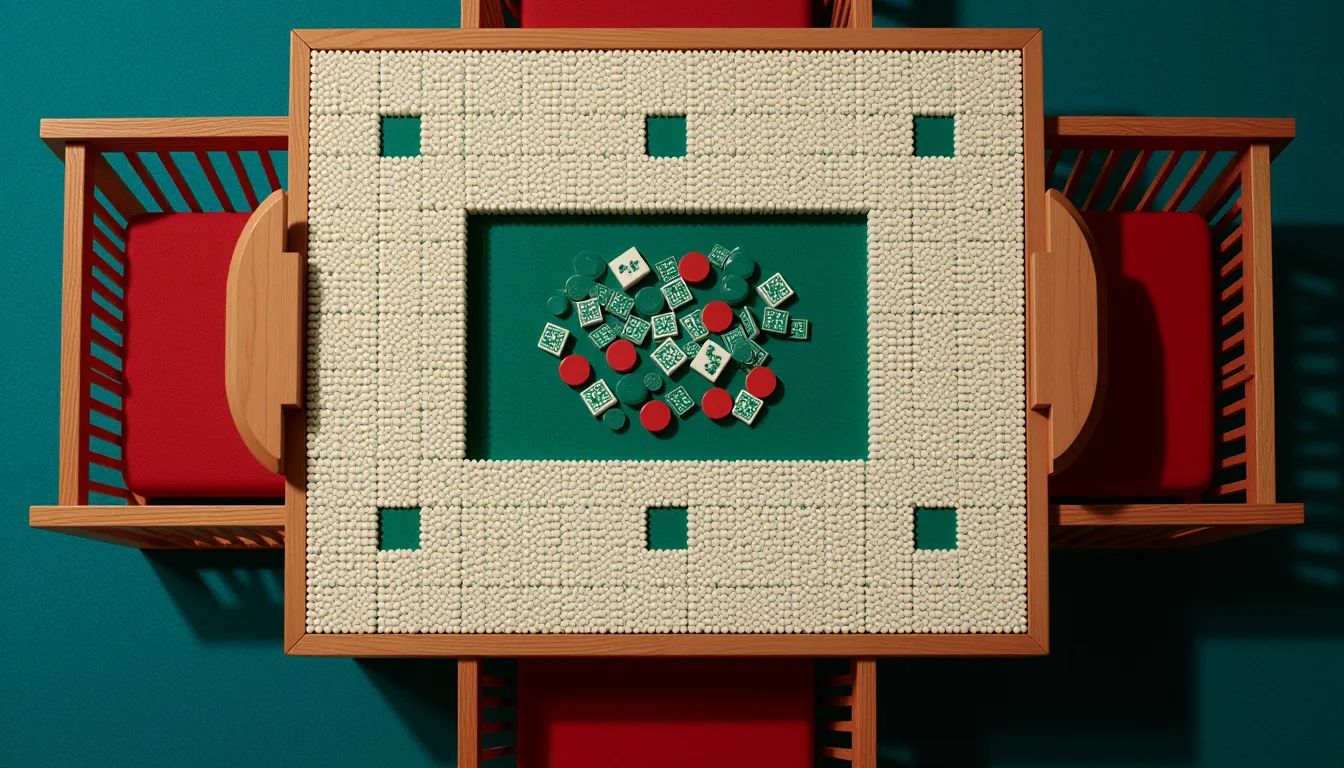
A set is 136 tiles carrying 34 faces, and only sixteen of them have characters at all: the numbers one to nine, the word for ten thousand, the four directions, and three everyday words. Nearly all of it is HSK 1 to 4.
Tap any tile for its reading, meaning, stroke order and the lesson that teaches it. Nothing here tells you how to say a tile until you ask — that is the point.
Those sixteen characters are the same ones that spell out prices, dates and addresses. Learn to read a wall and you have learned to read a fair bit of China.
The three suits
Twenty-seven of the 34 faces are numbered one to nine in three suits, four copies of each.
| Suit | On the tile | What it is |
|---|---|---|
| 萬子 wàn zi | a number above 萬 | Characters — the only suit written in words. 萬 is ten thousand, the unit Chinese counts large numbers in. |
| 筒子 tǒng zi | circles | Dots — strings of coins, drawn as rings. No characters: you count them and say the number yourself. |
| 索子 suǒ zi | sticks | Bamboo — bundles of a hundred coins on a cord. Called 条 tiáo across much of northern China; both names are correct. |
That the dots and bamboo carry no writing is genuinely useful for a learner. A dot tile forces you to produce 六 liù from nothing, which is recall — the thing that actually builds memory — while a character tile lets you read it off. A wall gives you both kinds of practice at once.
The winds and the dragons
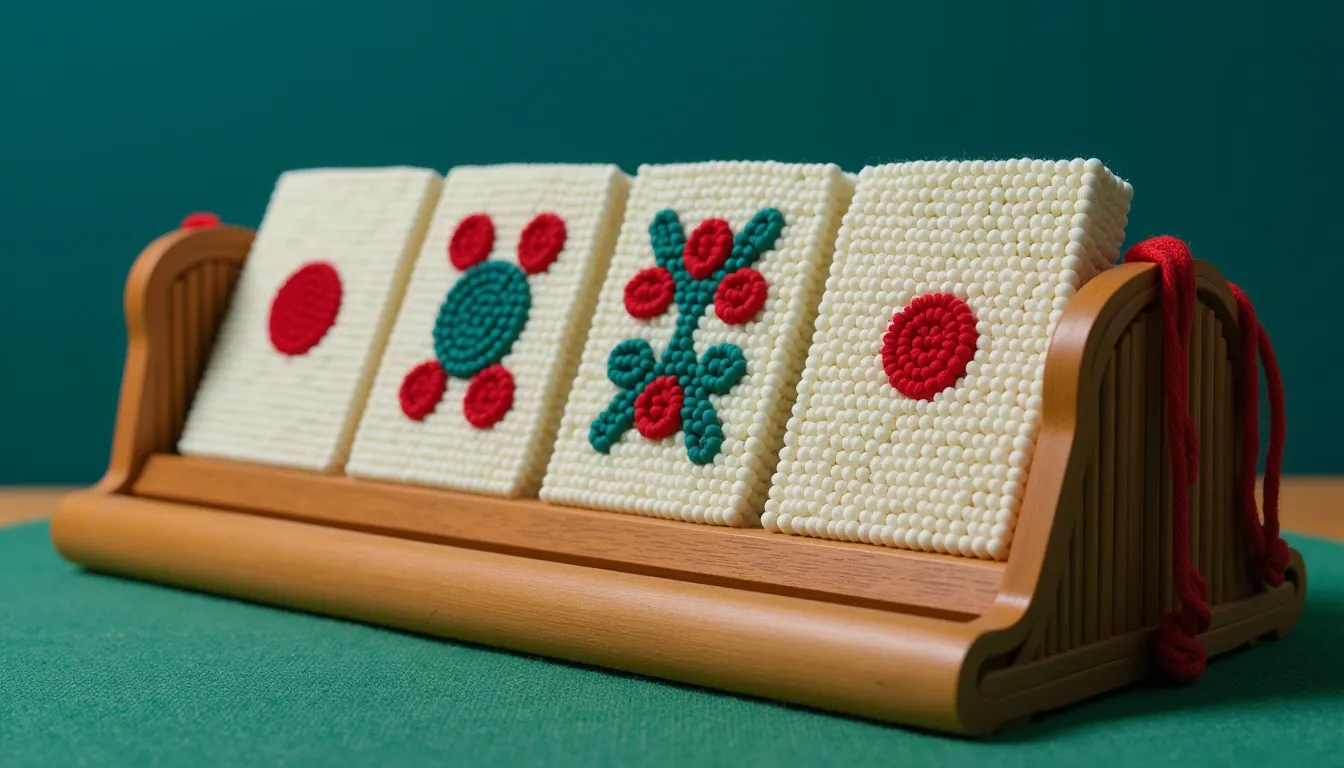
The remaining seven faces are the honour tiles, and they are the most immediately useful Chinese on the table.
The four winds are the compass: 東 dōng east, 南 nán south, 西 xī west, 北 běi north. Chinese lists directions in exactly that order — 東南西北 — where English says "north, south, east, west". These four characters are everywhere off the table too: 北京 Běijīng is the northern capital, 西安 Xī'ān is in the west, and every street address in China is full of them.
The three dragons are three ordinary words:
- 中 zhōng — centre, middle. Printed in red, and called 紅中 hóng zhōng. The same 中 as 中国 Zhōngguó, China: the middle kingdom.
- 發 fā — to issue, to prosper. Short for 發財 fā cái, to get rich, which is also half of the New Year greeting 恭喜发财.
- 白 bái — white, blank. The face is empty, hence 白板 bái bǎn, "white board" — the same word used for the whiteboard on an office wall.
Why the tiles are traditional characters
The designs are older than the simplification of Chinese writing in the 1950s, and sets are still stamped the old way everywhere, mainland China included. So a tile says 萬 where a modern newspaper says 万, and 發 where the newspaper says 发. Same words, same readings, two written forms, and learning the wall hands you a few traditional characters for free.
This is also why the tiles above never change when you switch a page into traditional: a tile is a physical object, not a piece of text. What you say about it follows whichever script you read in.
What you can read once you know the wall
The nine number characters plus 万 are how Chinese writes quantities on menus, receipts, floor buttons and cheques. The four directions run through addresses, city names and directions given in the street.
中, 发 and 白 are among the most common characters in the language. In our own curriculum those characters are spread over five topics between HSK 1 and HSK 4.
The interactive graph under the tiles shows where each one sits, and tapping a character's lesson opens it.
The words you say at the table
A real game runs on about twenty words, and the important ones are single characters you would meet in a beginner course anyway.
- 碰 pèng claims a discarded tile to make a triplet.
- 吃 chī — the same 吃 as 吃饭, to eat — claims one to complete a run, and only from the player on your left.
- 杠 gàng declares four of a kind.
- 胡了 hú le means you have won.
- 听牌 tīng pái, literally "listening", means you are one tile away from it.
The full list, with audio, is in the Table talk tab above.
Where these characters sit in the course
The tiles are a doorway into an ordered curriculum, not a curiosity. Every character above is a node in a dependency graph of 829 topics running from HSK 0 to HSK 6, where each topic is handed to you after the steps beneath it. The lit dots are the topics that teach the tile characters; tap any dot to see what it connects to.
The tiles are one small door. The course is the whole map. HSK 0 through HSK 6 on a prerequisite-ordered knowledge graph: active recall in small steps, reviews timed to arrive just before you would forget, and speaking practice built on the comment + question method. From $49 once for lifetime access.
See plans