Chinese one-pagers, free to share

414 teaching cards: one idea each, at least 20 for every HSK level. Vocabulary sets, grammar patterns with their example sentences, characters taken apart, sound series, conversation openers, 成语 with the story behind them, and the whole mahjong wall.
Tap any card to open it, then save it at 1080×1920 for TikTok or Reels, 1080×1350 for a feed, or 1200×630 for a link preview — in paper or night. Use them however you like; the readings come from the same checked data the course runs on. For paper instead, the same collection has 8 printable sheets.
级 HSK 3.0 band ladders — ready to post
A topic's whole vocabulary, each word placed at the band where the official HSK 3.0 syllabus first introduces it — HSK 1 up to HSK 7-9. Already rendered at the sizes that get posted, so these need no export step; open them as cards to change the paper or take a different crop.
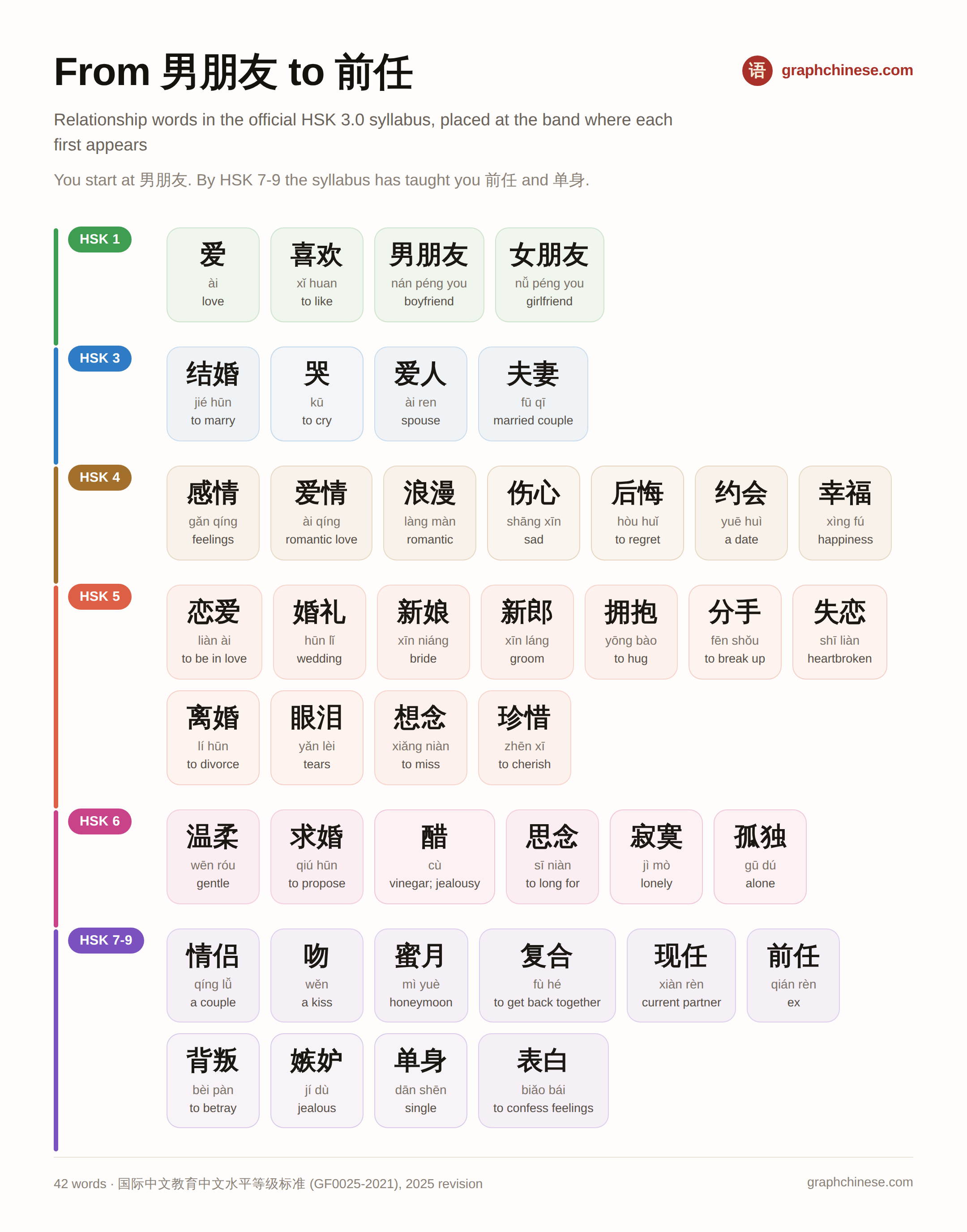
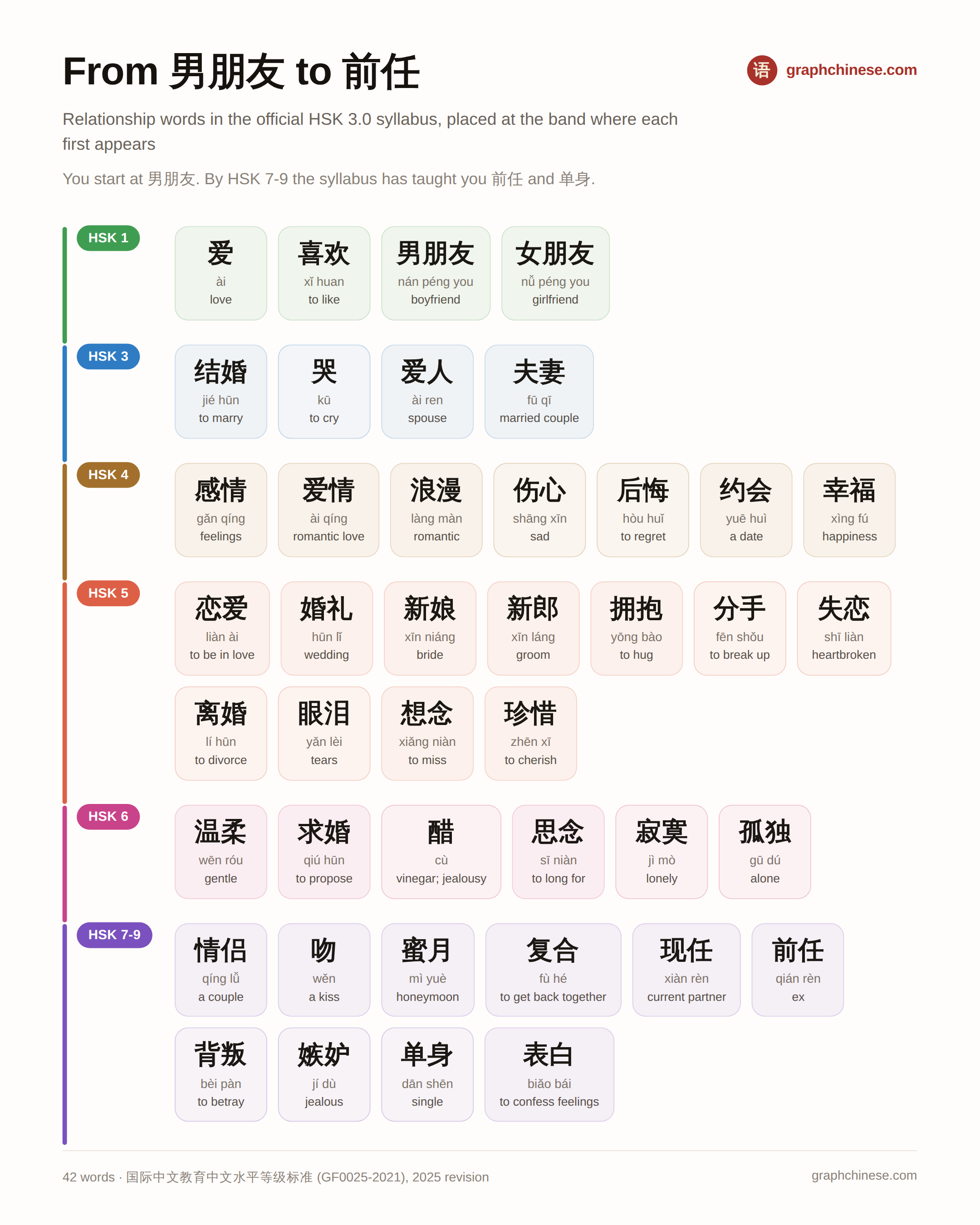
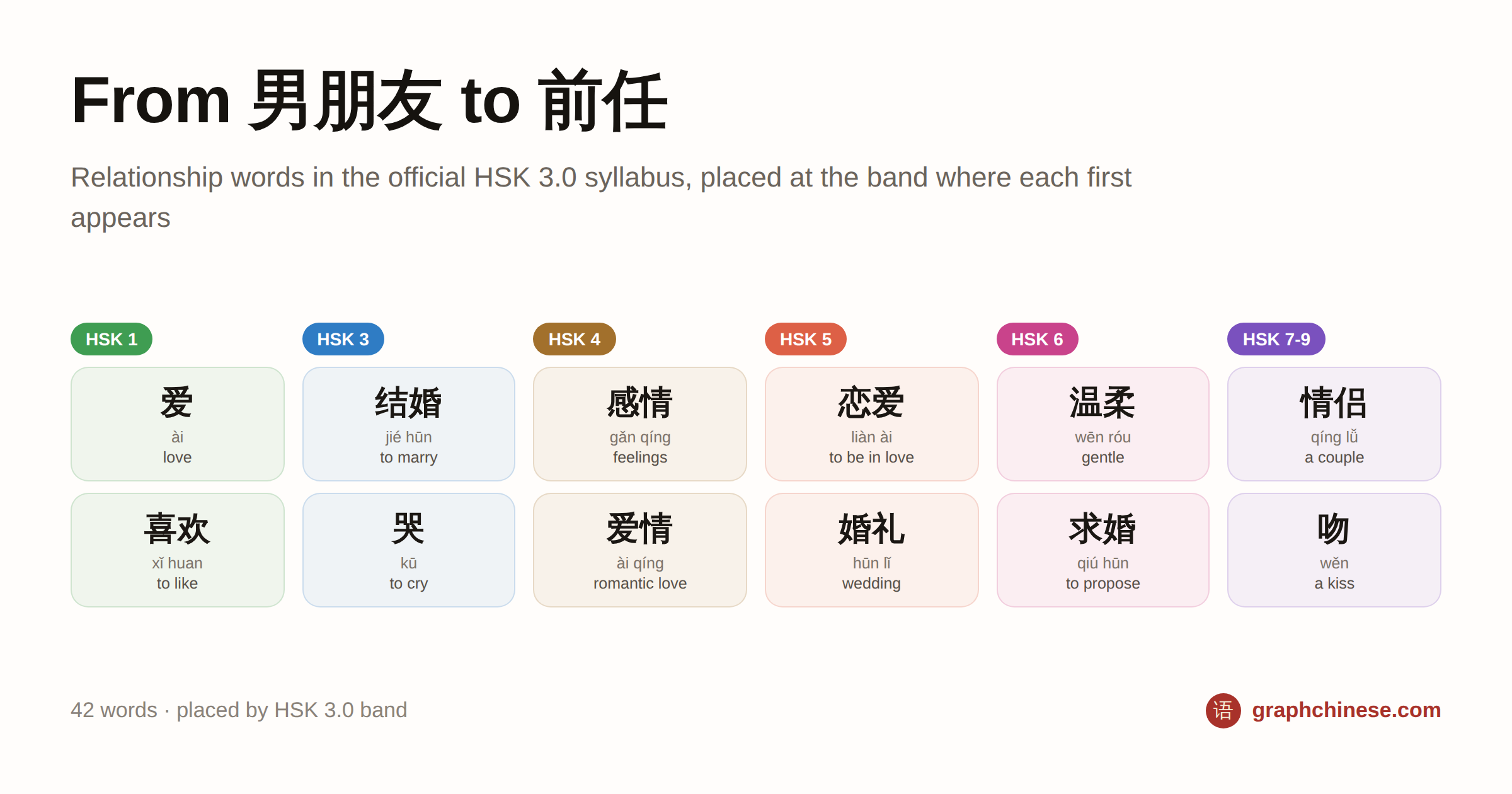
- 级 · From 男朋友 to 前任 PNG 1080 wide 1080×1350 1200×630
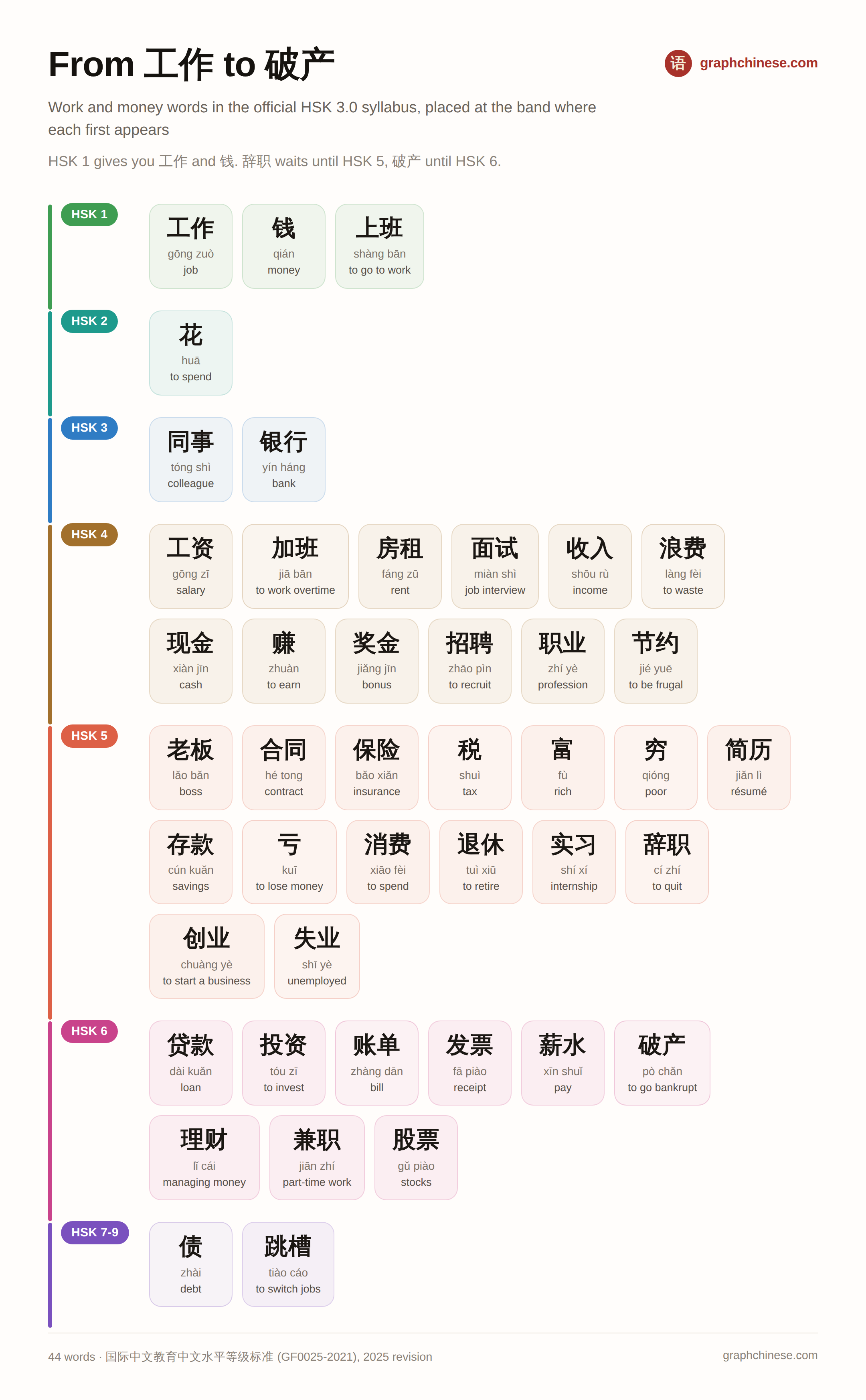
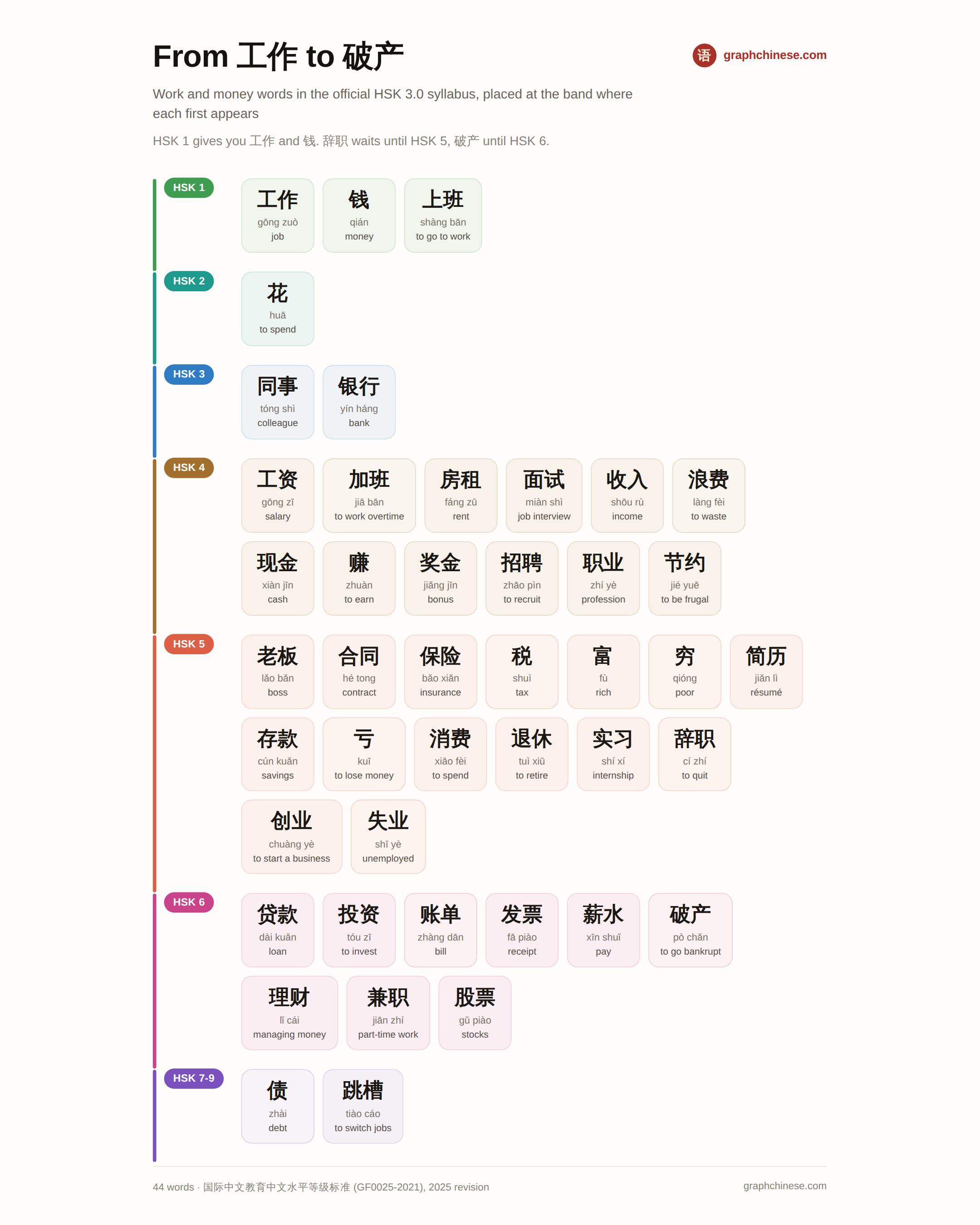
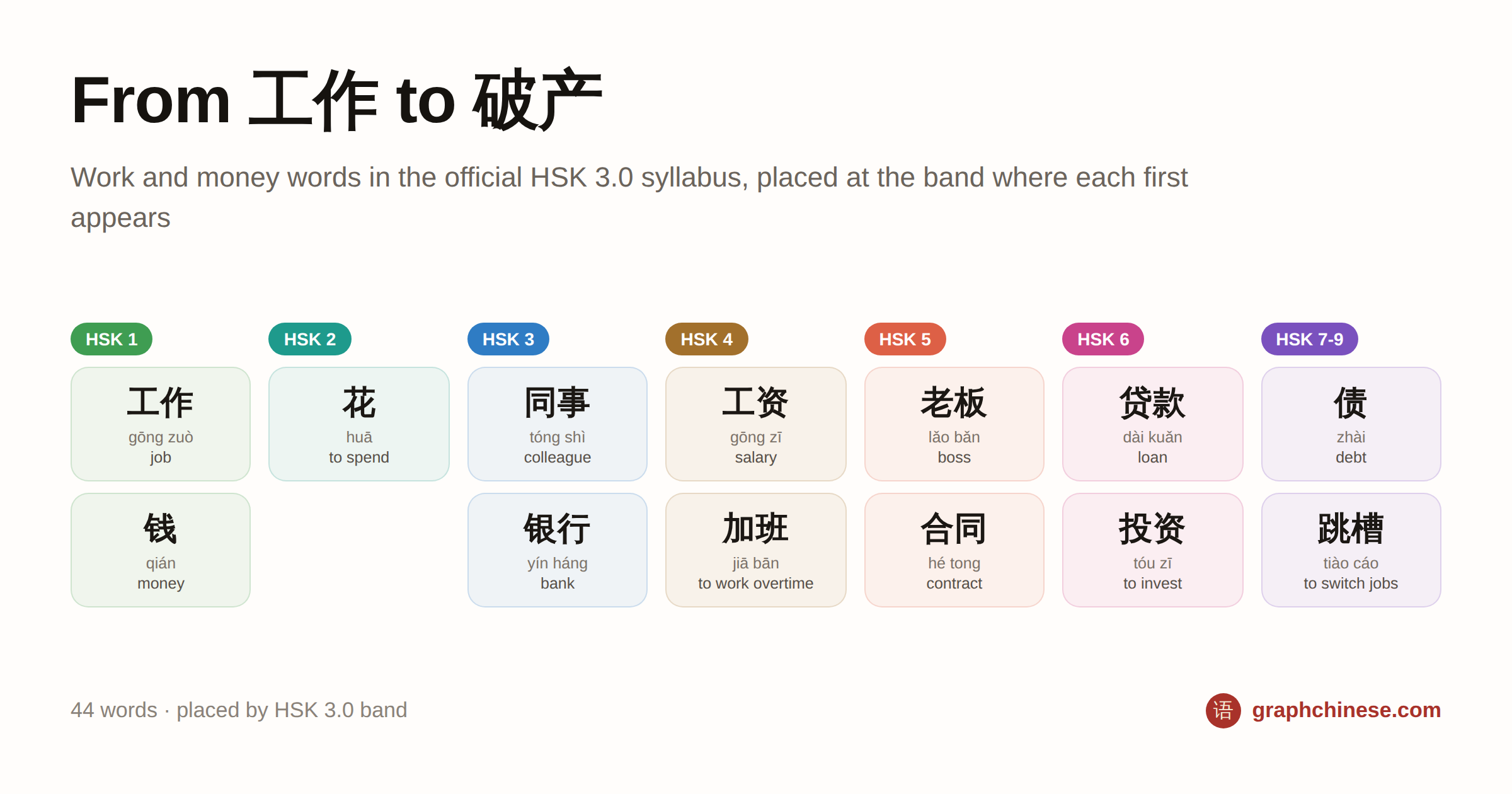
- 级 · From 工作 to 破产 PNG 1080 wide 1080×1350 1200×630
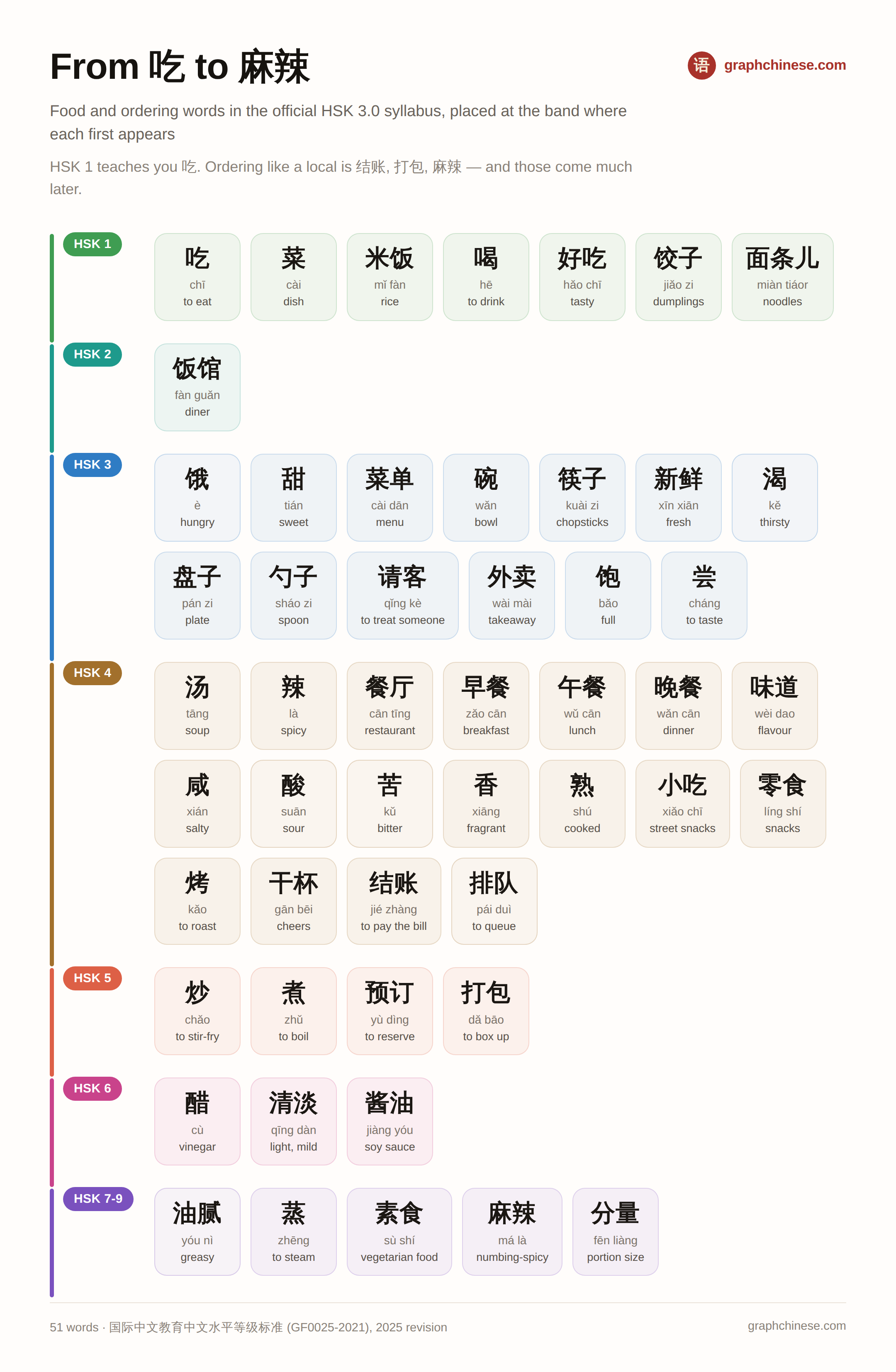
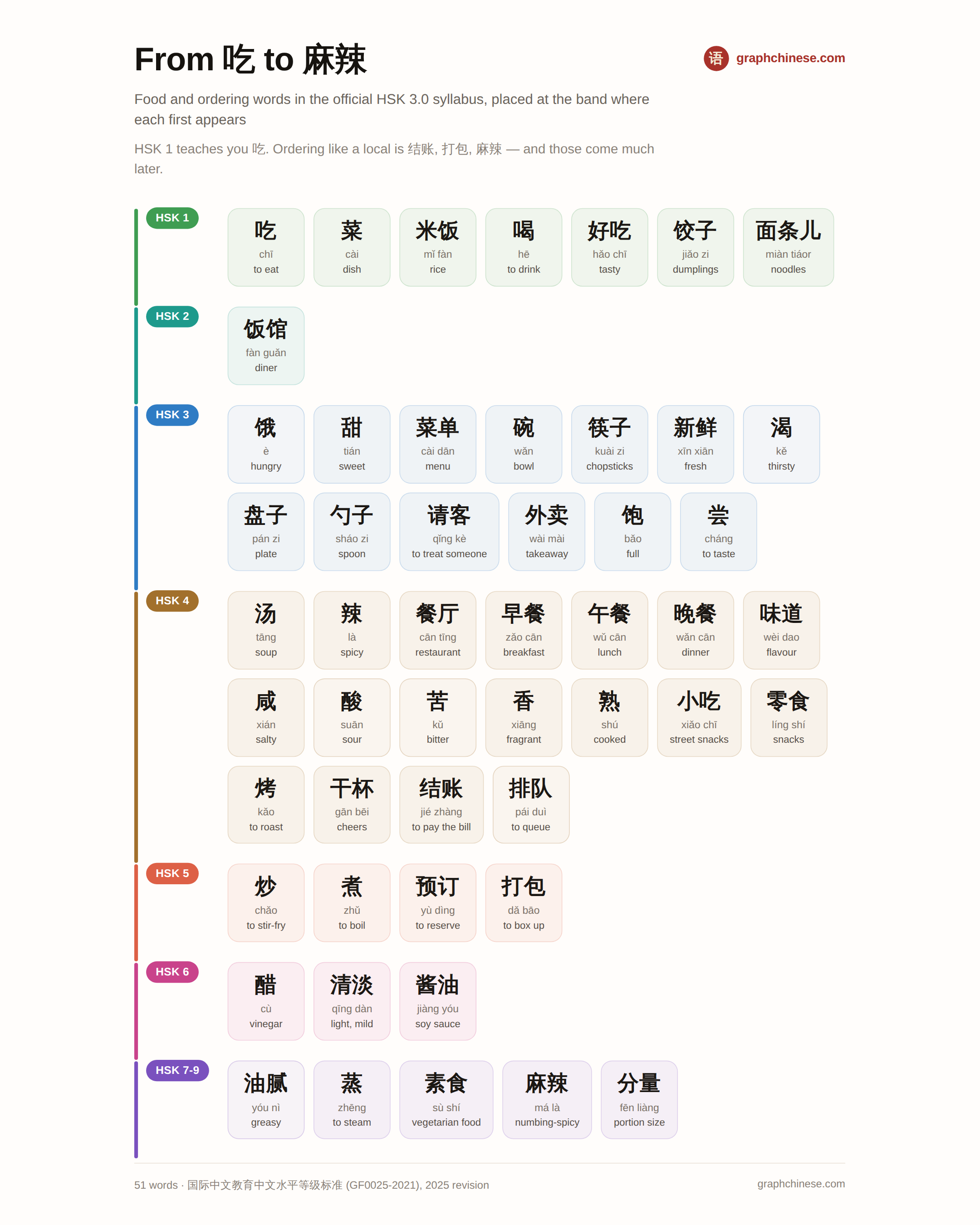
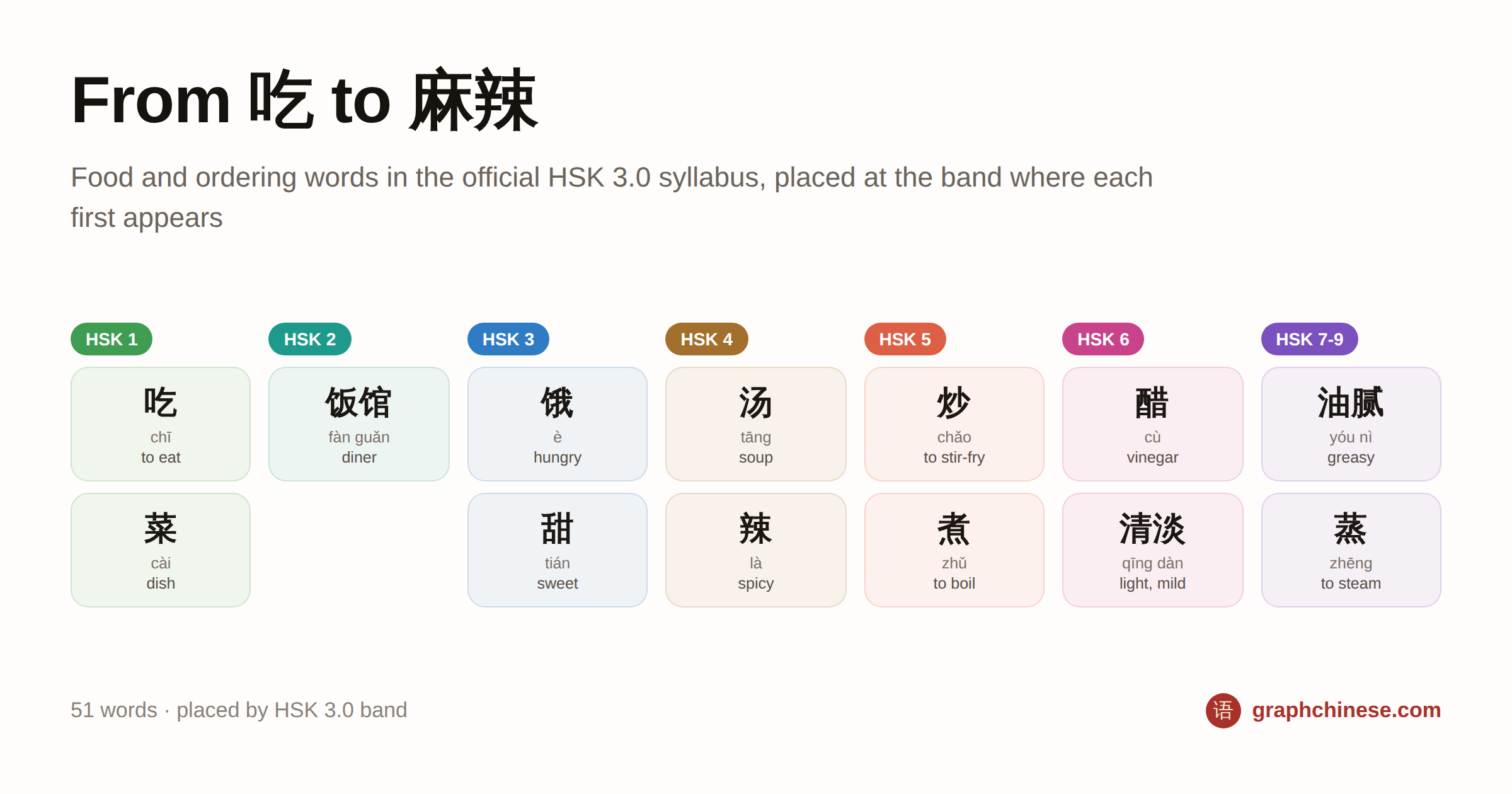
- 级 · From 吃 to 麻辣 PNG 1080 wide 1080×1350 1200×630
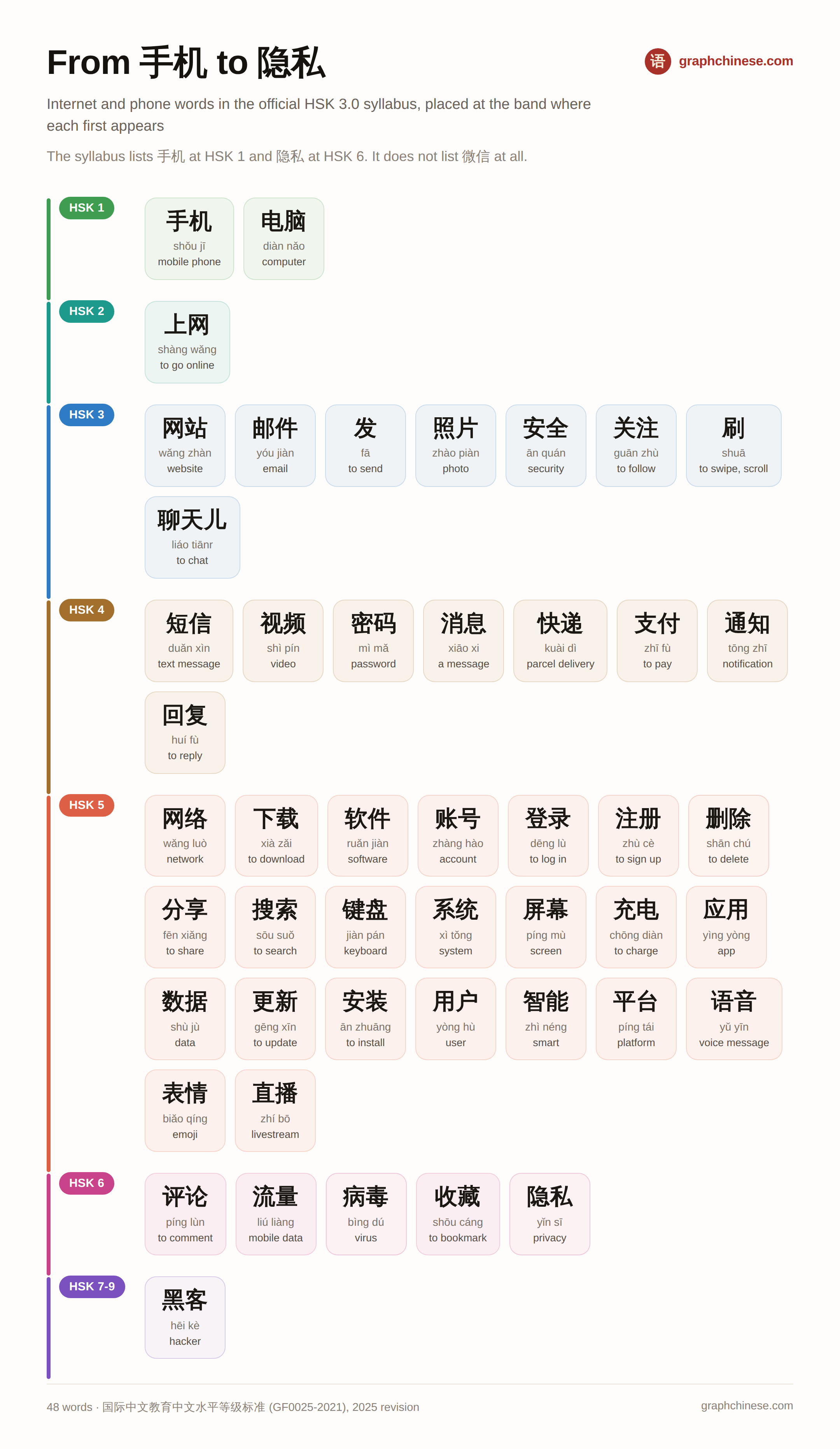
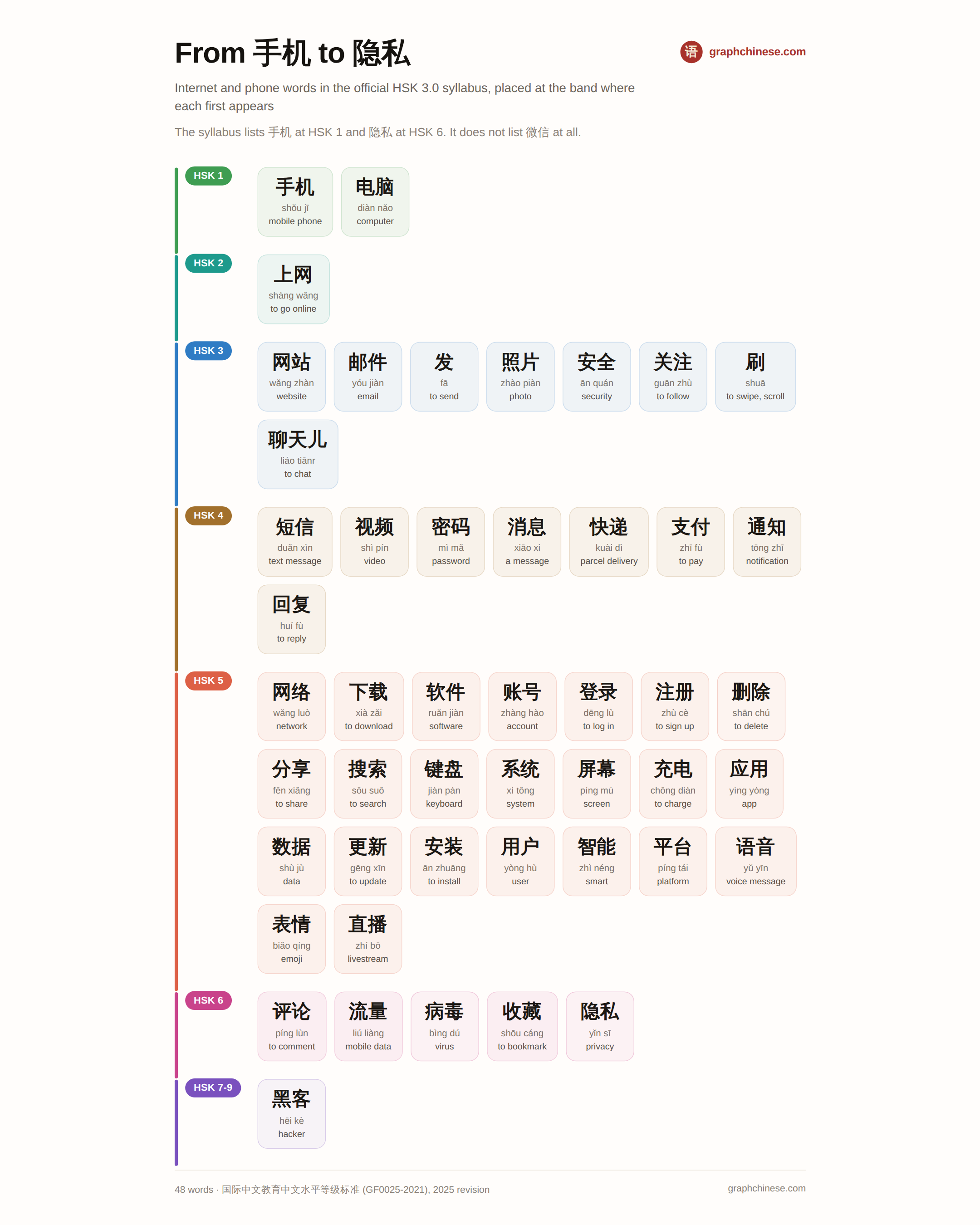
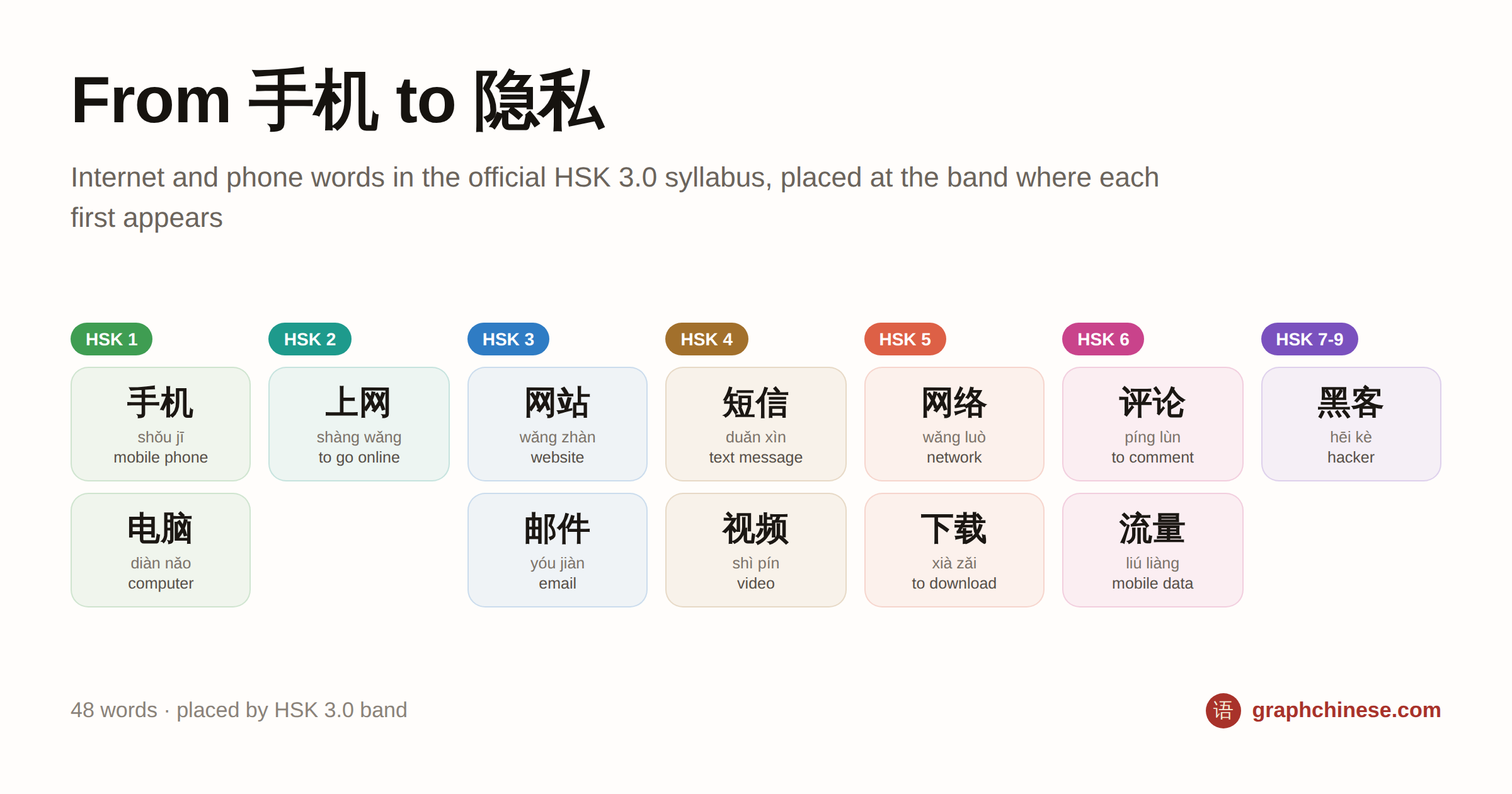
- 级 · From 手机 to 隐私 PNG 1080 wide 1080×1350 1200×630
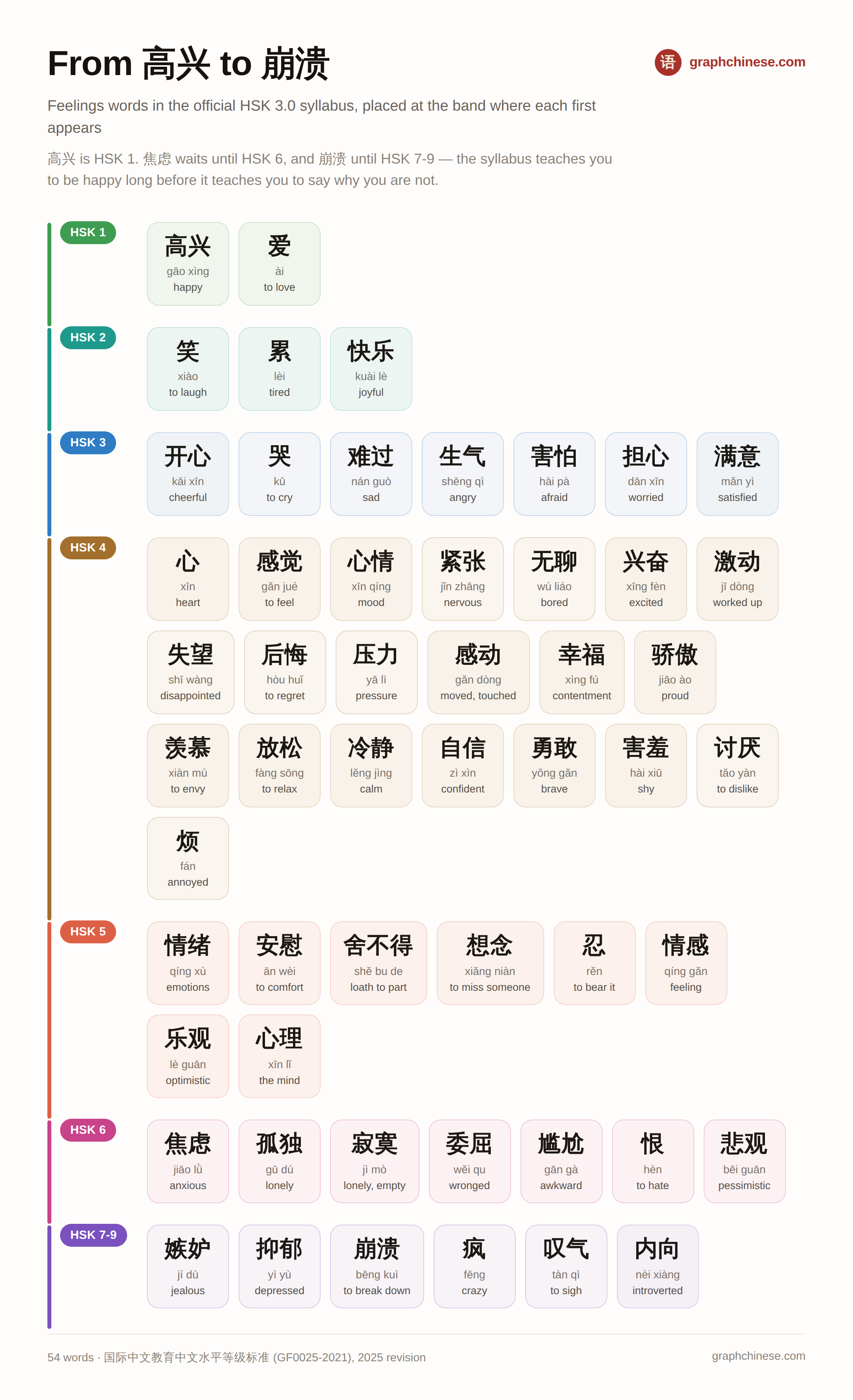
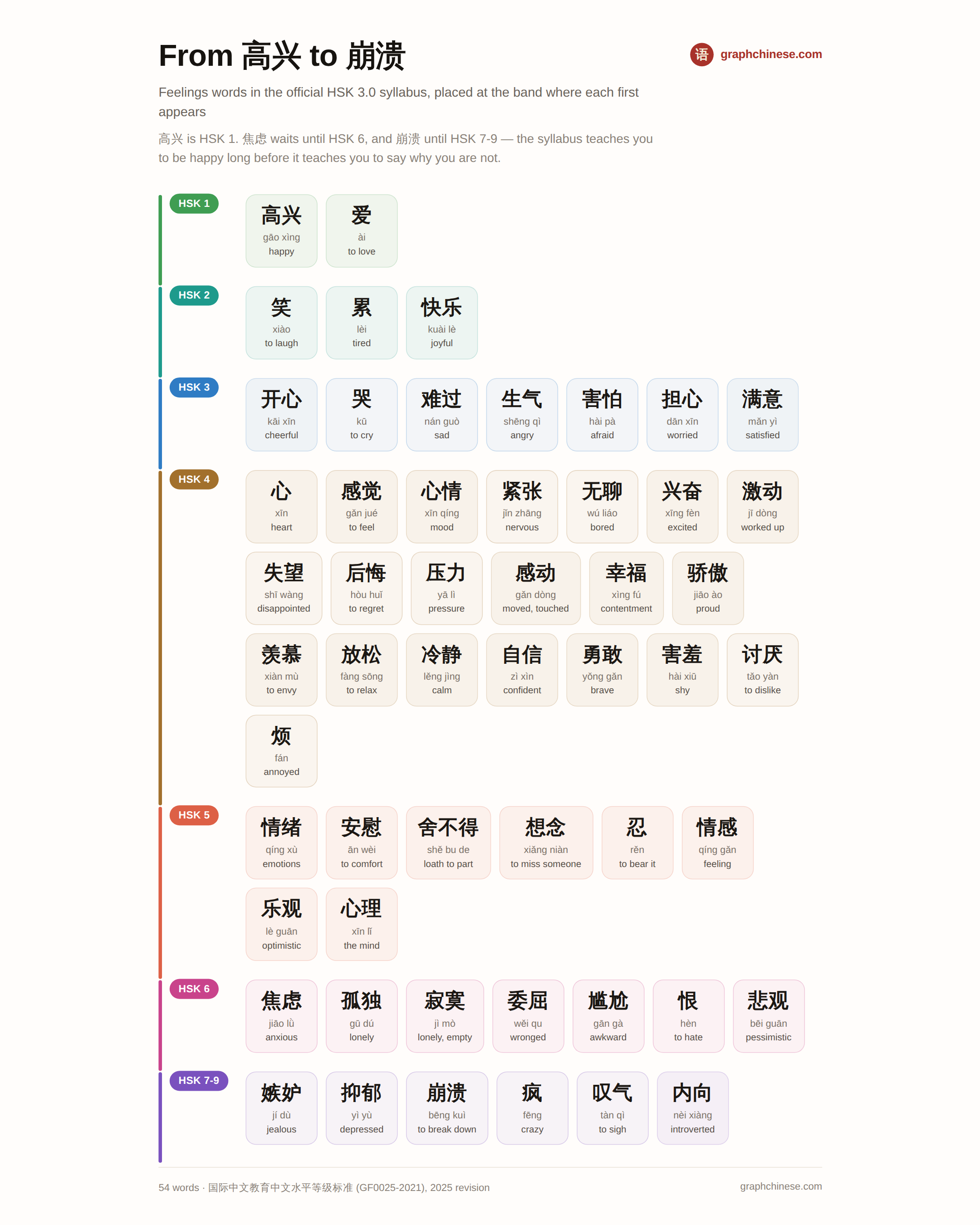
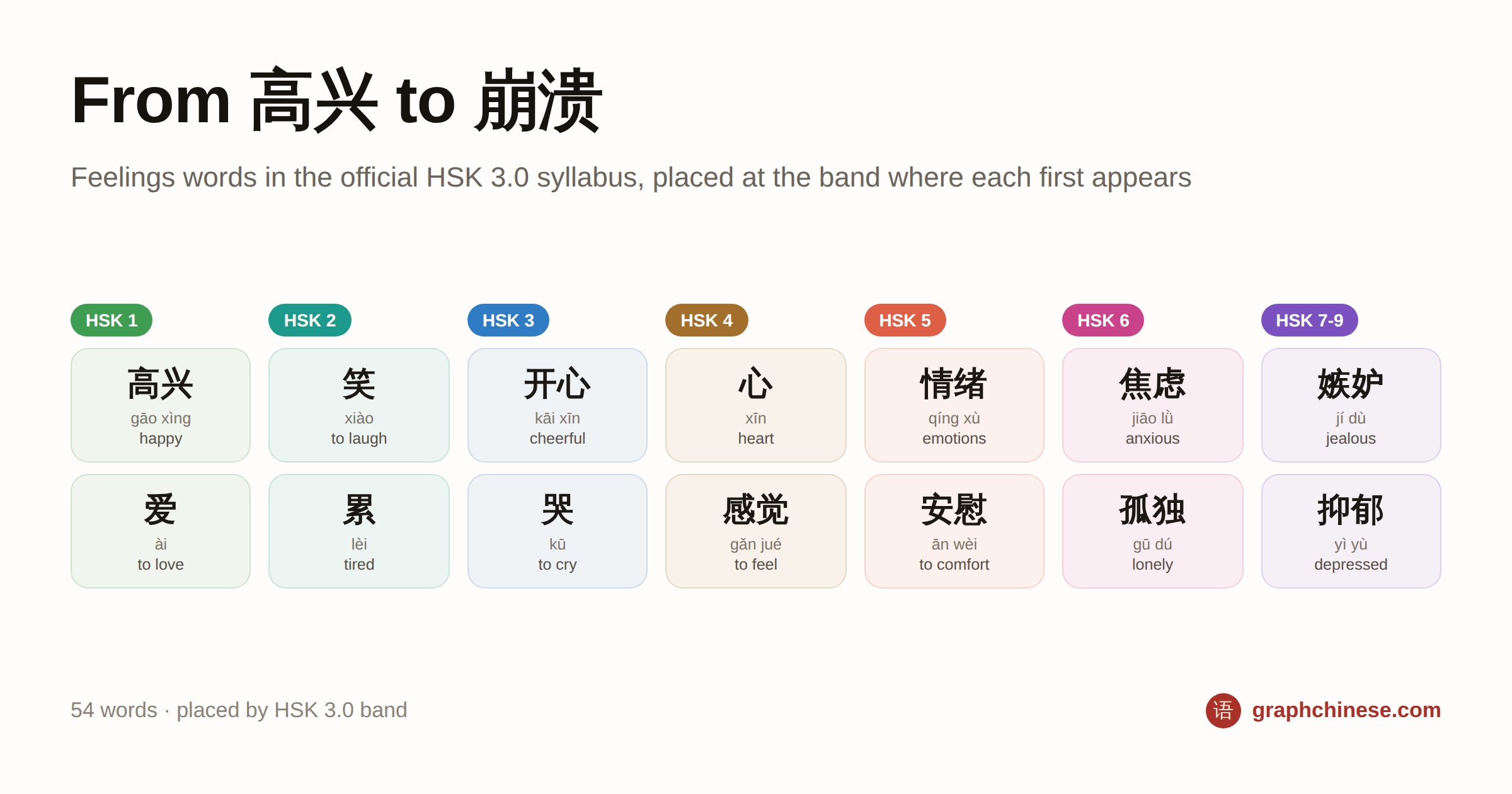
- 级 · From 高兴 to 崩溃 PNG 1080 wide 1080×1350 1200×630
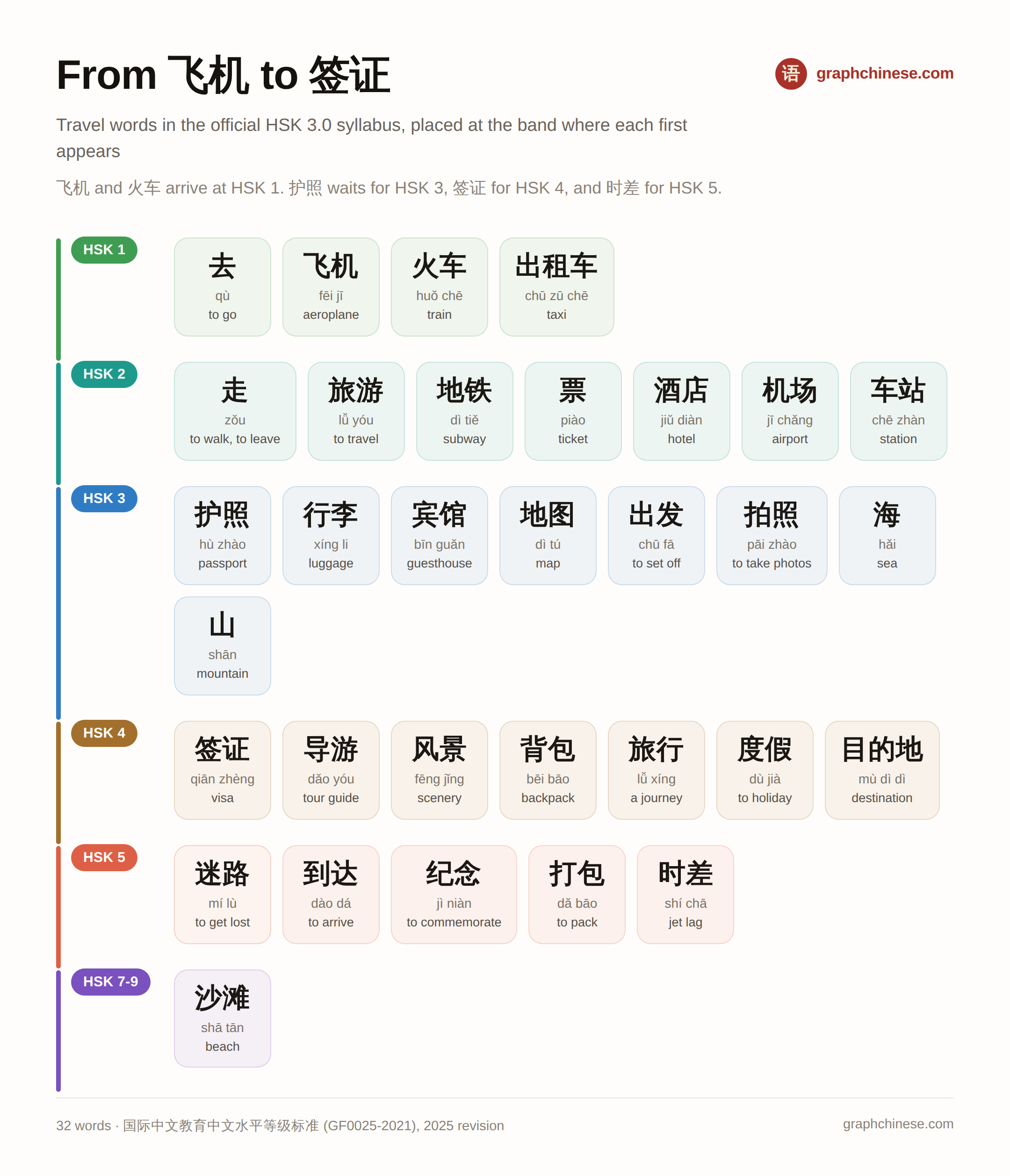
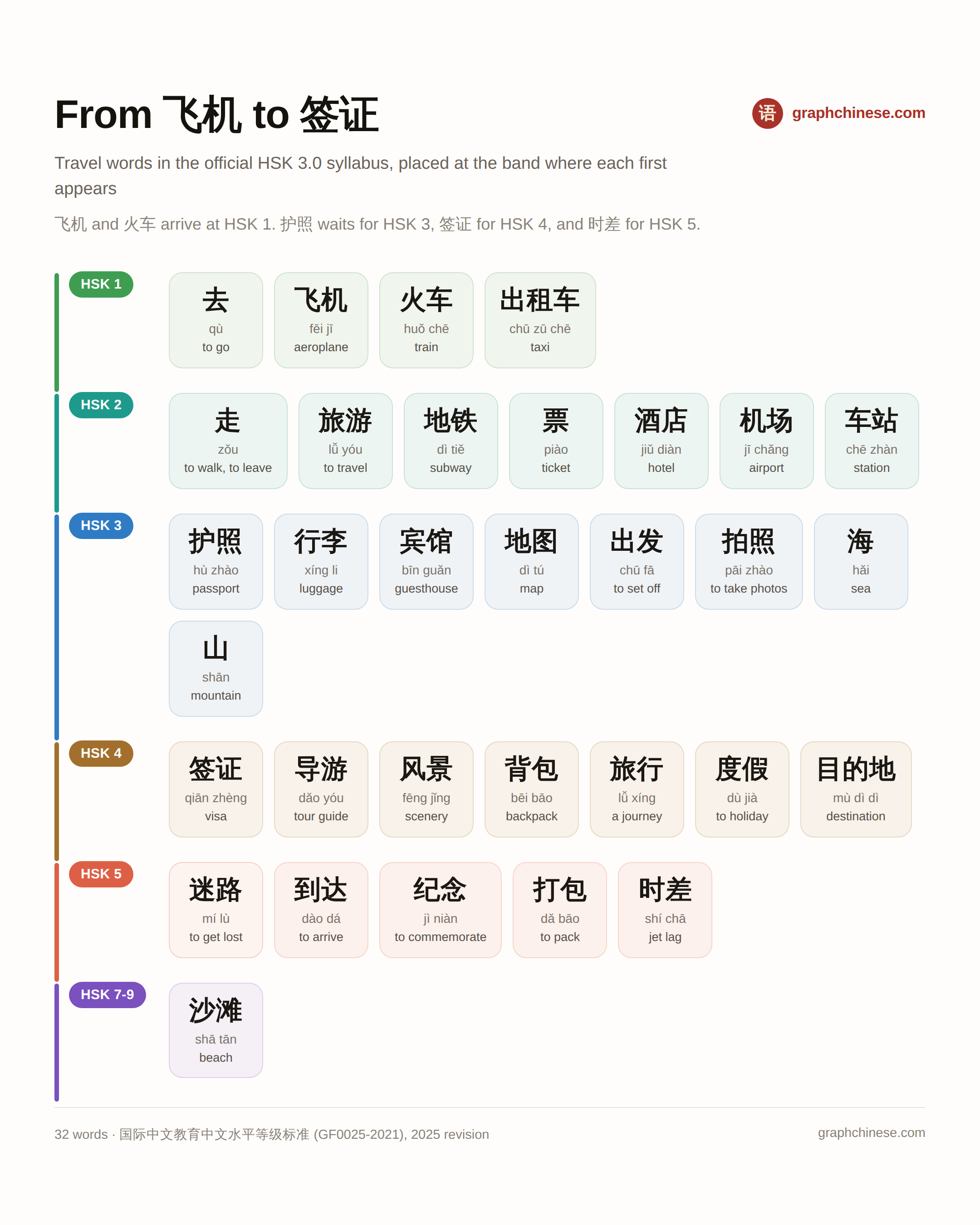
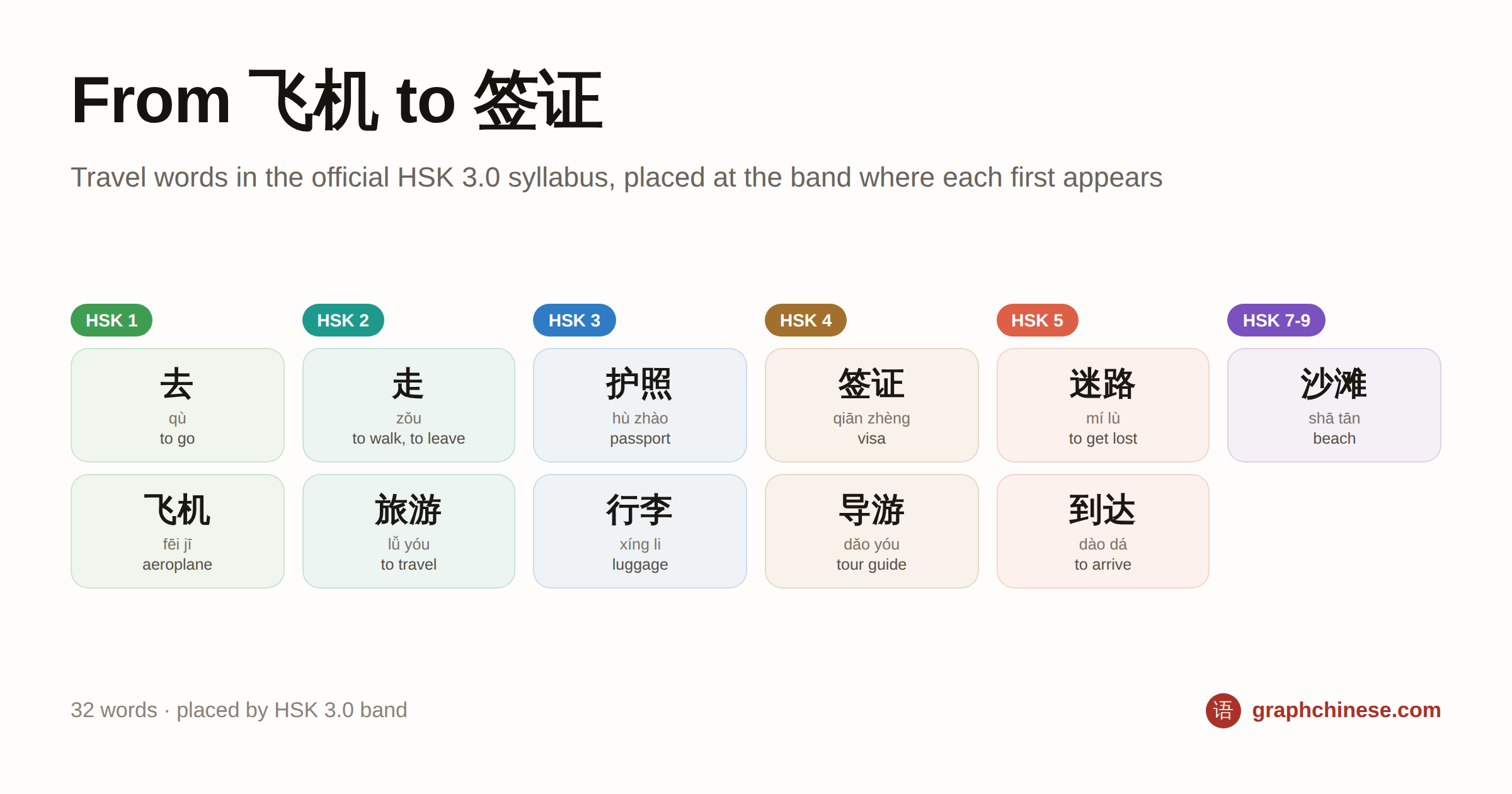
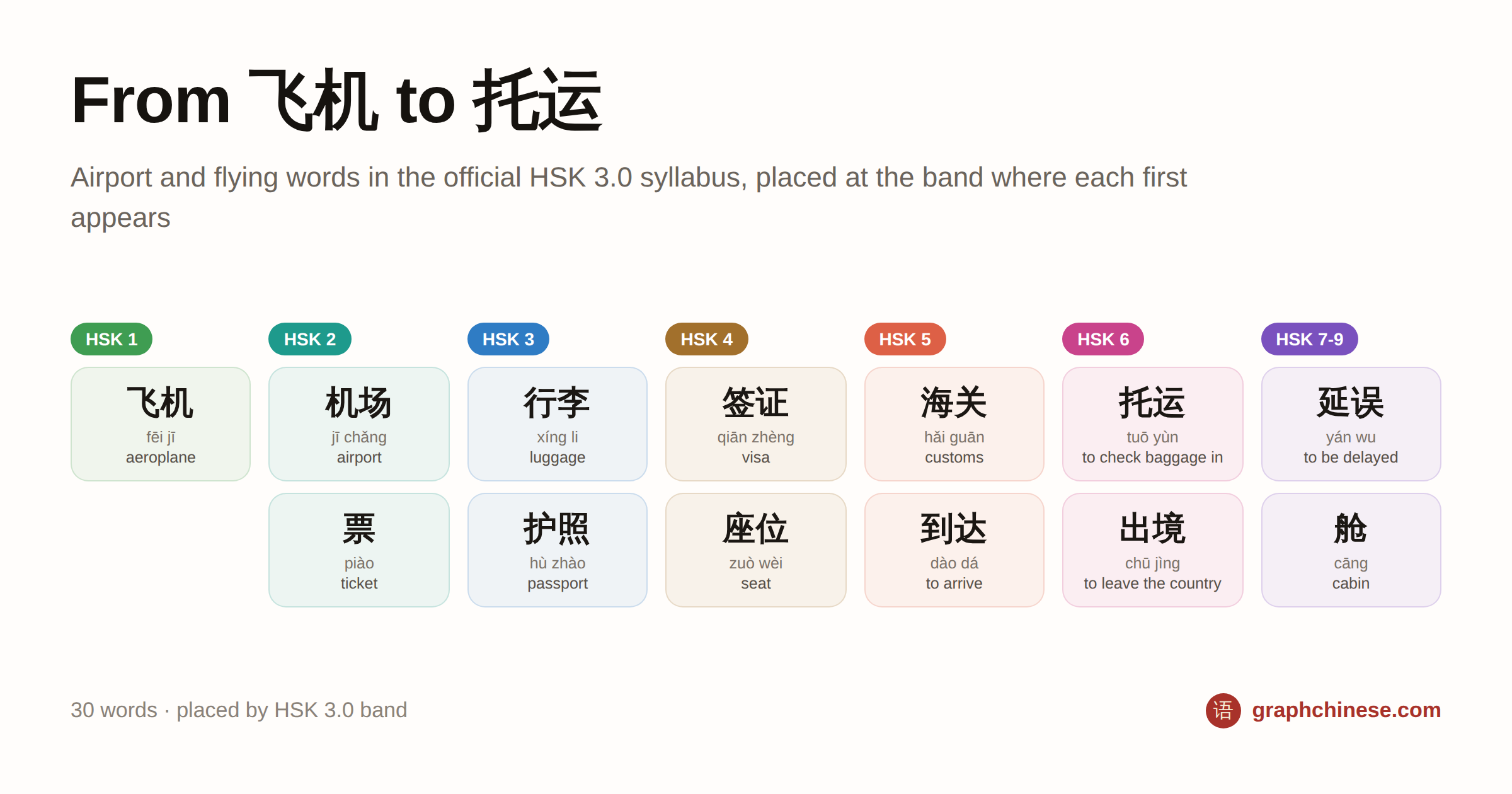
- 级 · From 飞机 to 签证 PNG 1080 wide 1080×1350 1200×630
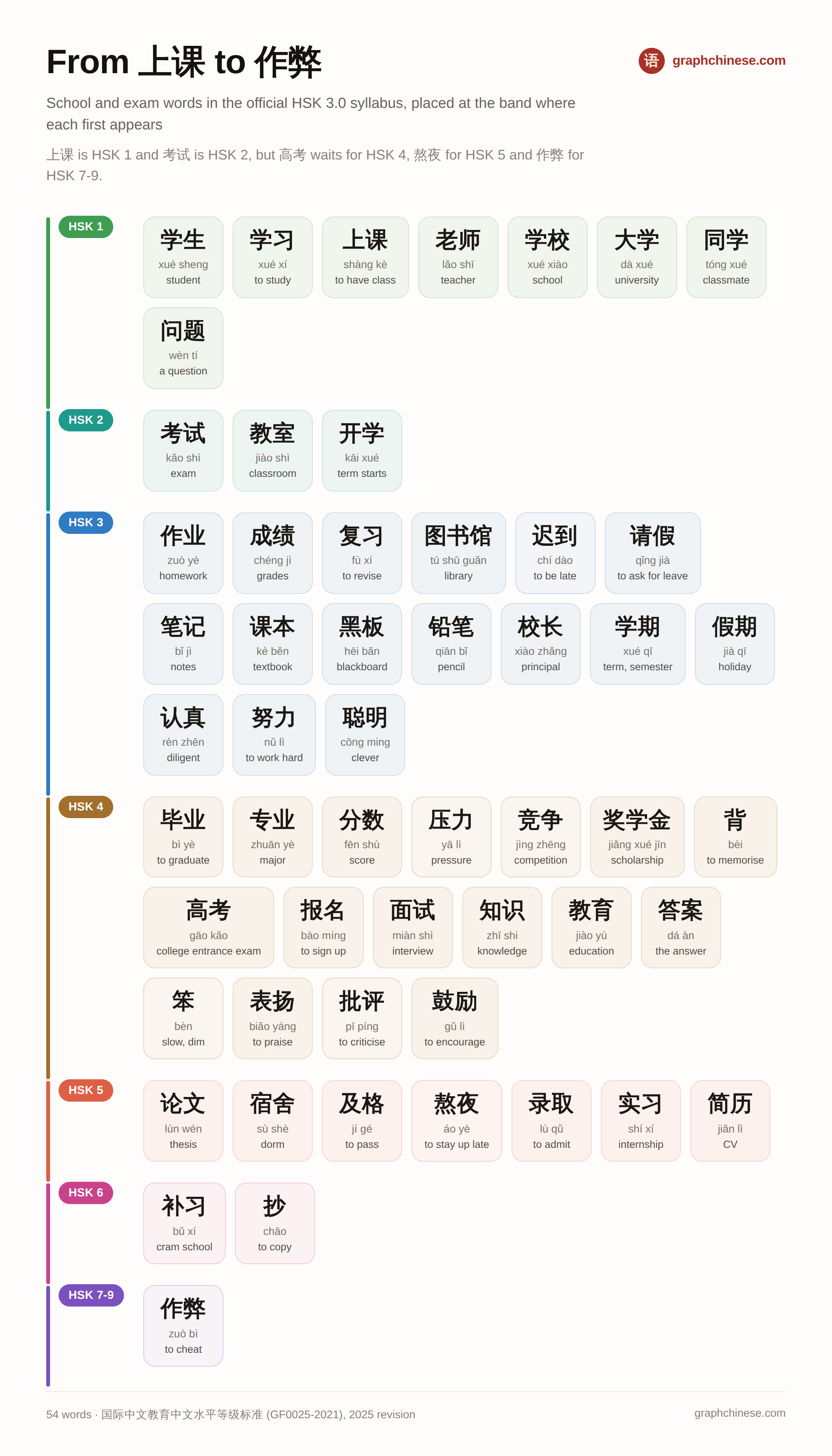
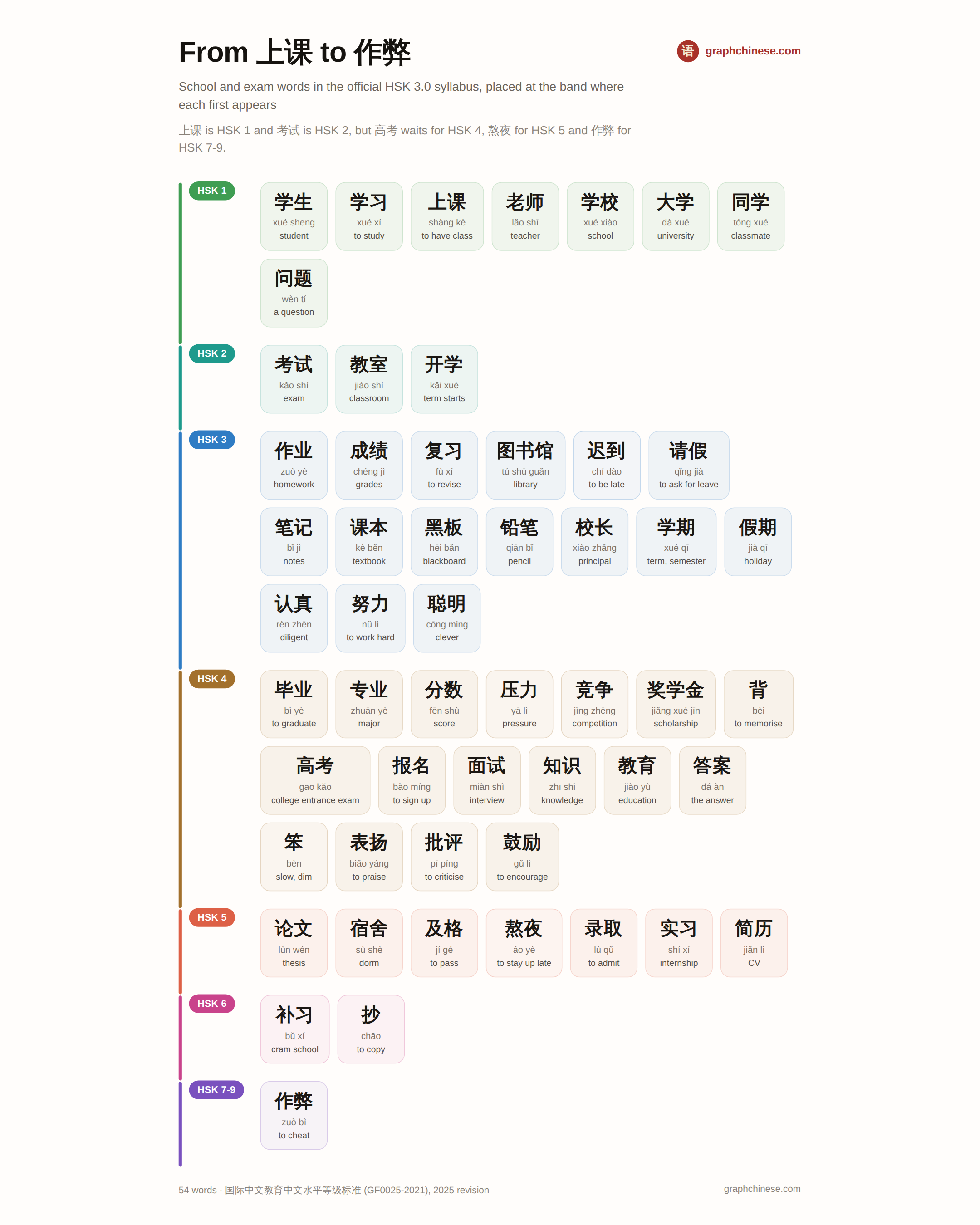
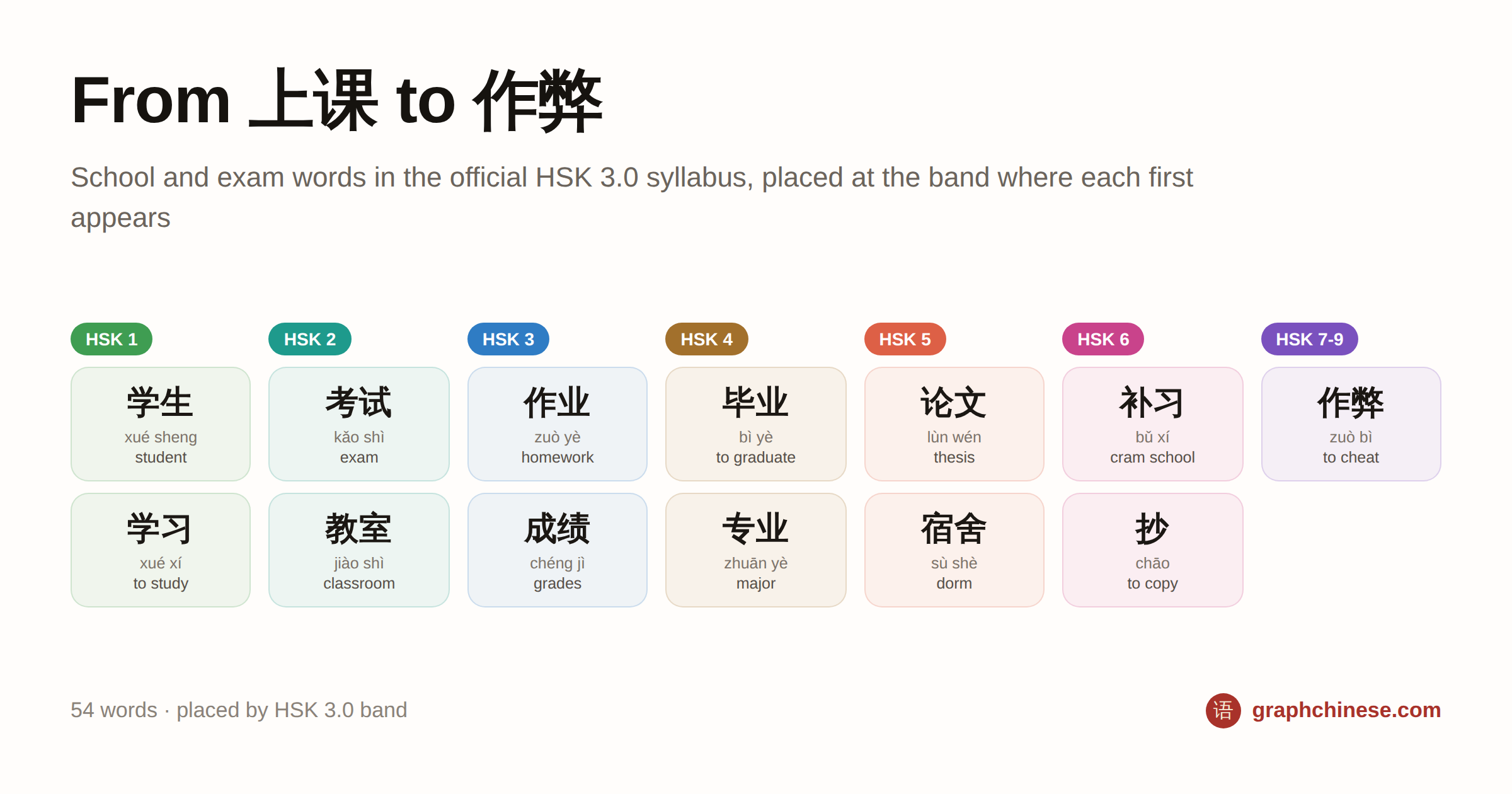
- 级 · From 上课 to 作弊 PNG 1080 wide 1080×1350 1200×630
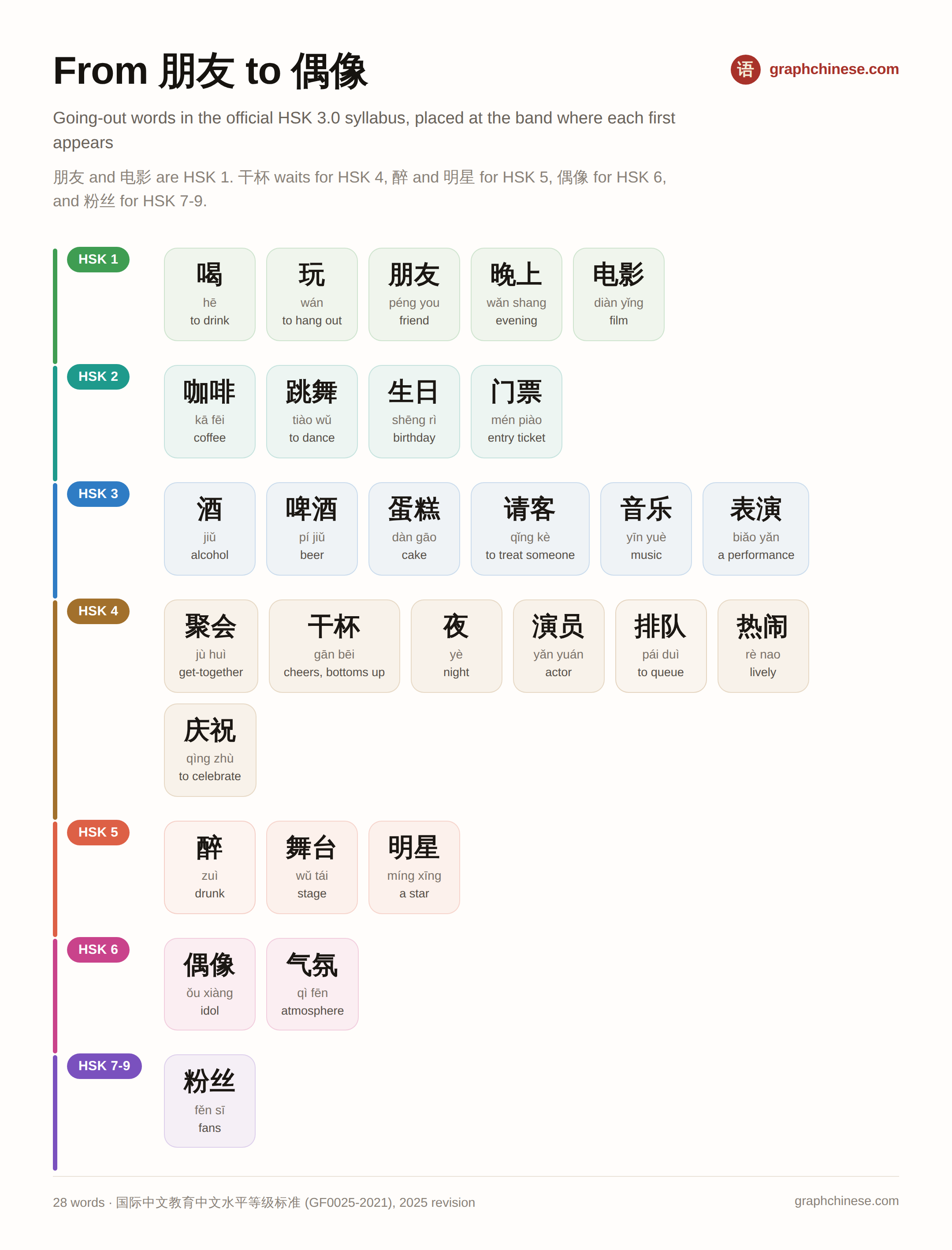
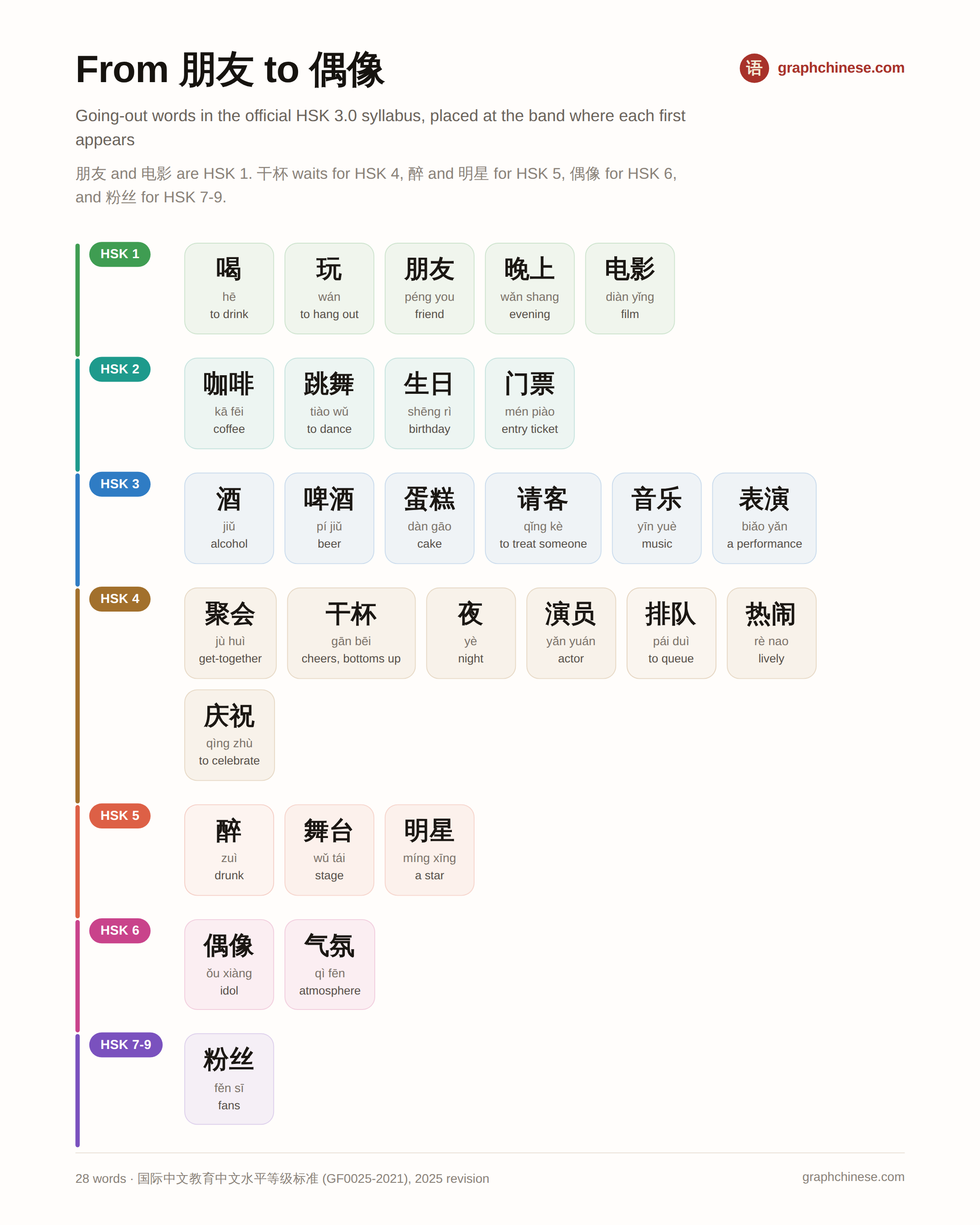
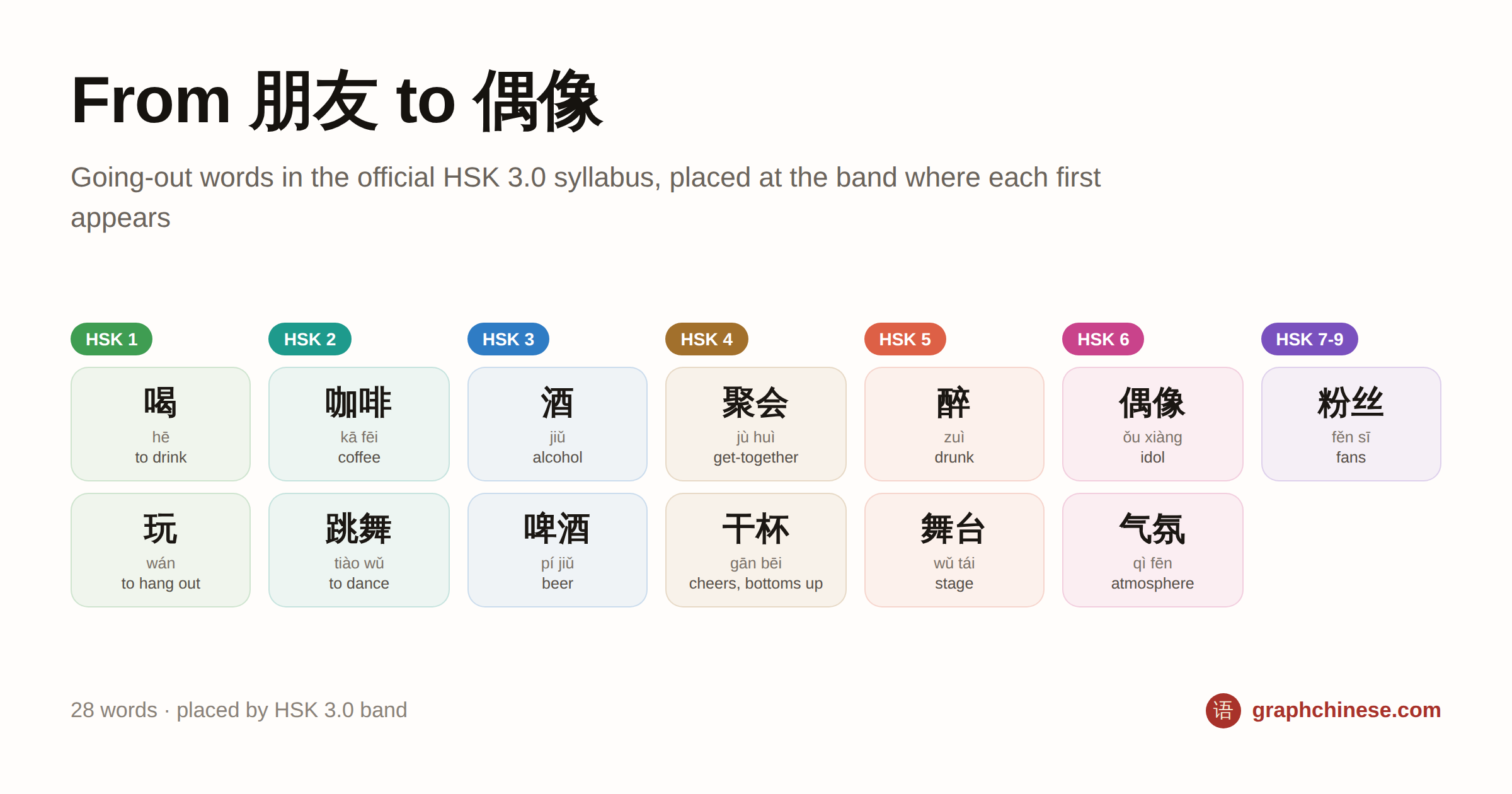
- 级 · From 朋友 to 偶像 PNG 1080 wide 1080×1350 1200×630
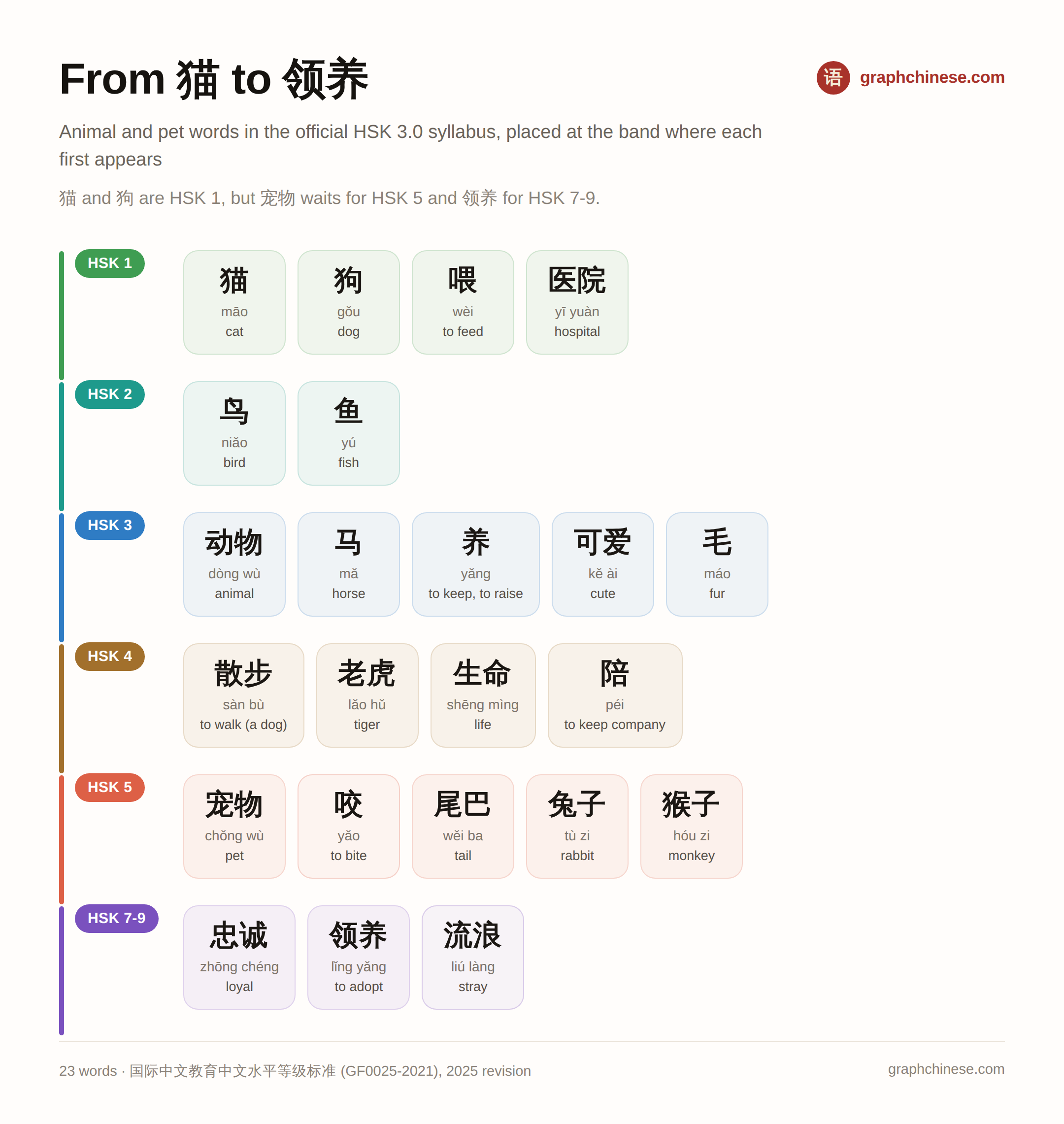
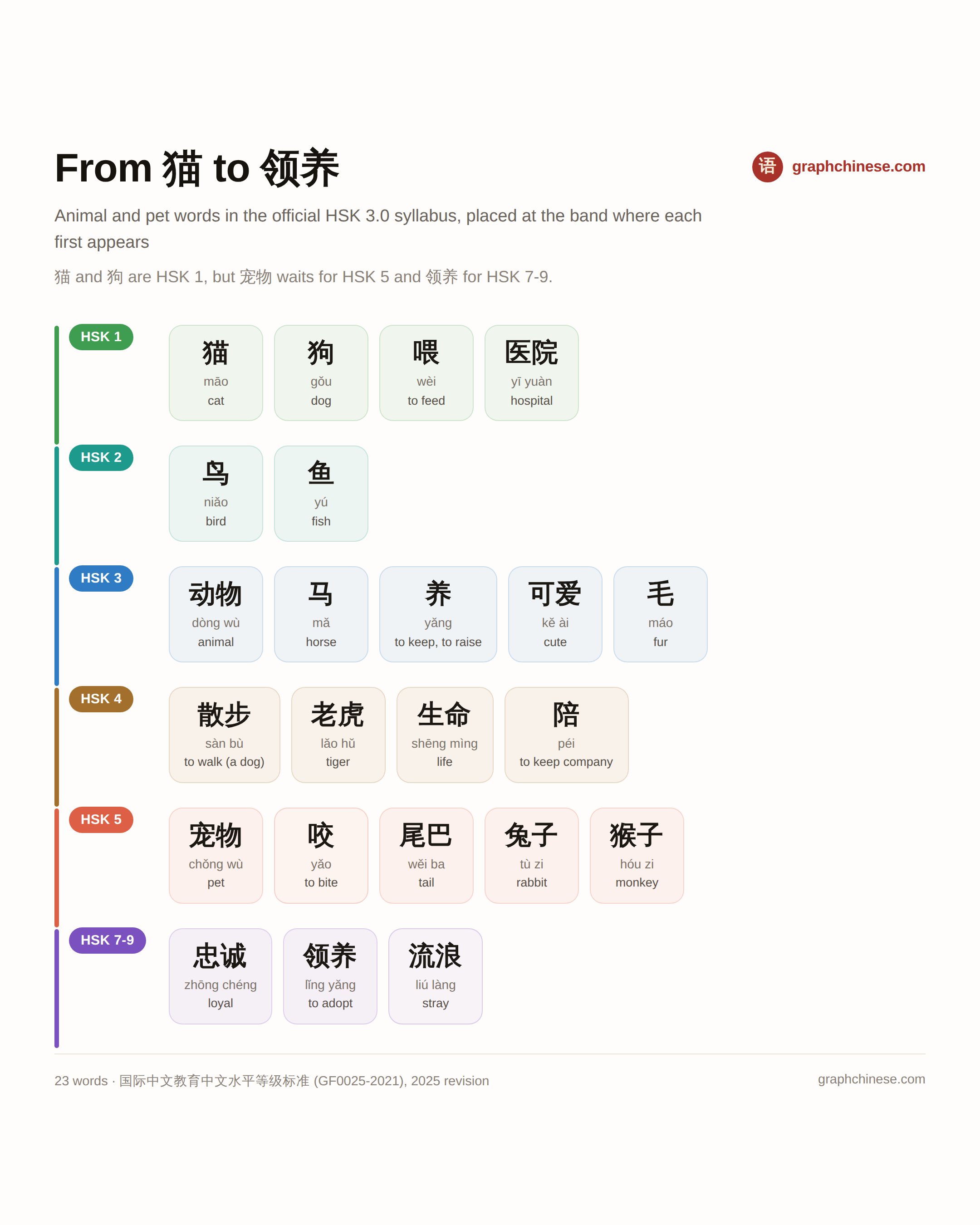
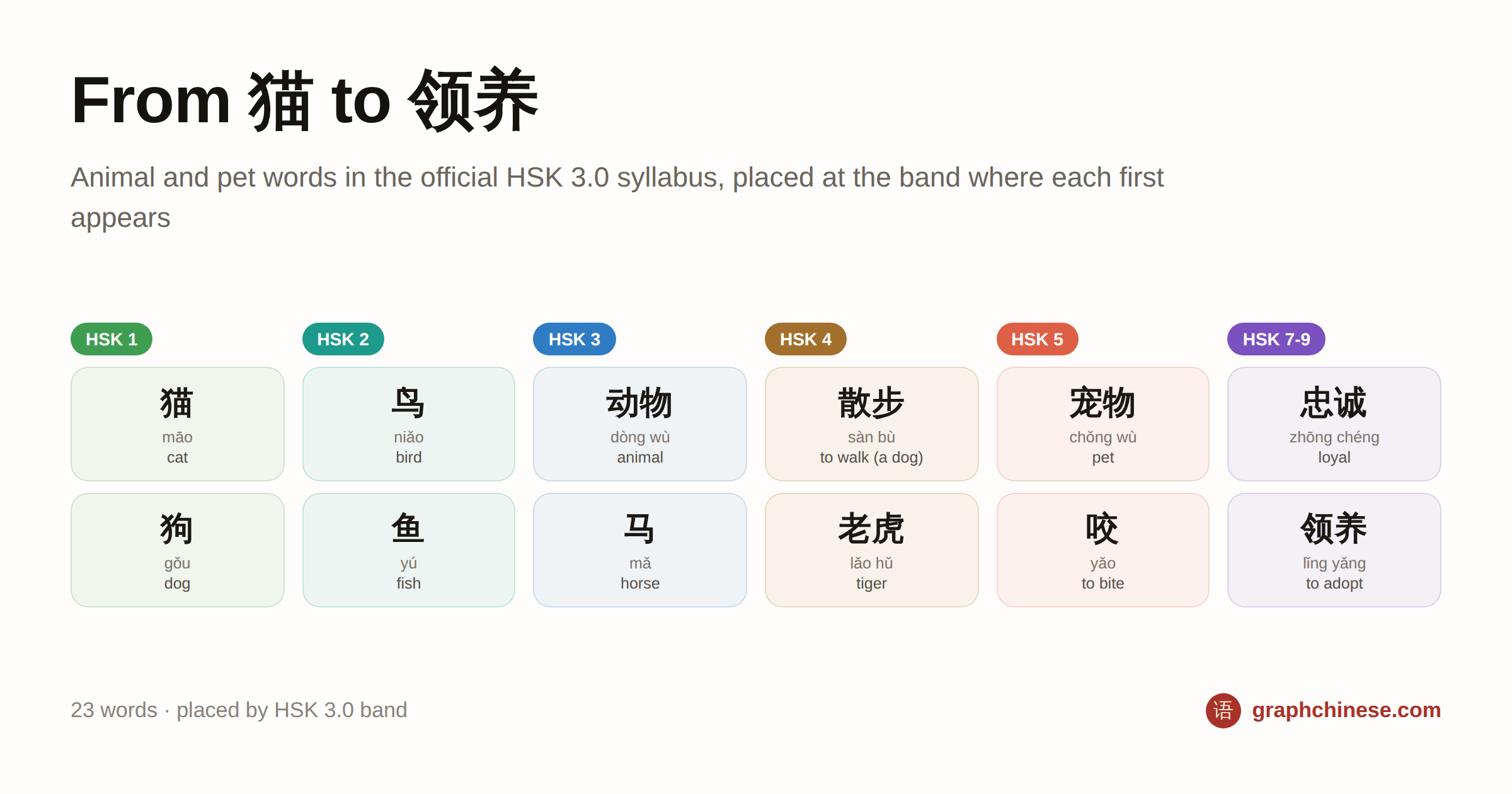
- 级 · From 猫 to 领养 PNG 1080 wide 1080×1350 1200×630
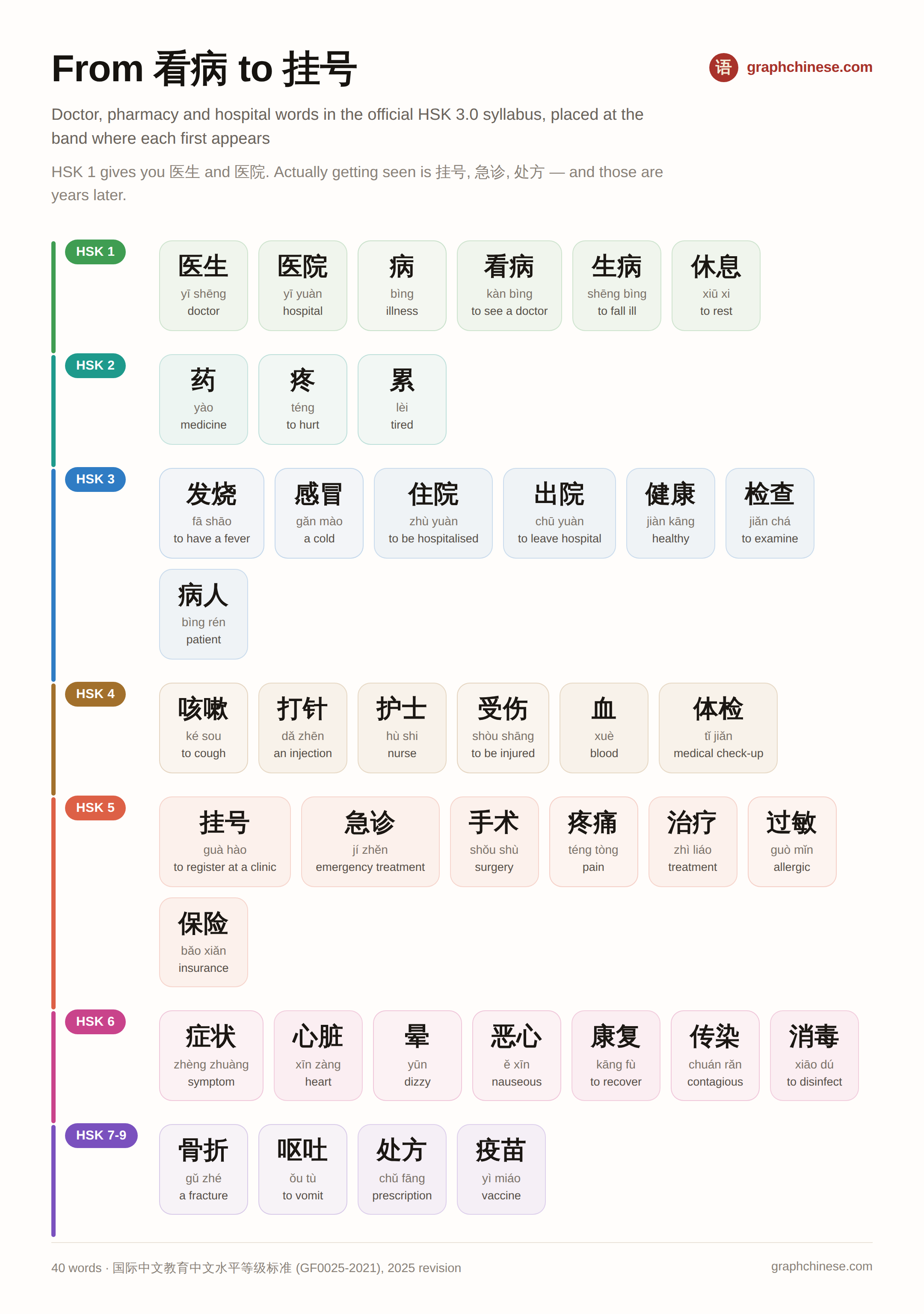
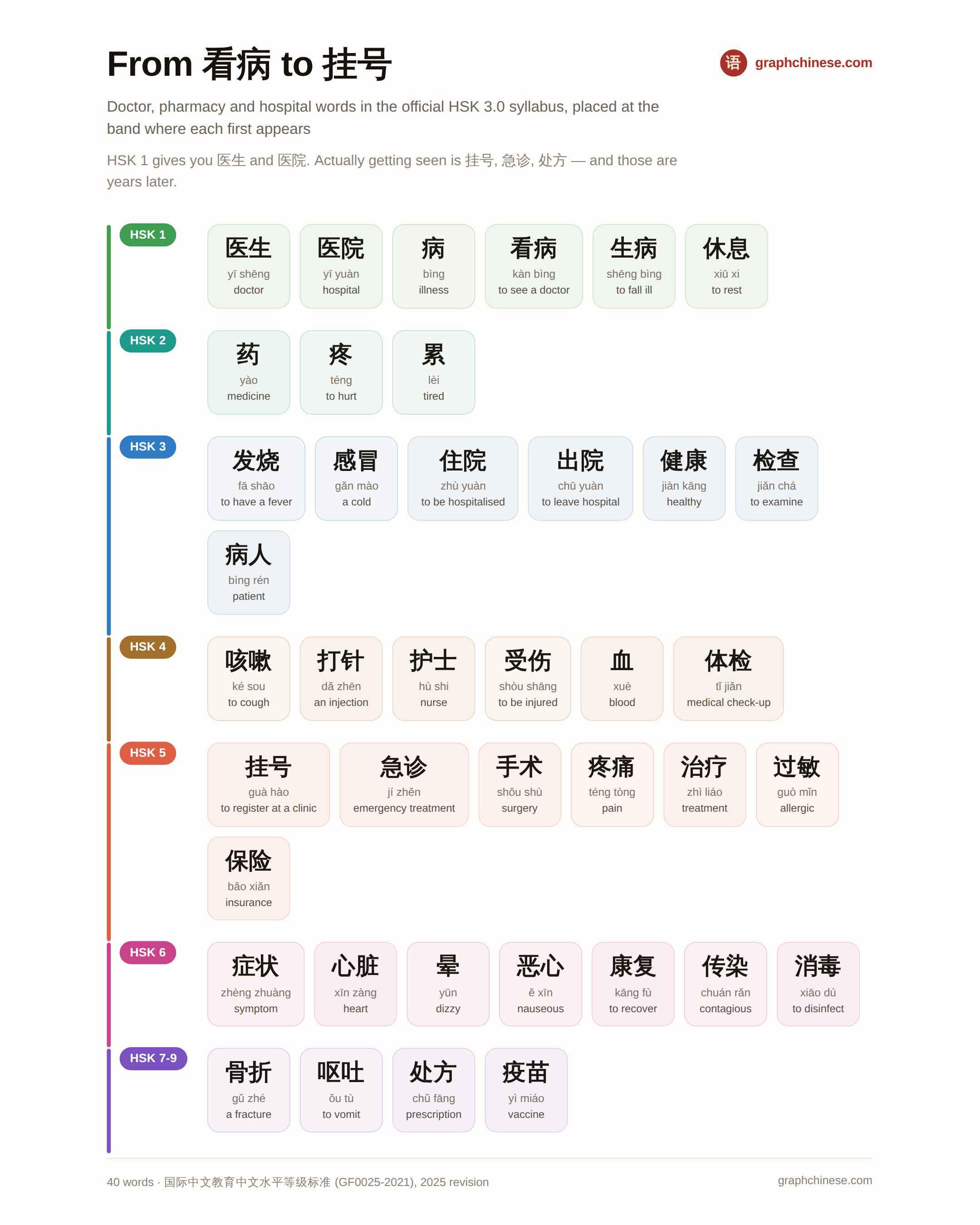
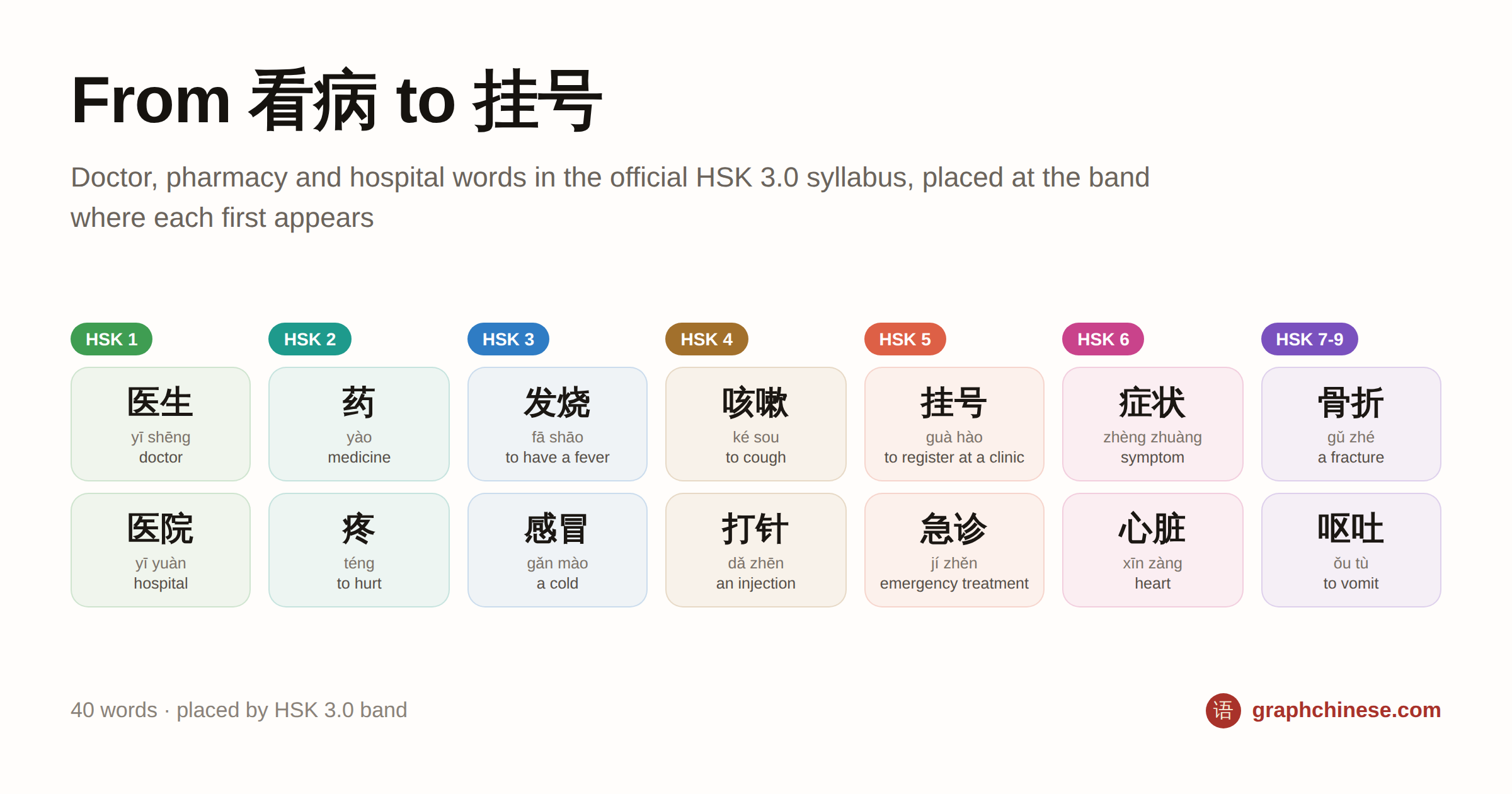
- 级 · From 看病 to 挂号 PNG 1080 wide 1080×1350 1200×630
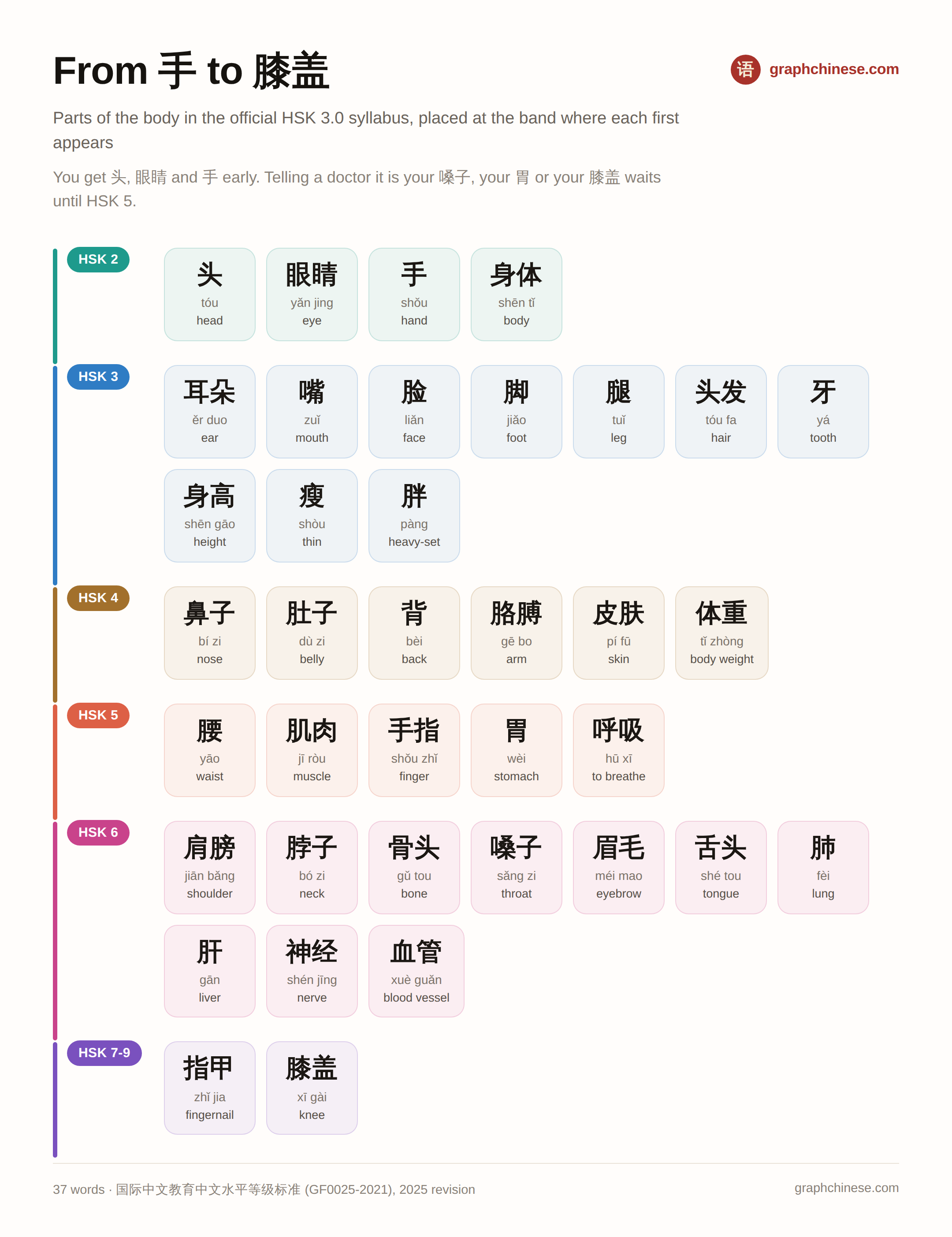
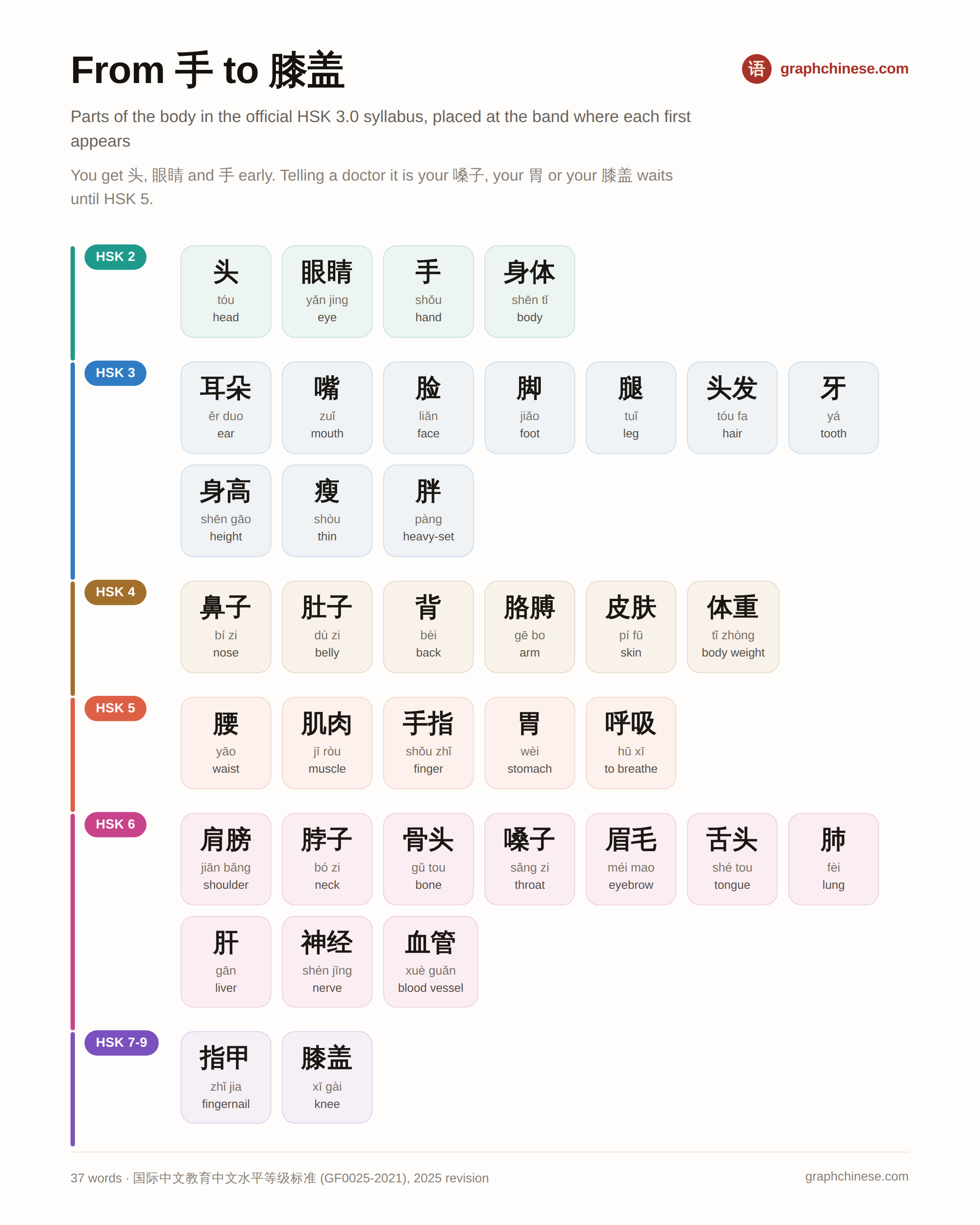
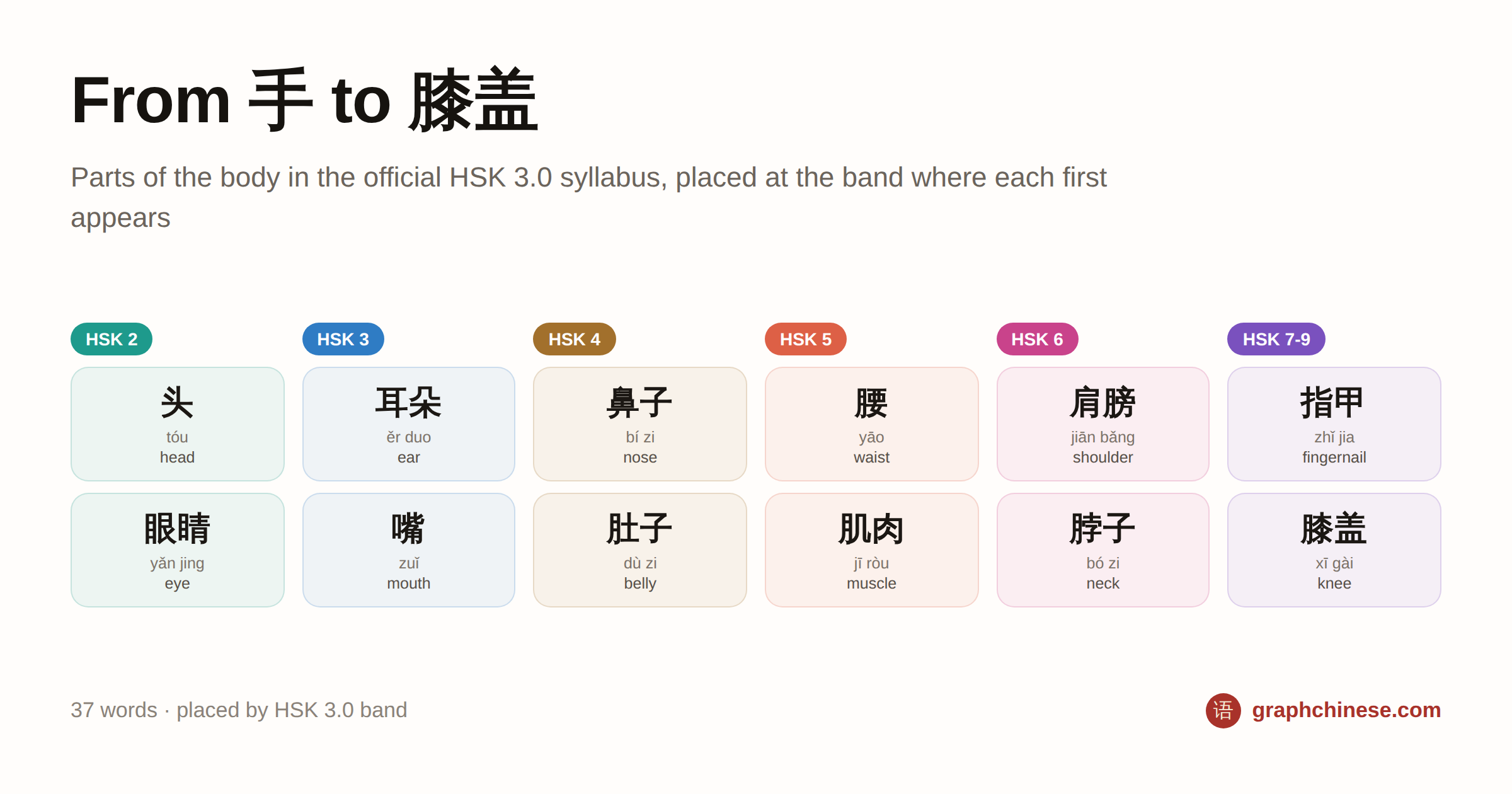
- 级 · From 手 to 膝盖 PNG 1080 wide 1080×1350 1200×630
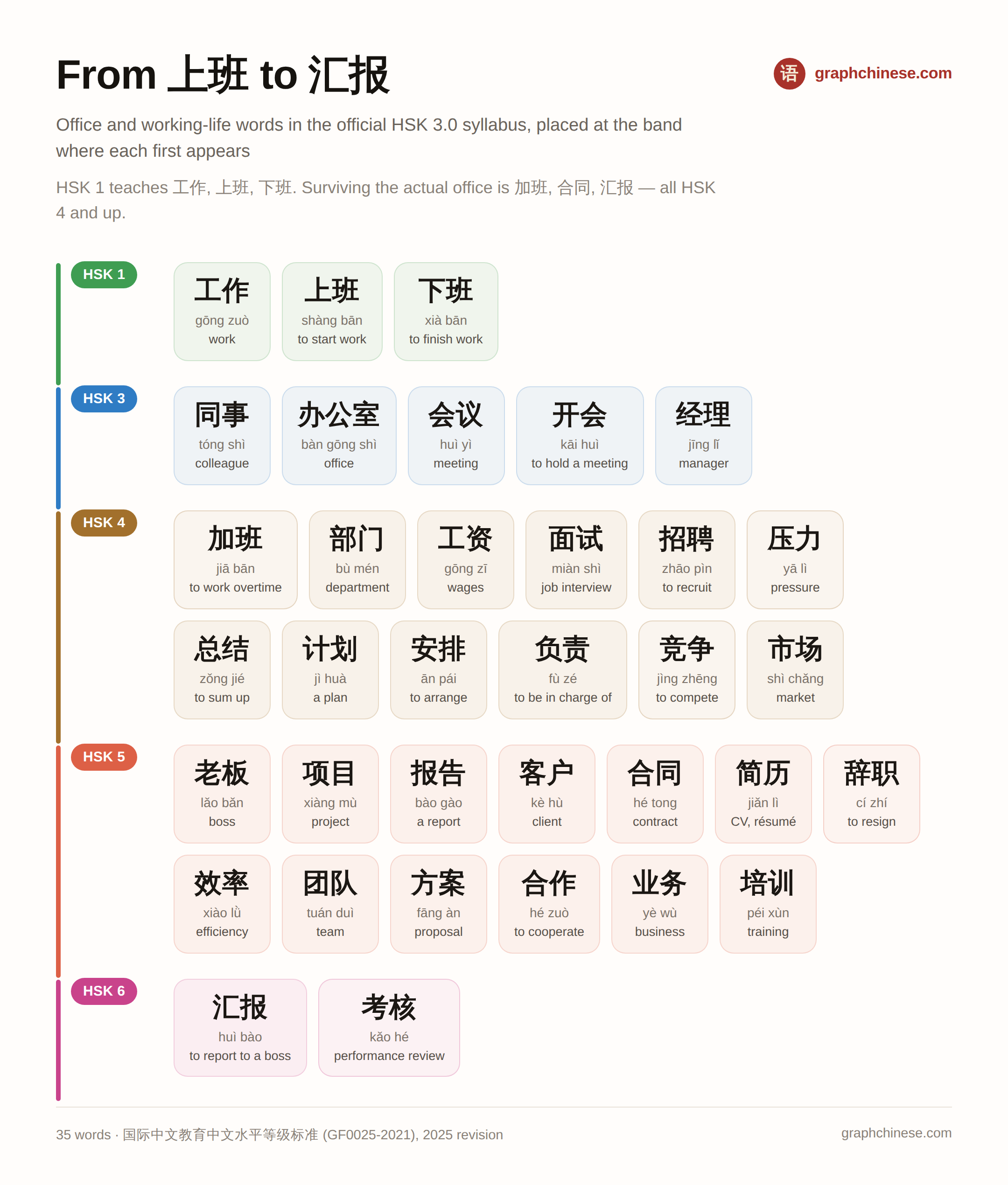
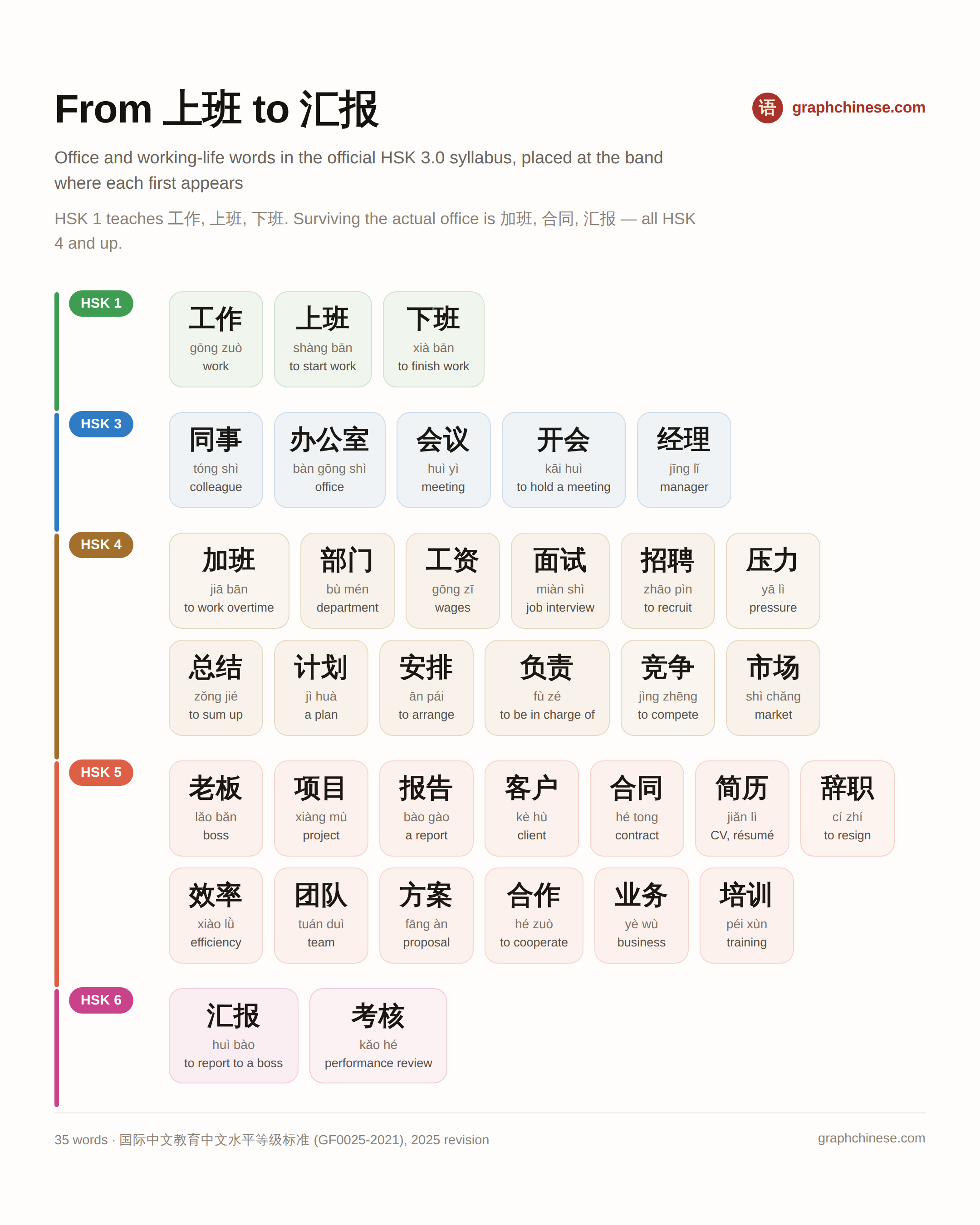
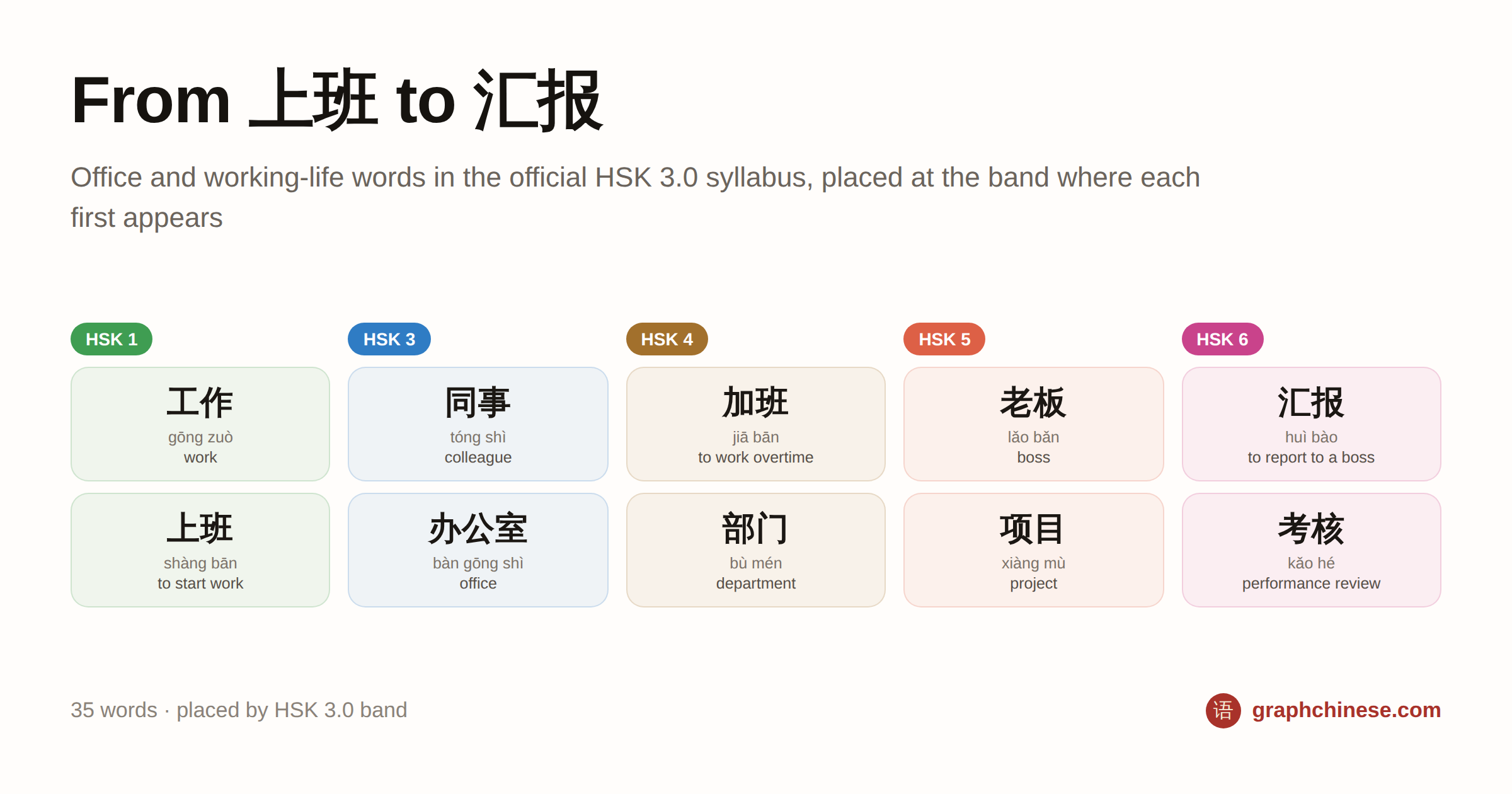
- 级 · From 上班 to 汇报 PNG 1080 wide 1080×1350 1200×630
- 级 · From 妈妈 to 孝顺 PNG 1080 wide 1080×1350 1200×630
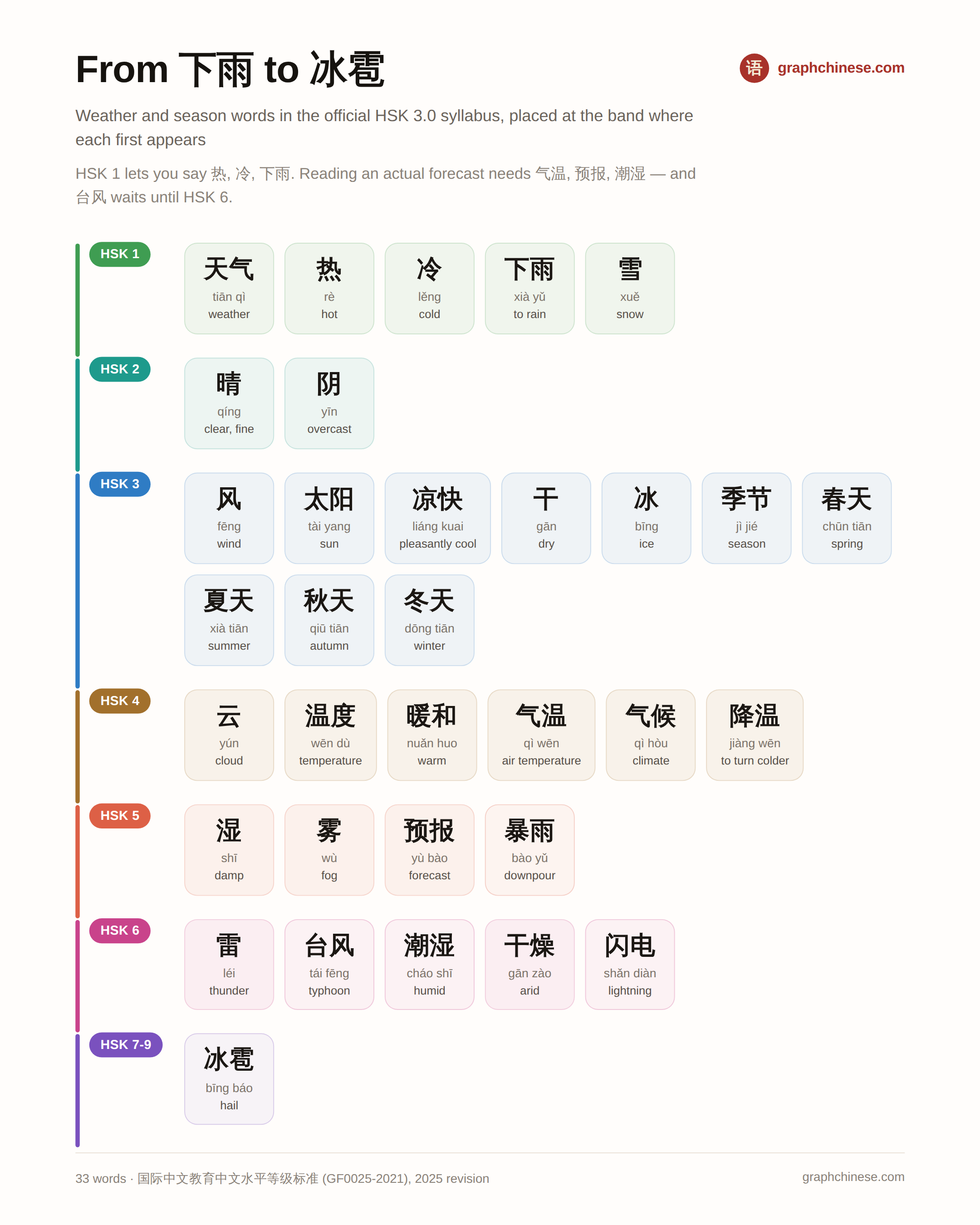
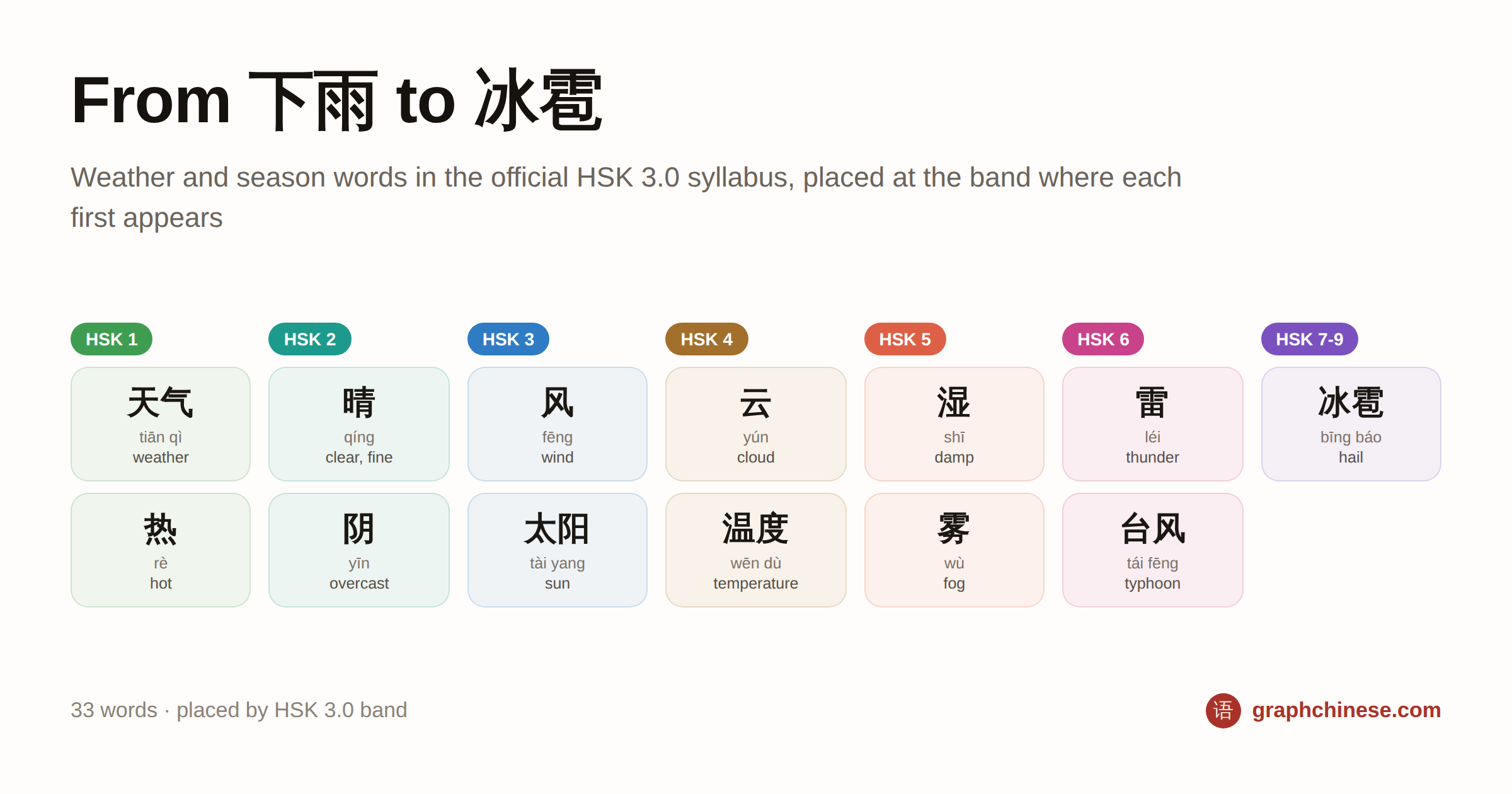
- 级 · From 下雨 to 冰雹 PNG 1080 wide 1080×1350 1200×630
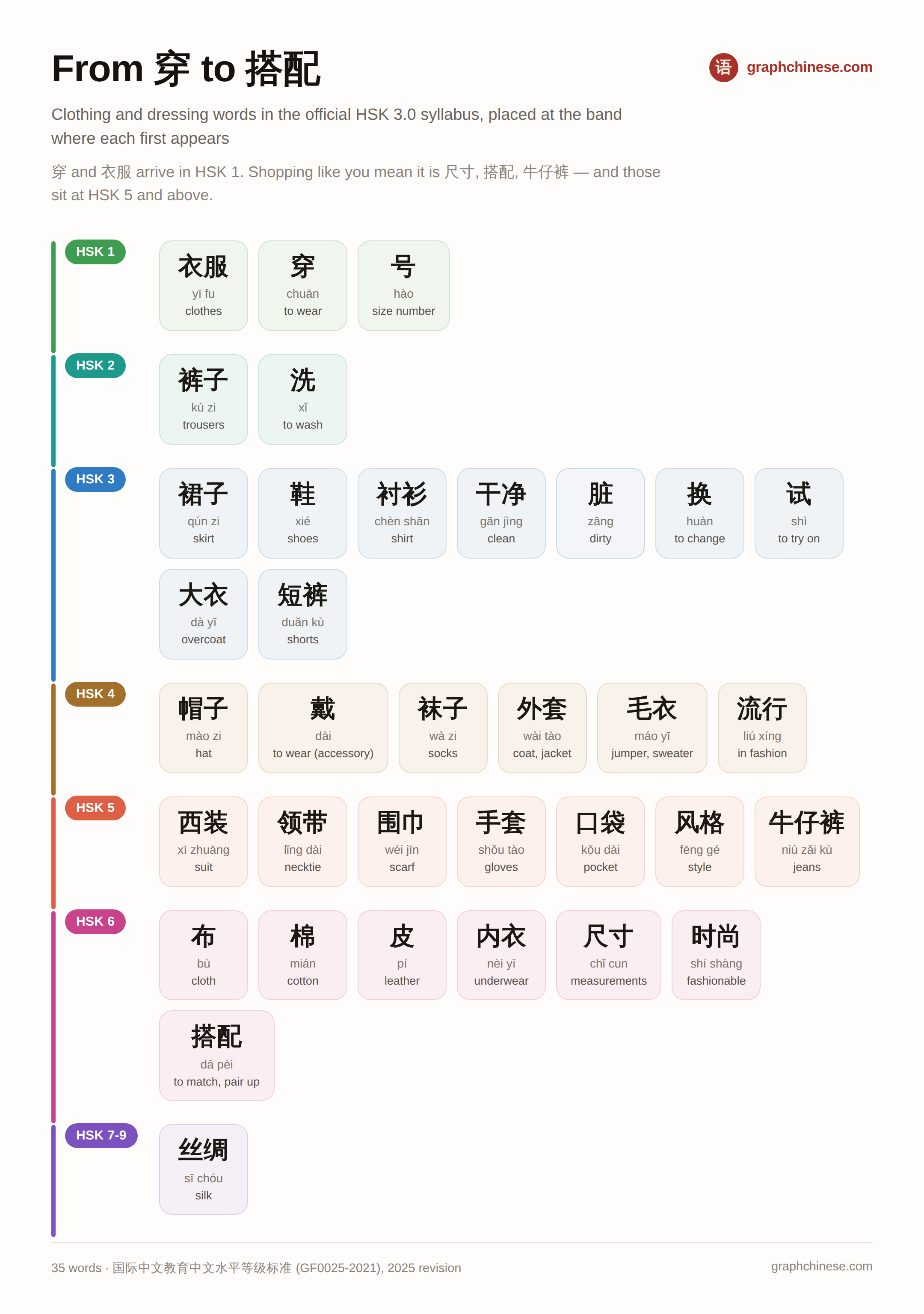
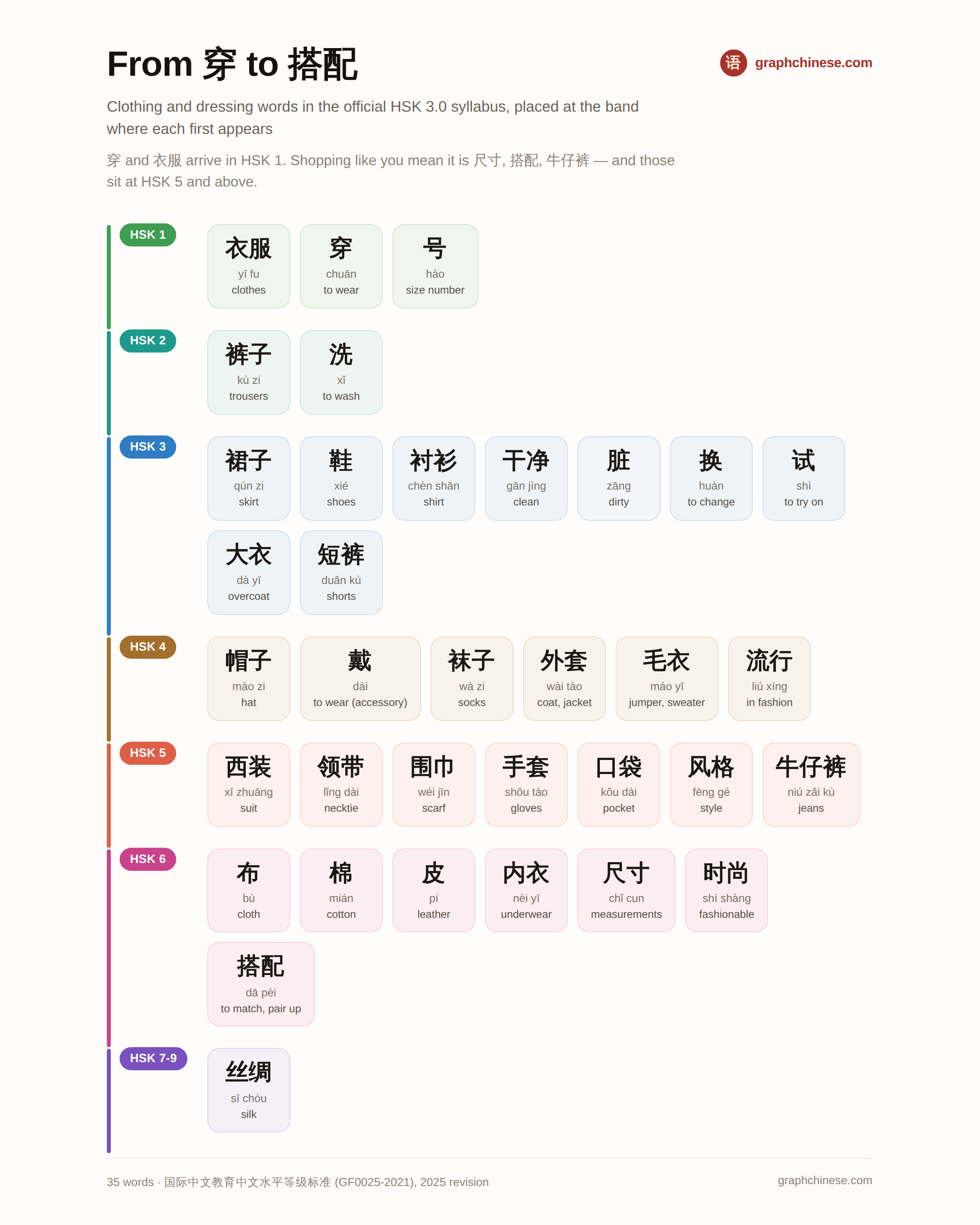
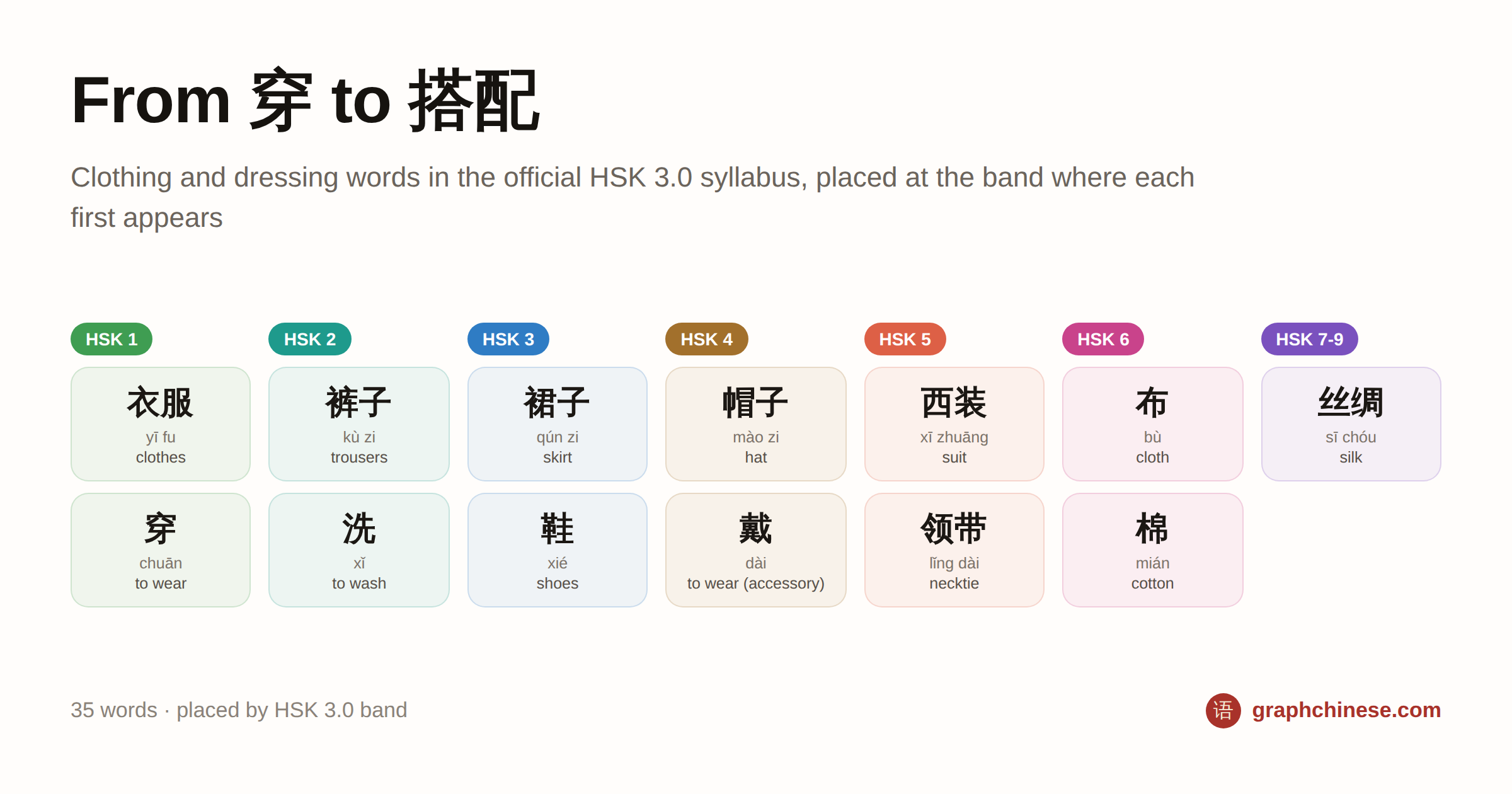
- 级 · From 穿 to 搭配 PNG 1080 wide 1080×1350 1200×630
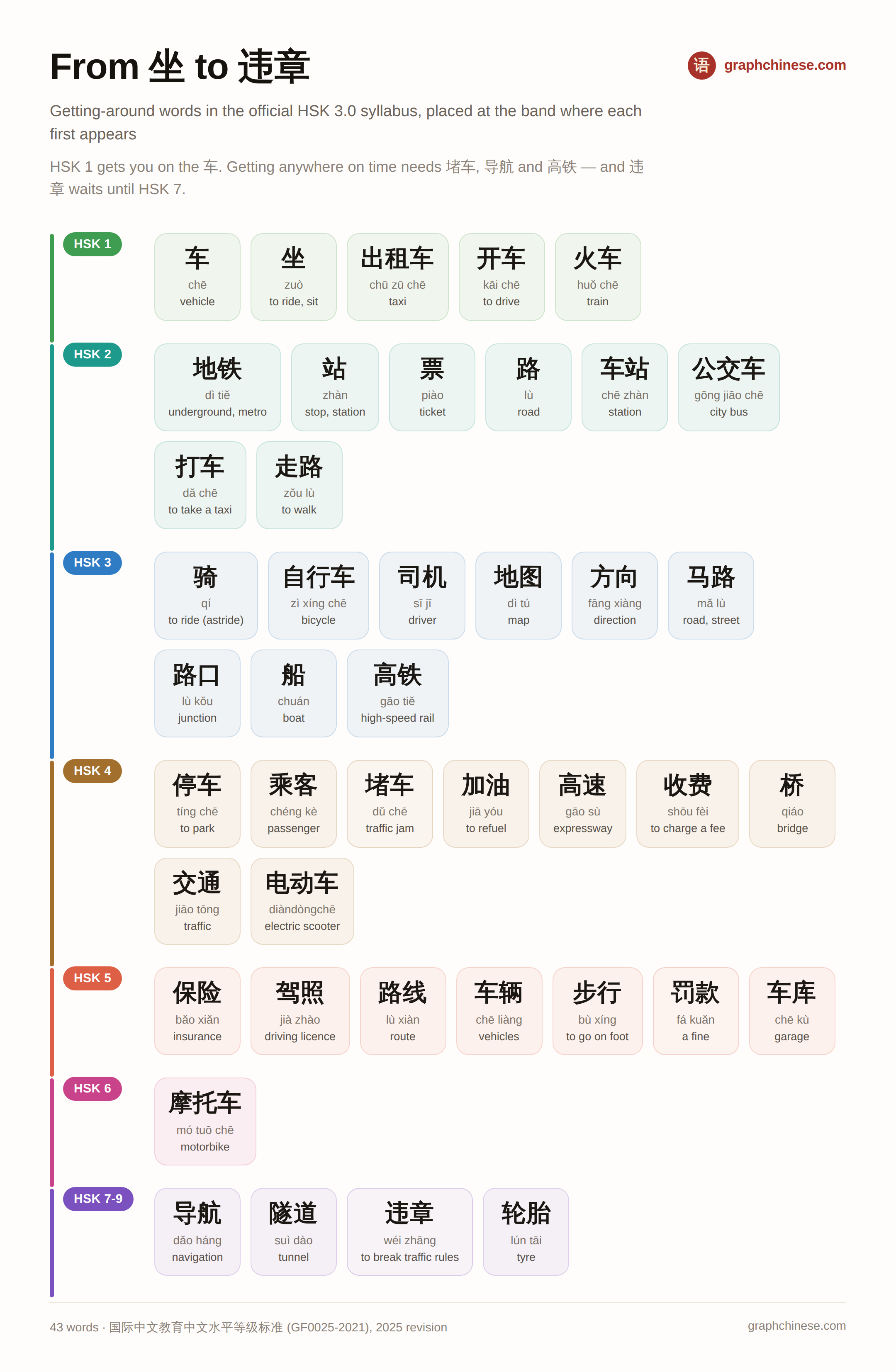
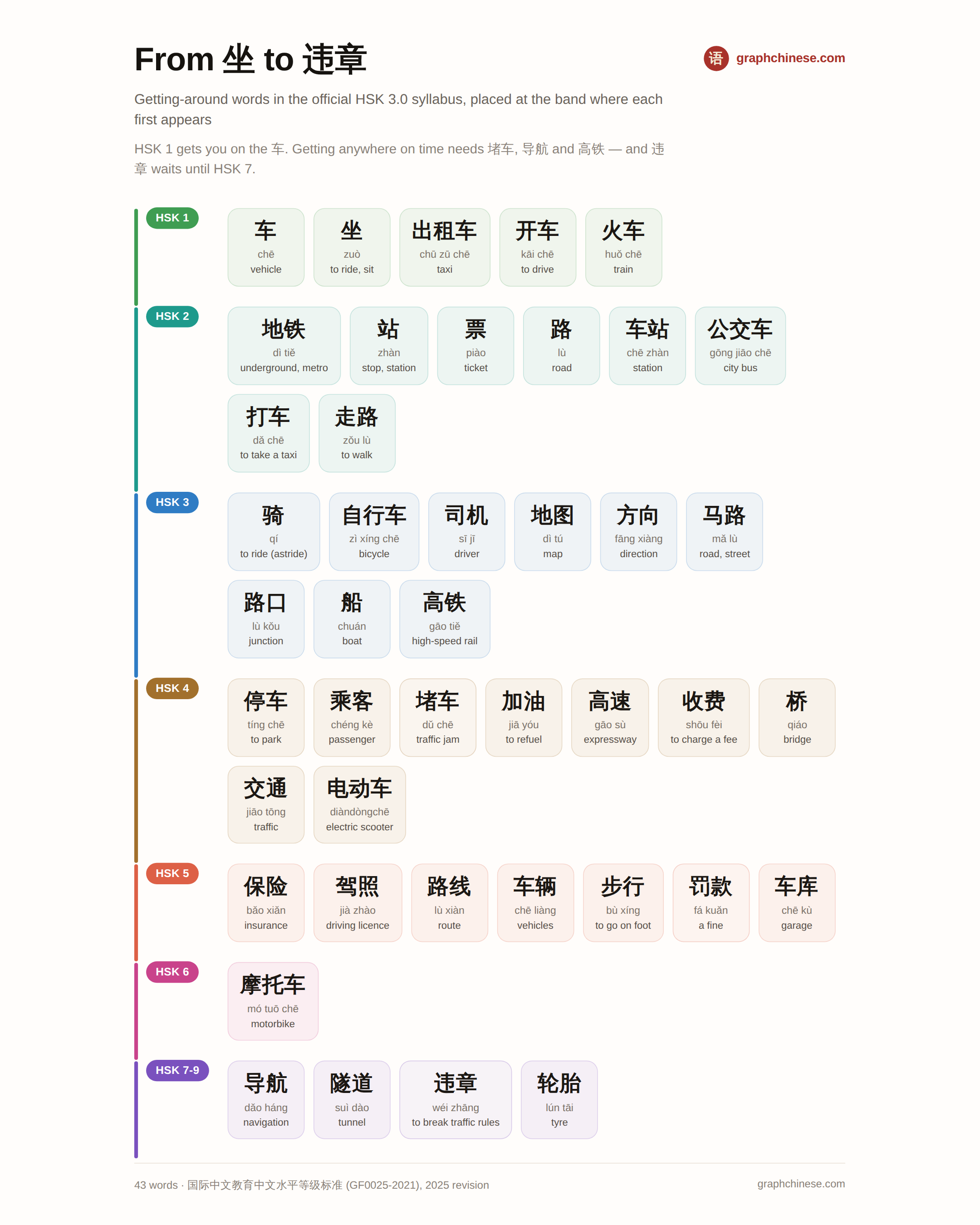
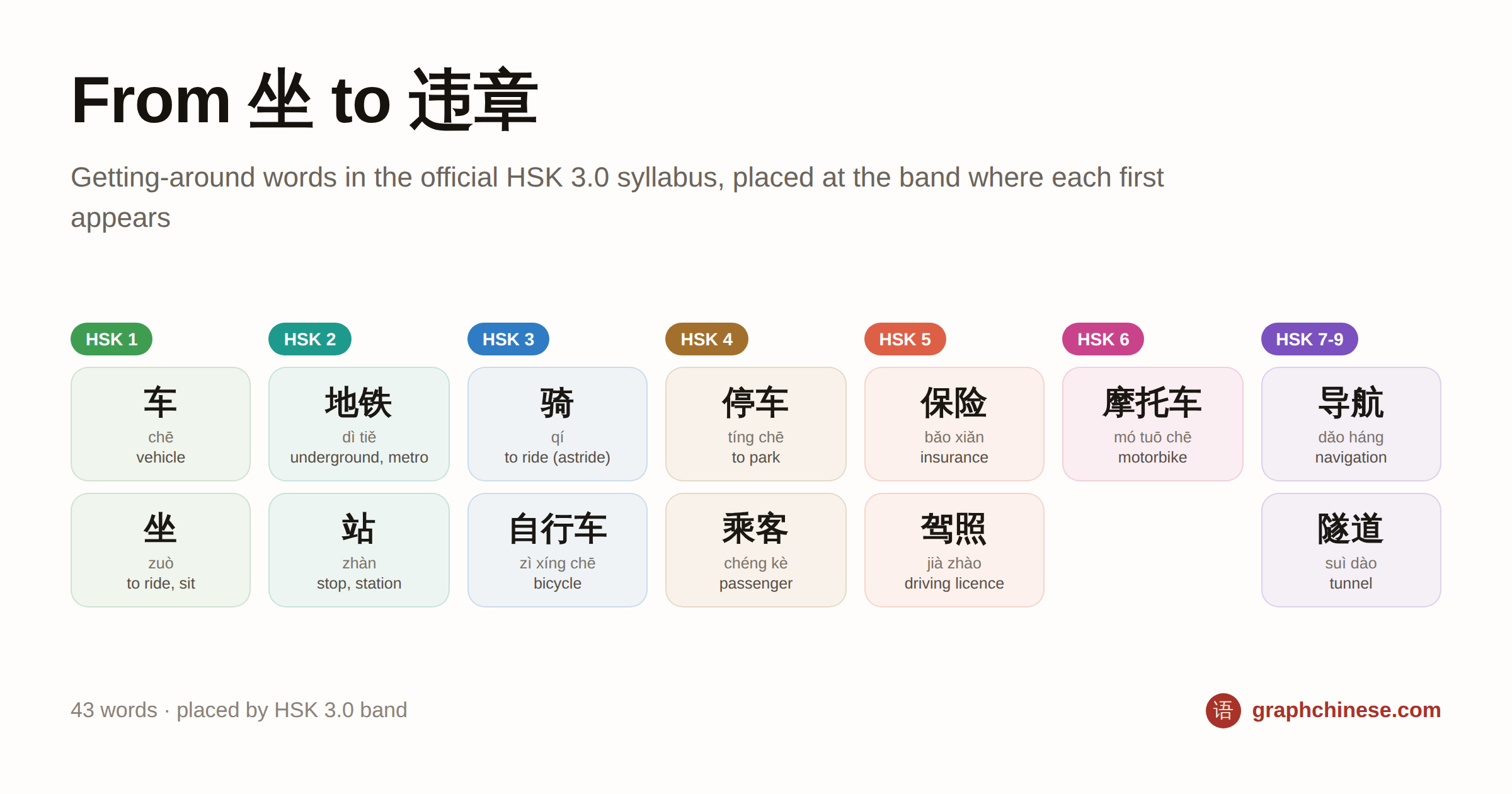
- 级 · From 坐 to 违章 PNG 1080 wide 1080×1350 1200×630
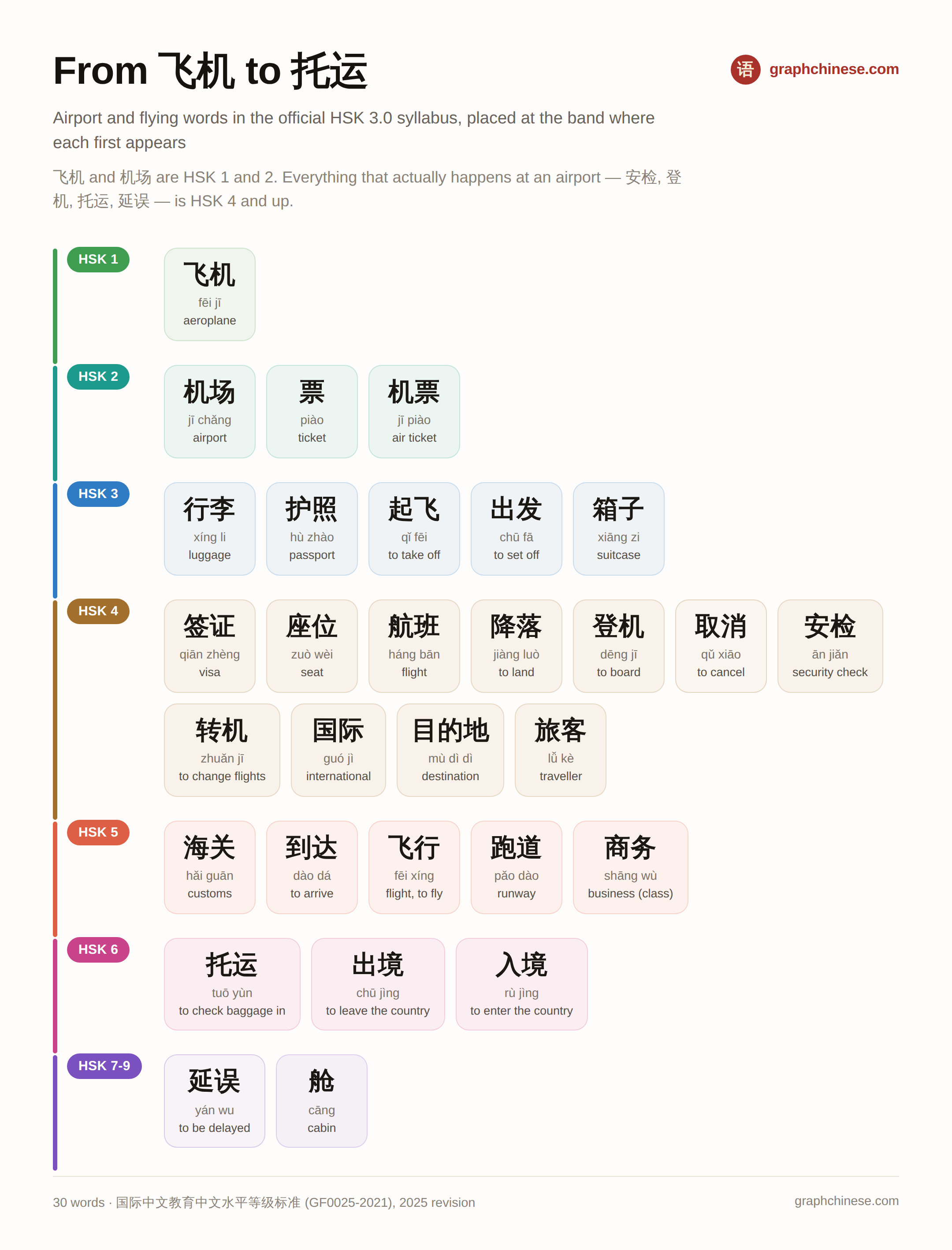
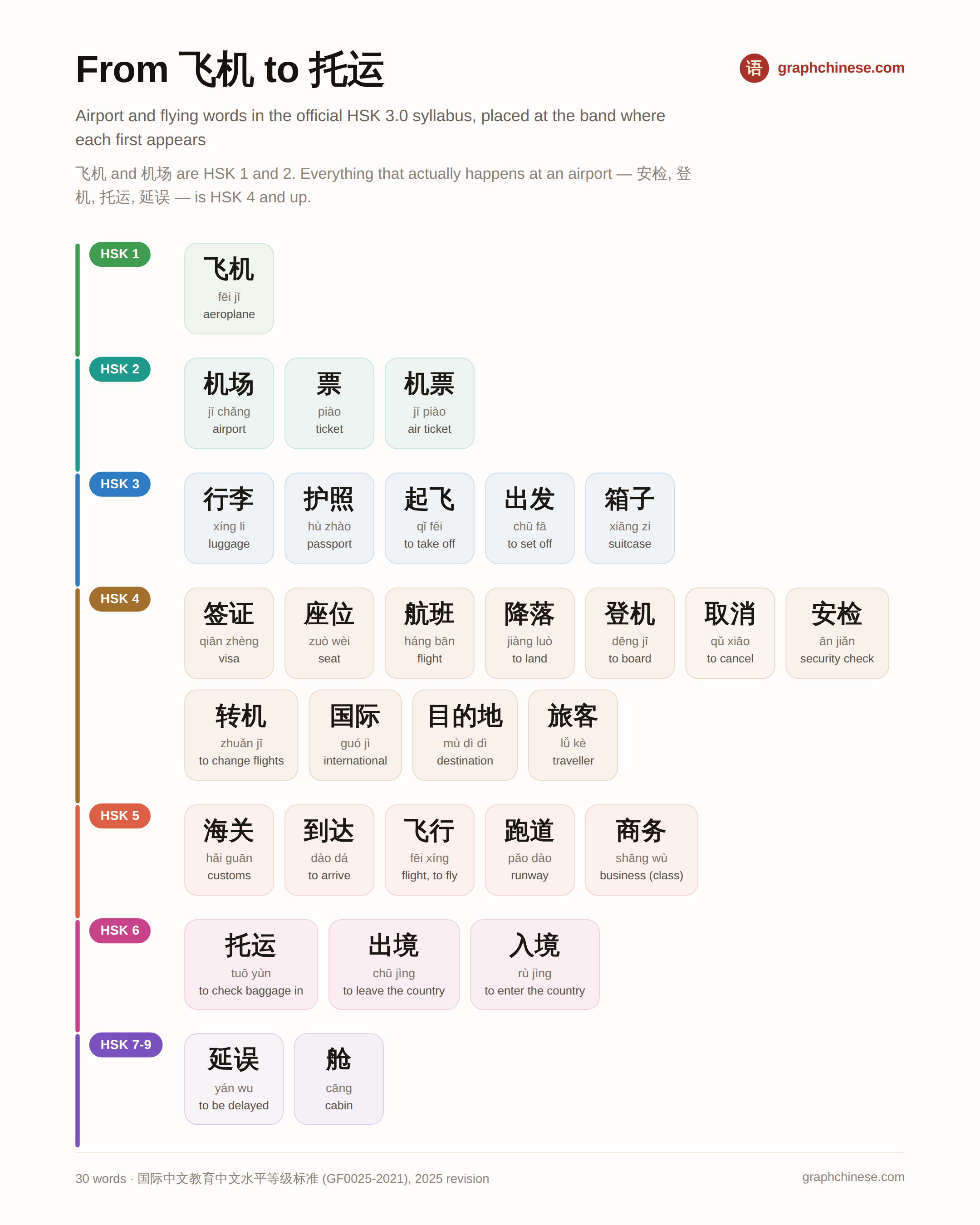
- 级 · From 飞机 to 托运 PNG 1080 wide 1080×1350 1200×630
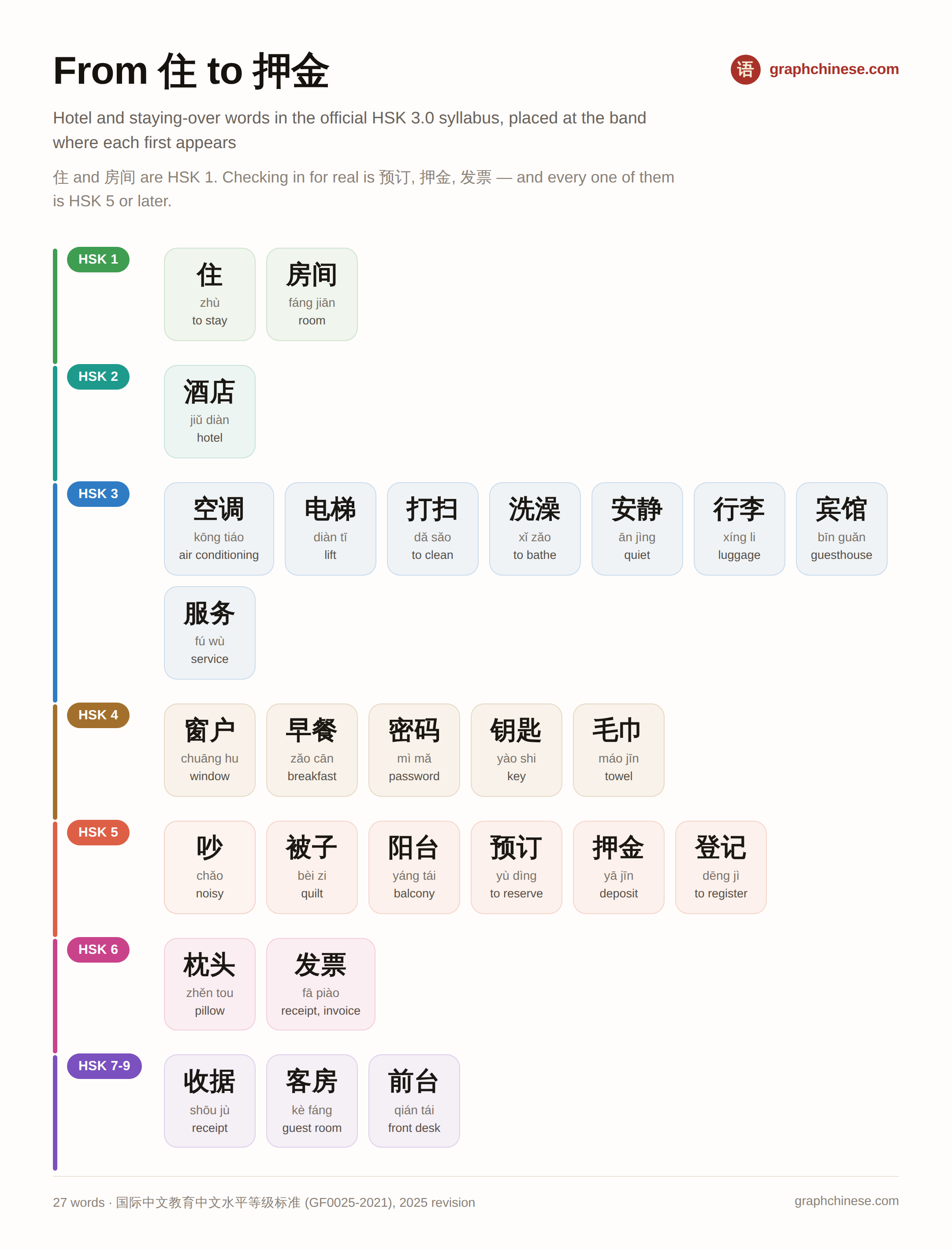
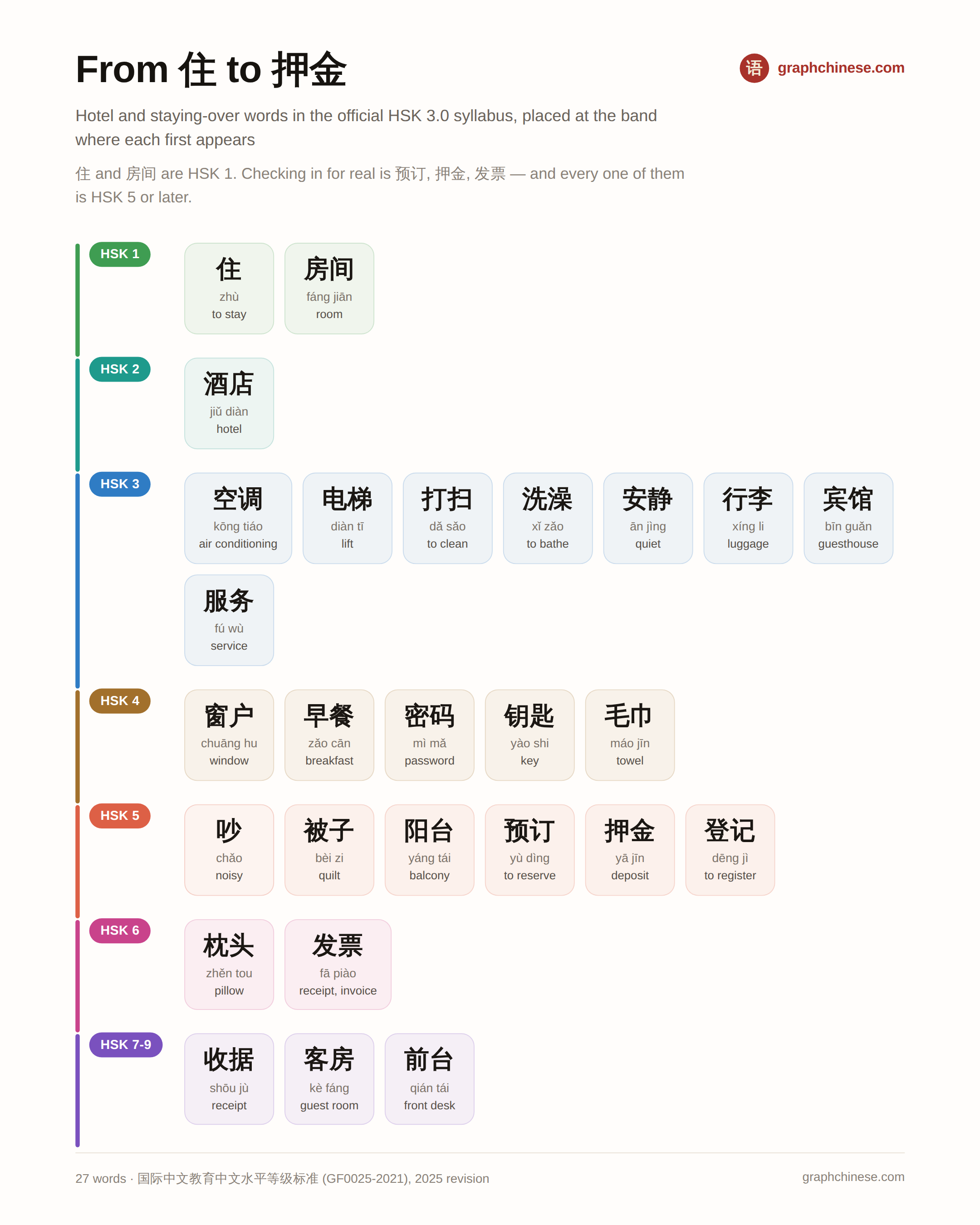
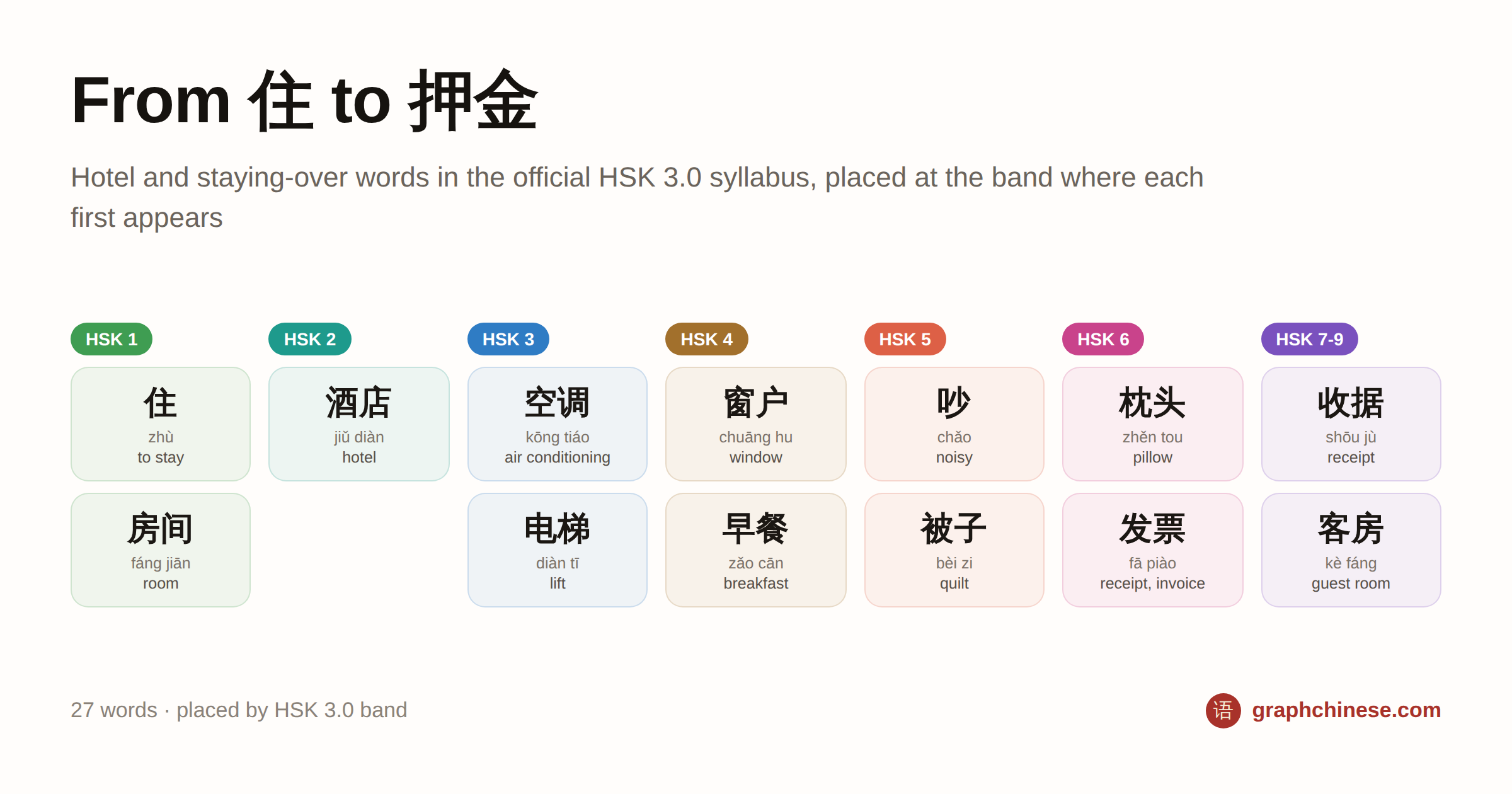
- 级 · From 住 to 押金 PNG 1080 wide 1080×1350 1200×630
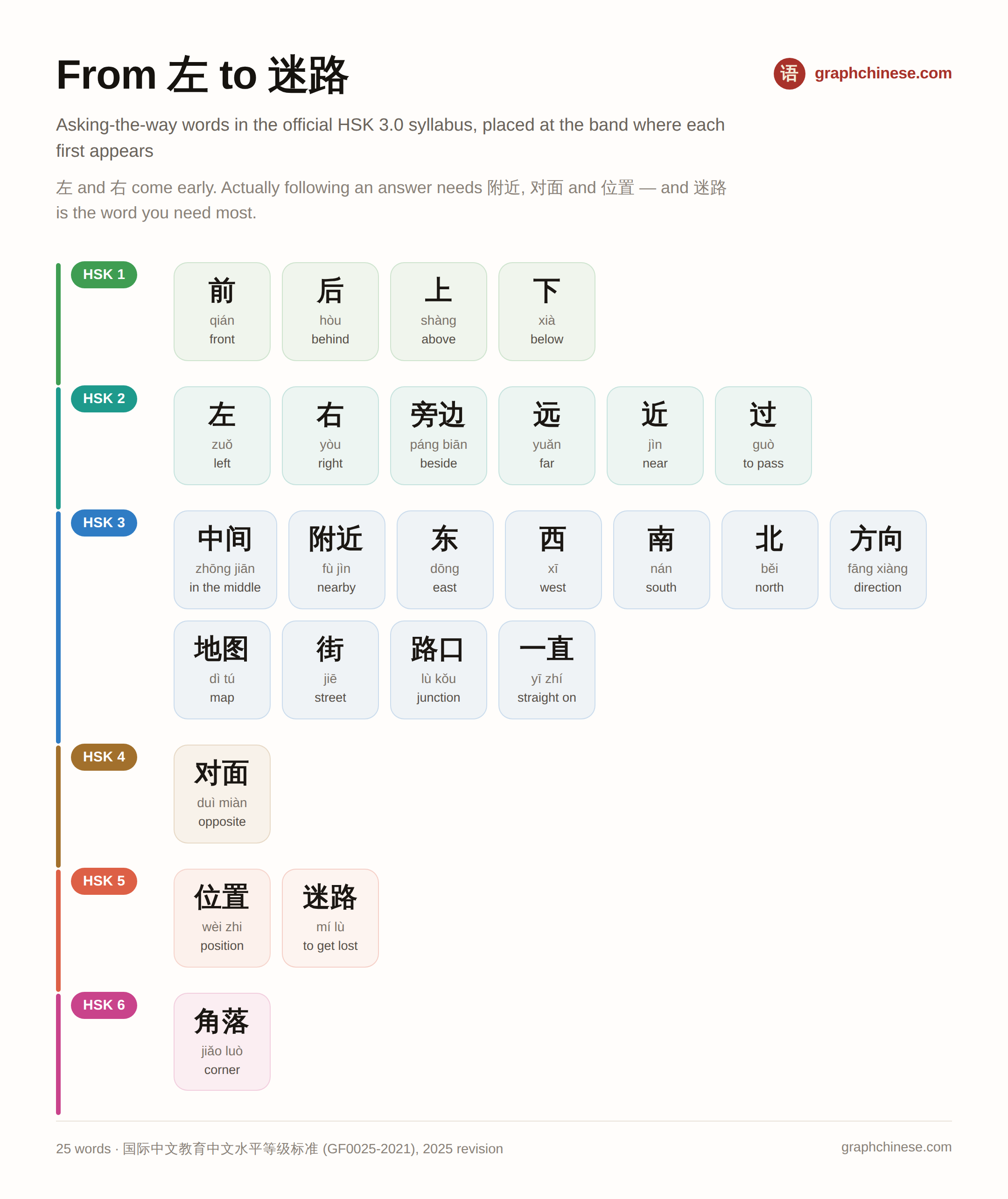
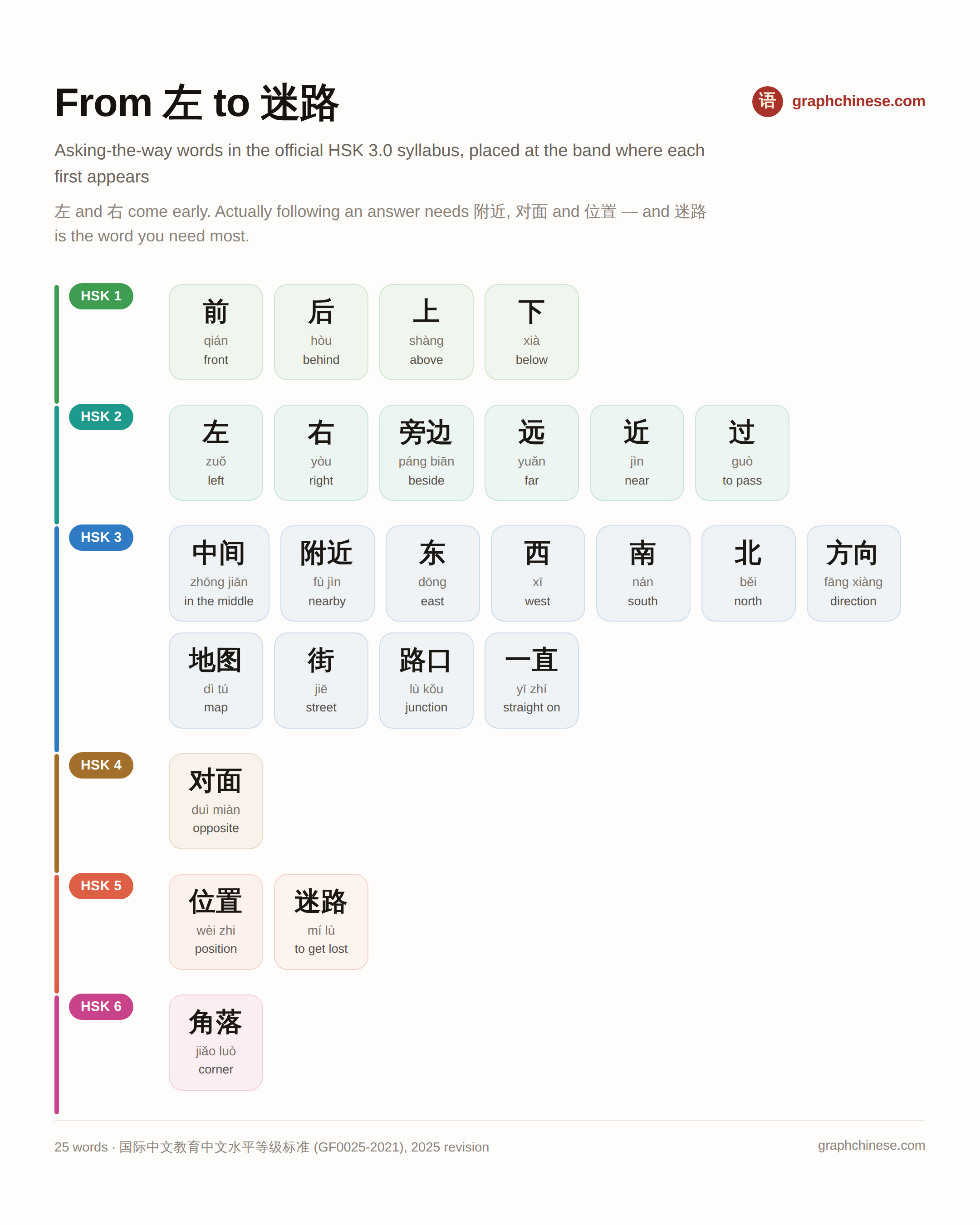
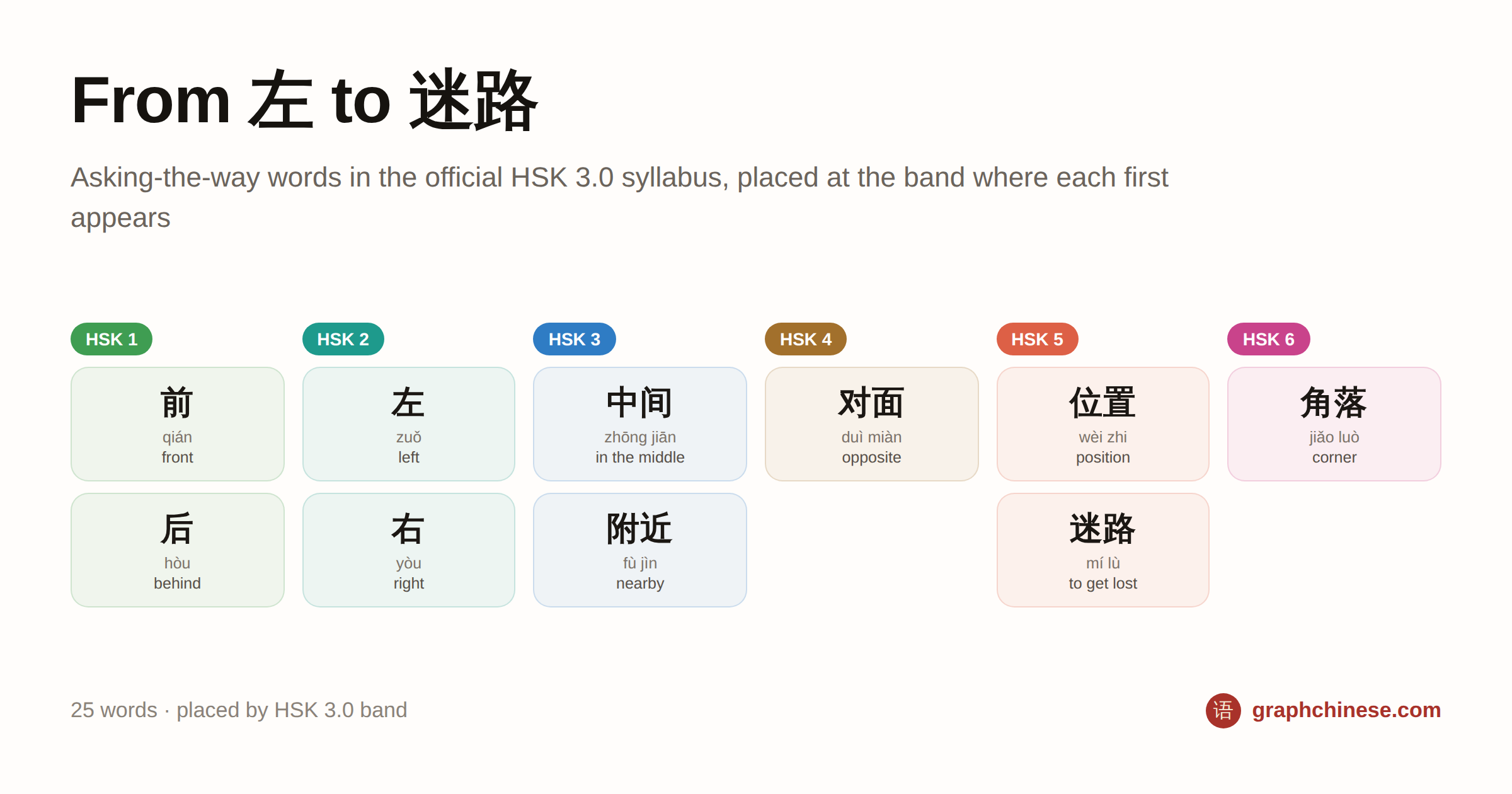
- 级 · From 左 to 迷路 PNG 1080 wide 1080×1350 1200×630
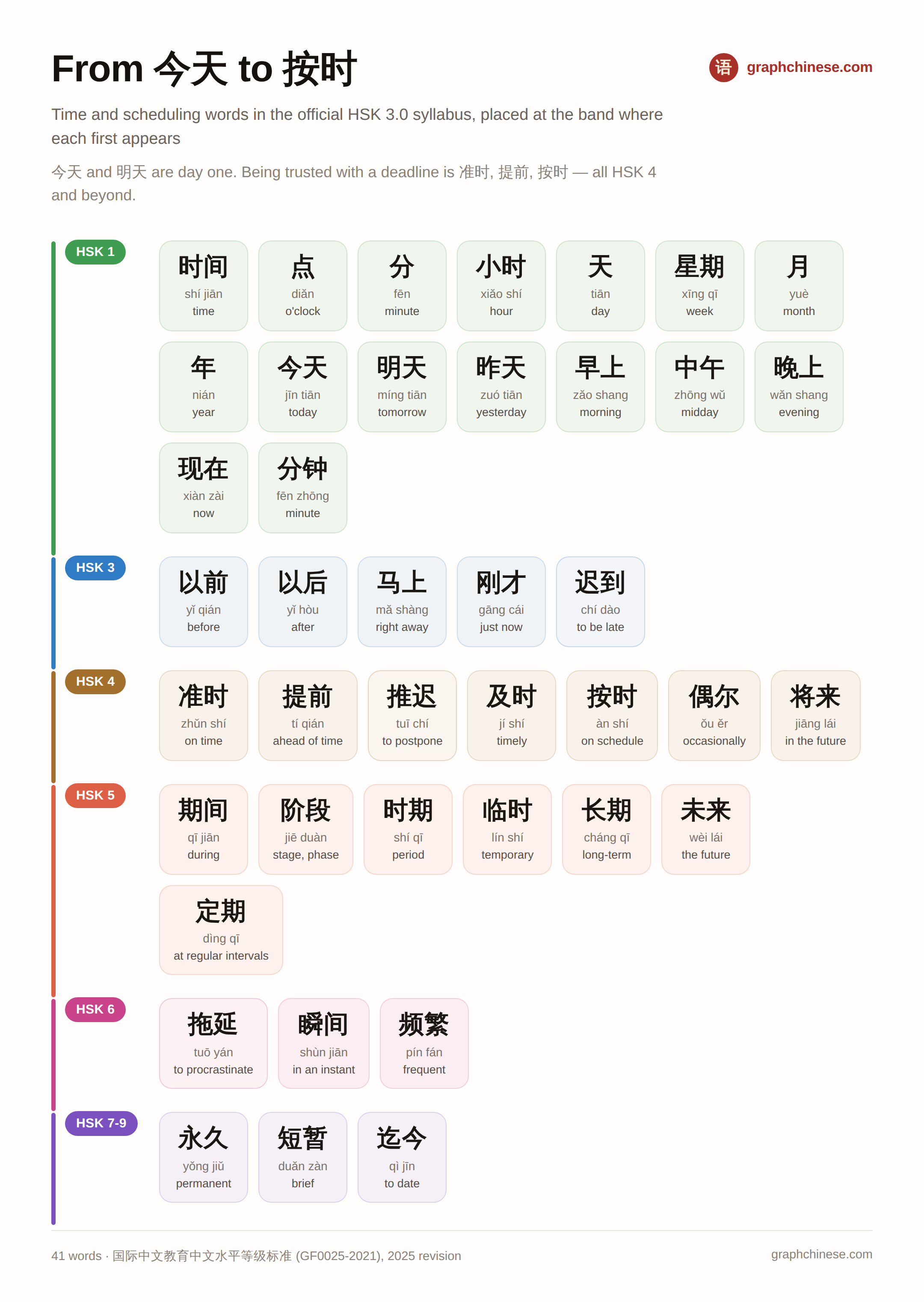
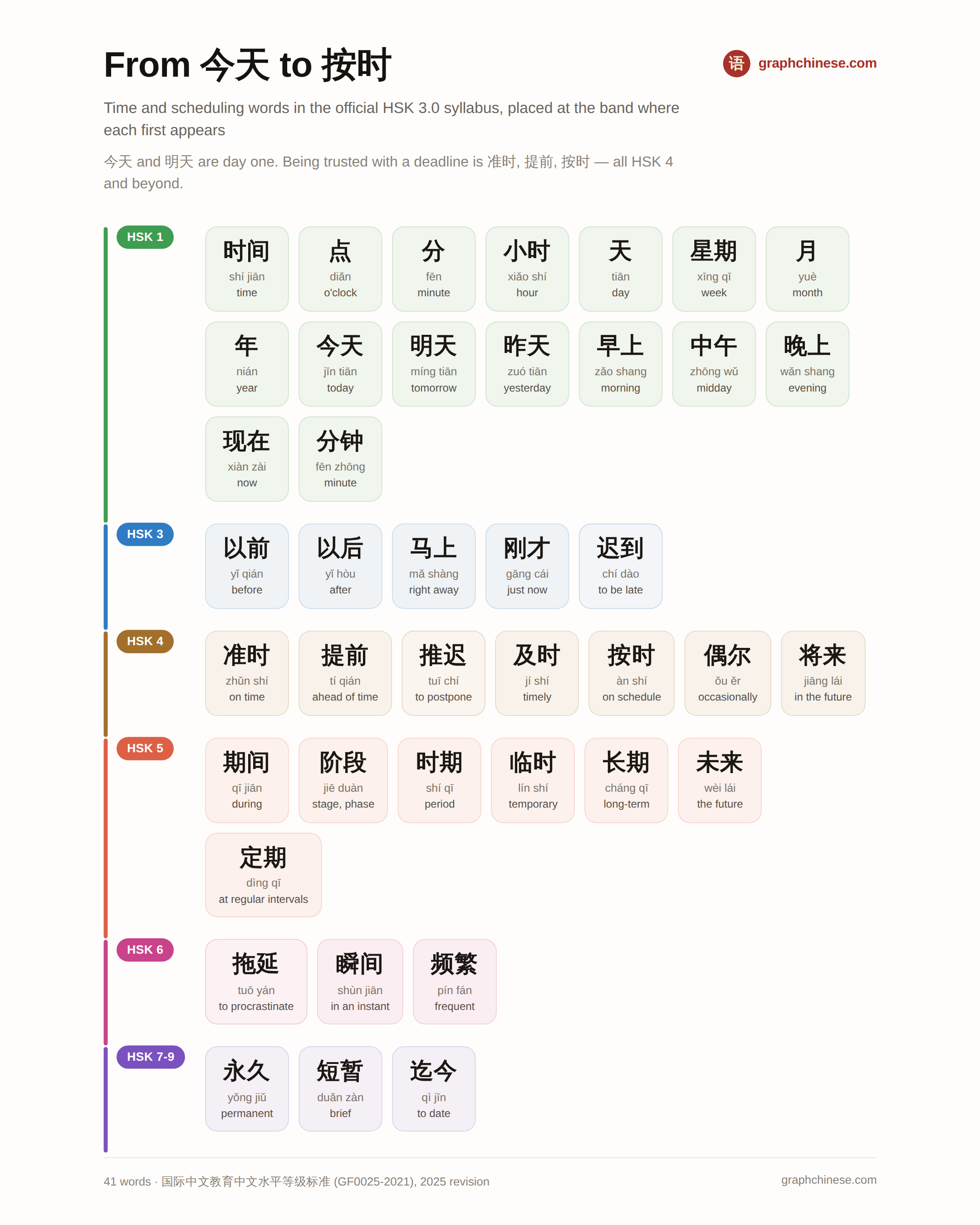
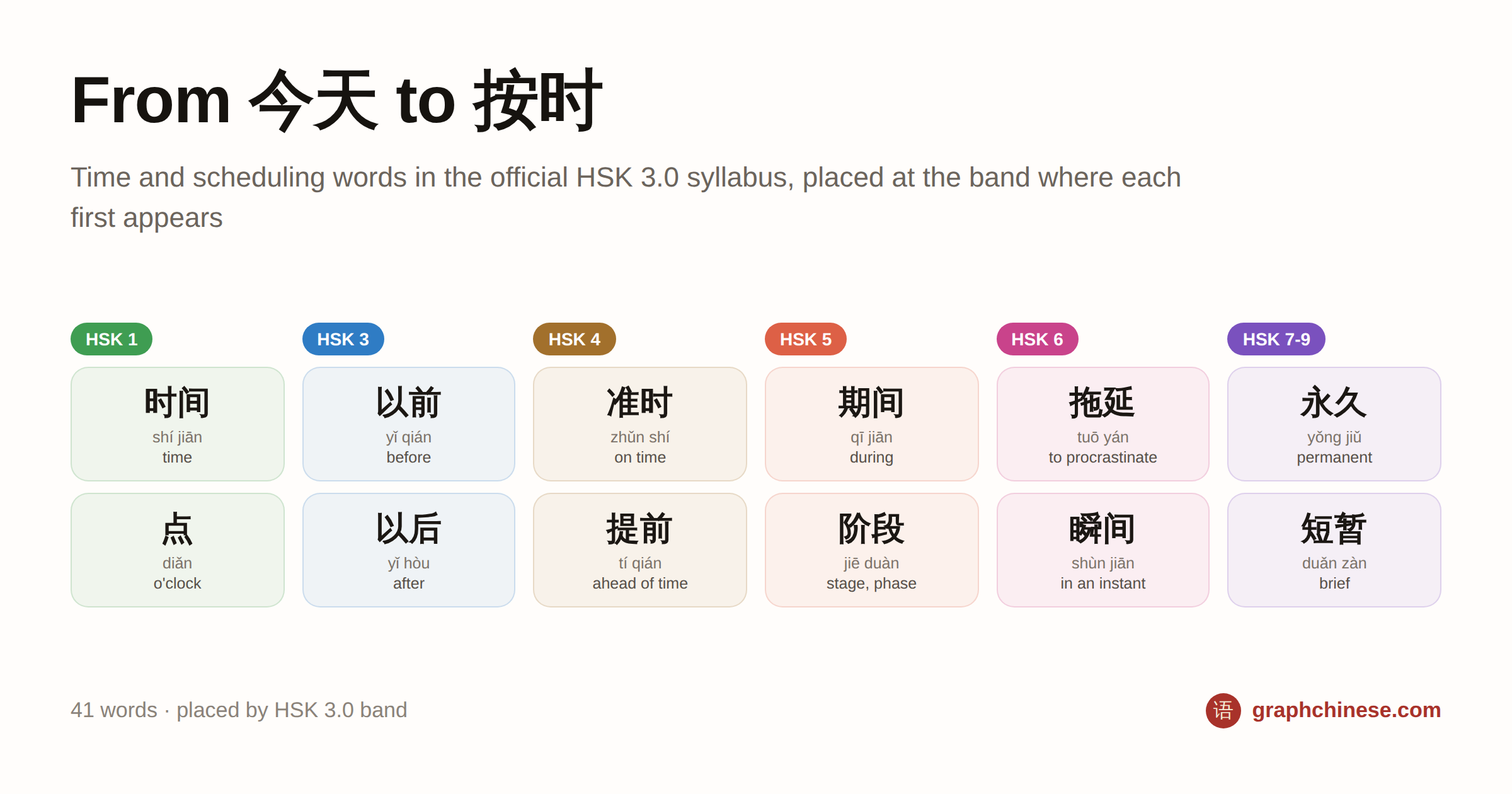
- 级 · From 今天 to 按时 PNG 1080 wide 1080×1350 1200×630
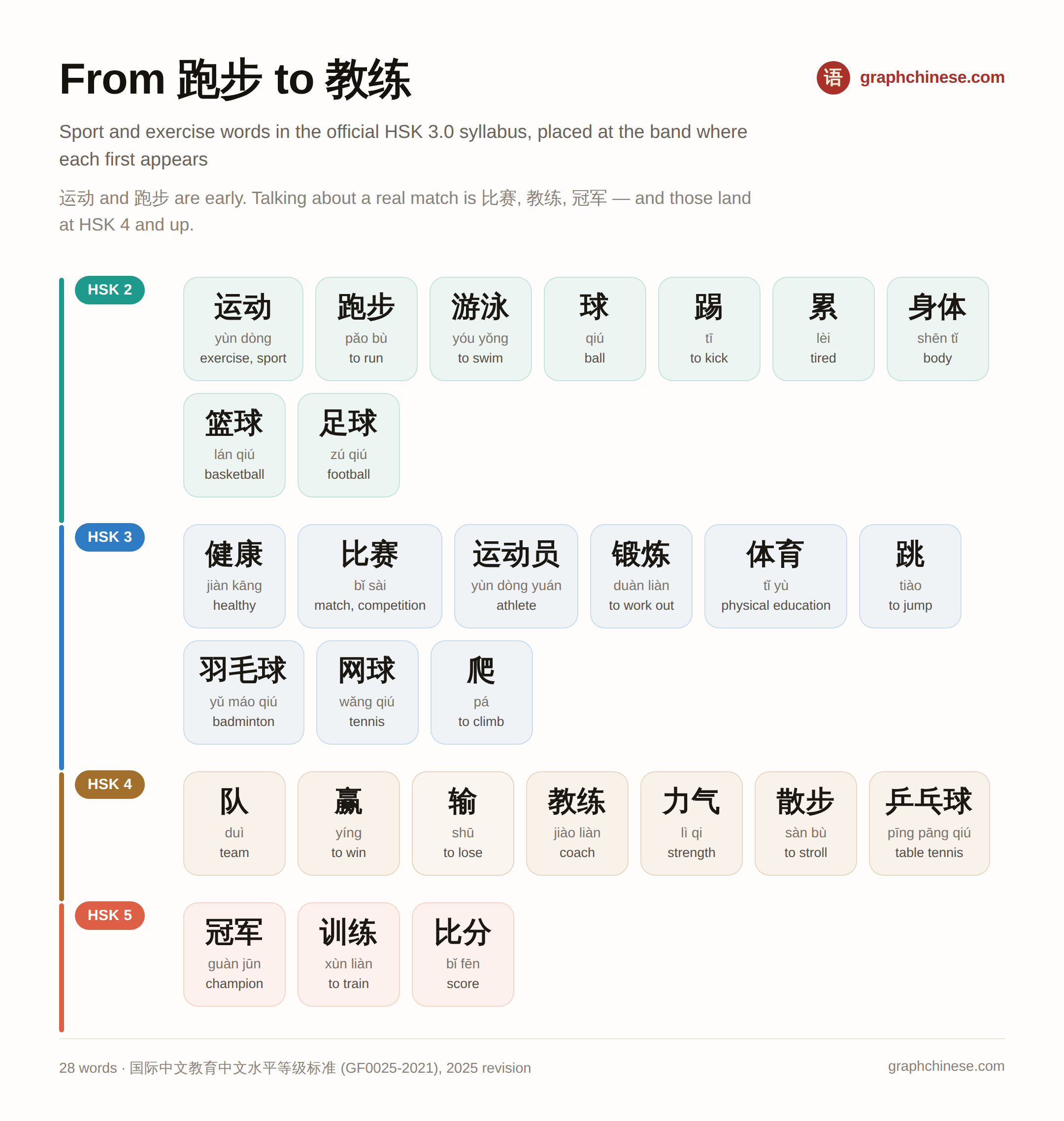
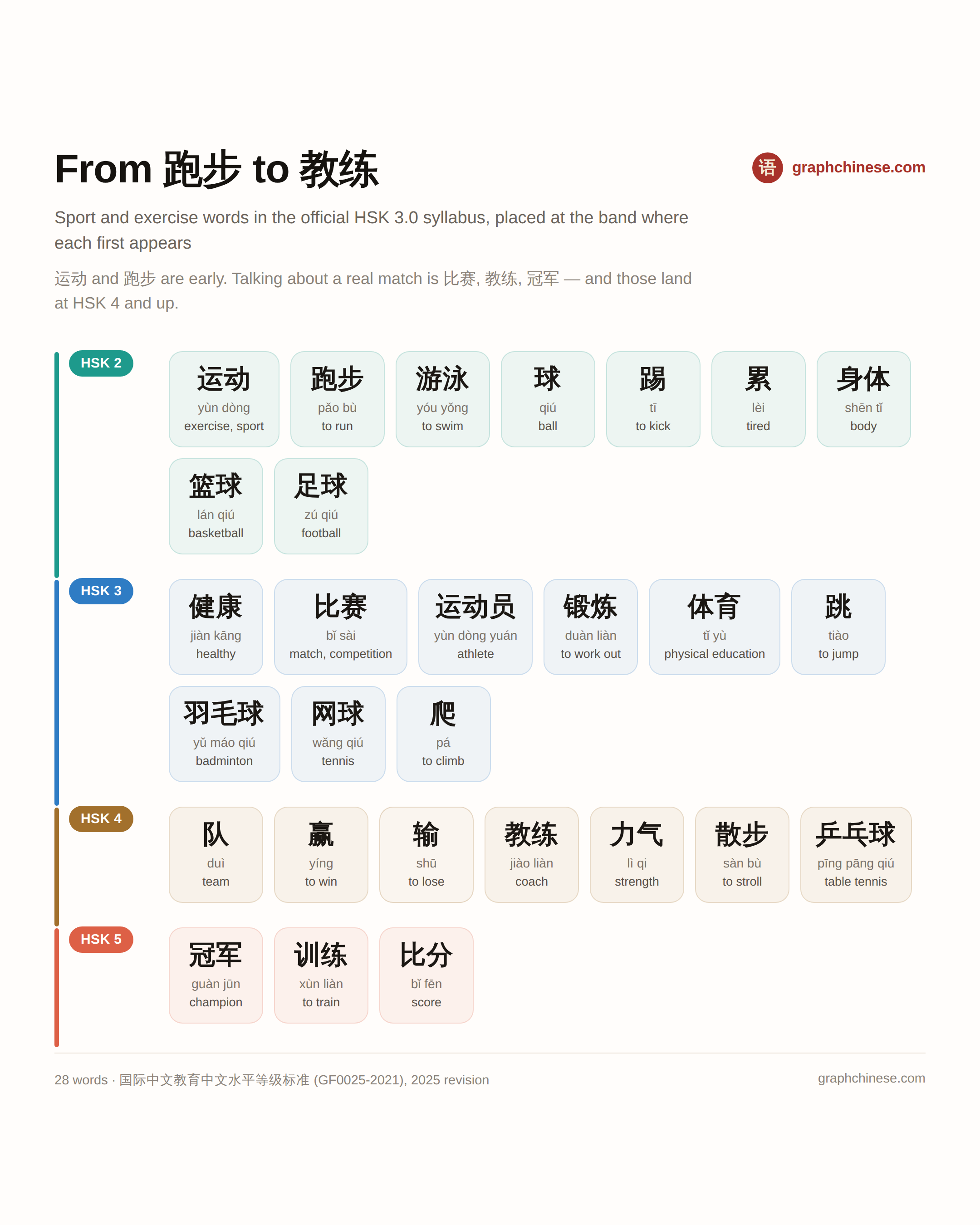
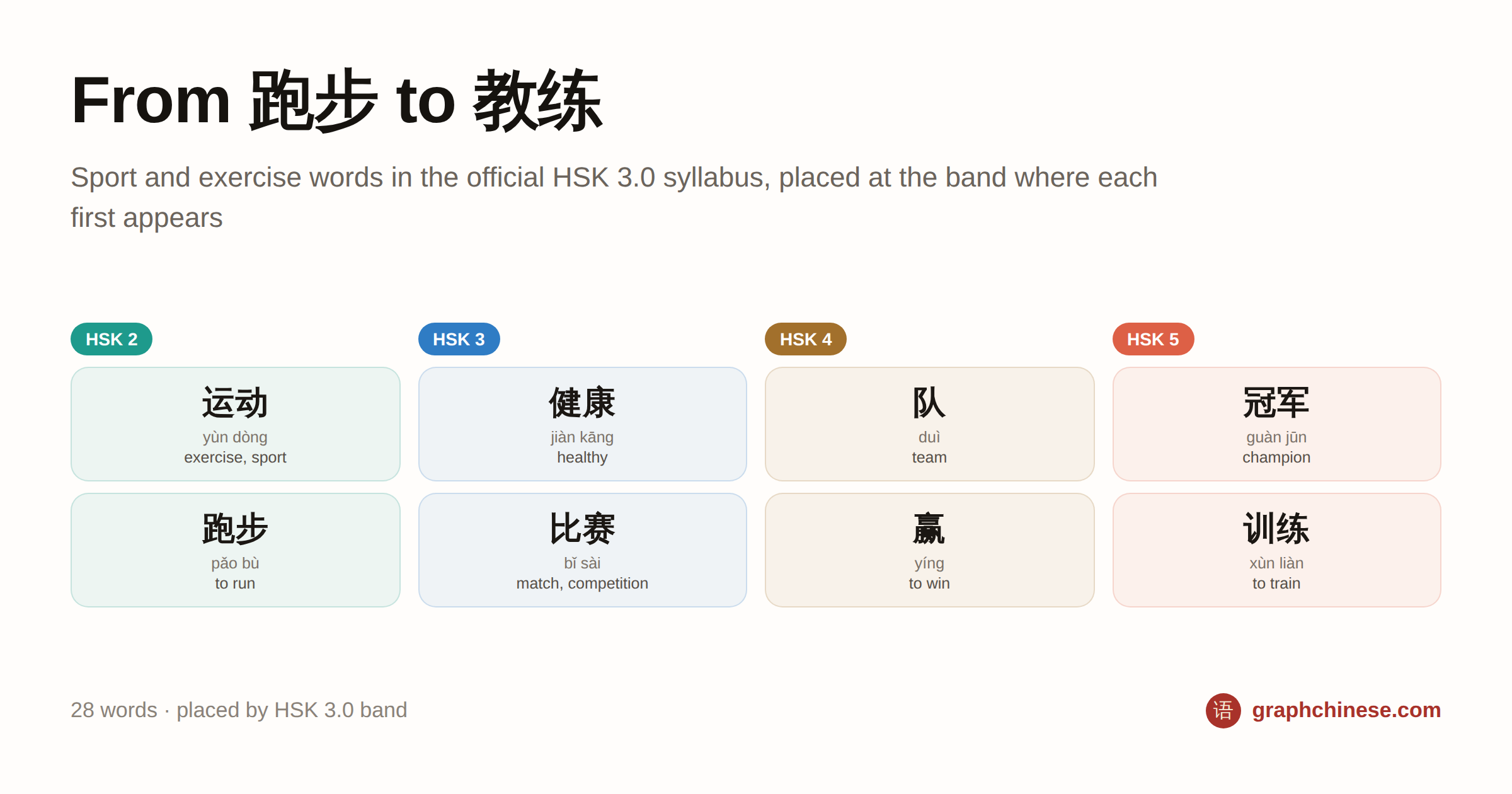
- 级 · From 跑步 to 教练 PNG 1080 wide 1080×1350 1200×630
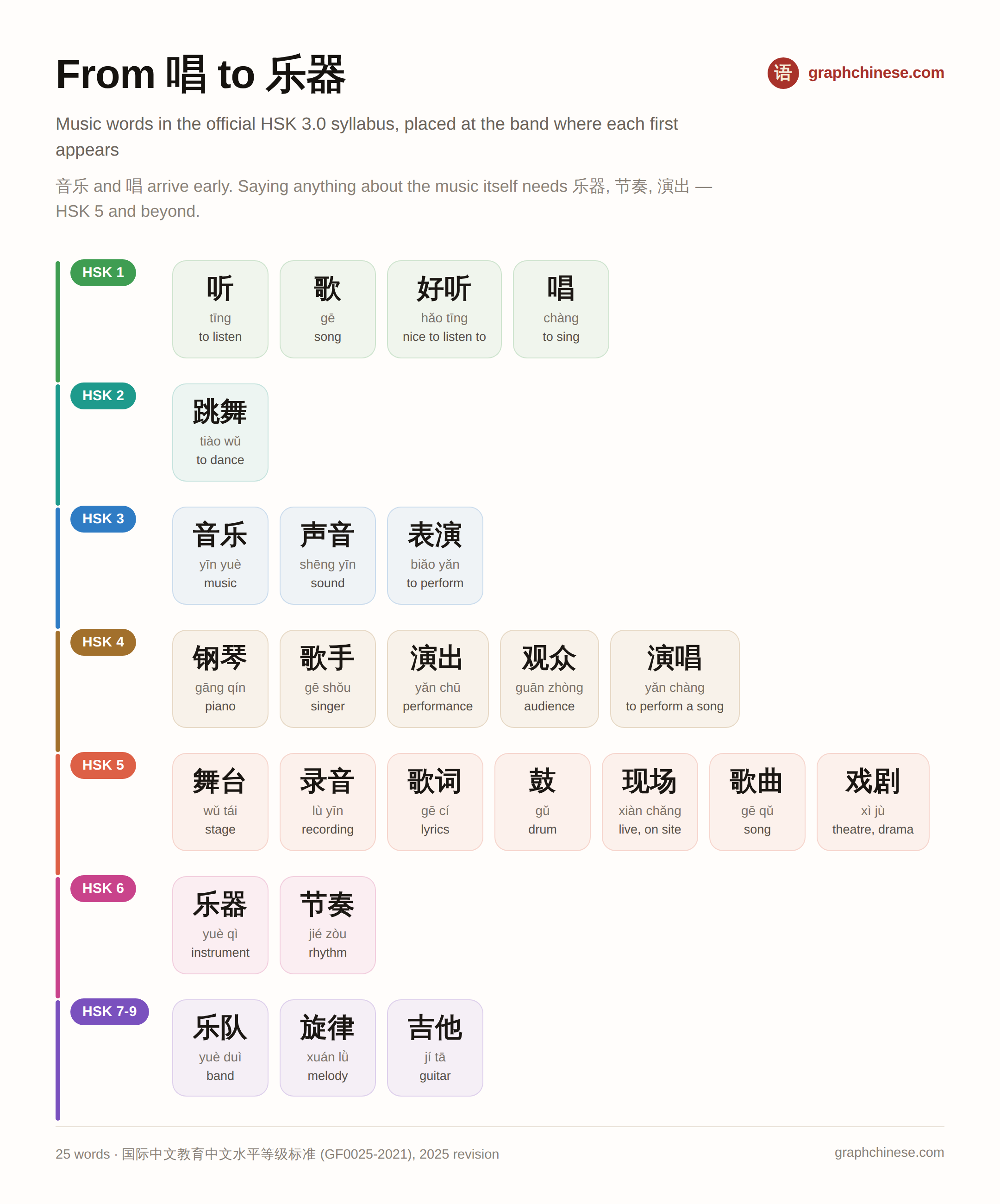
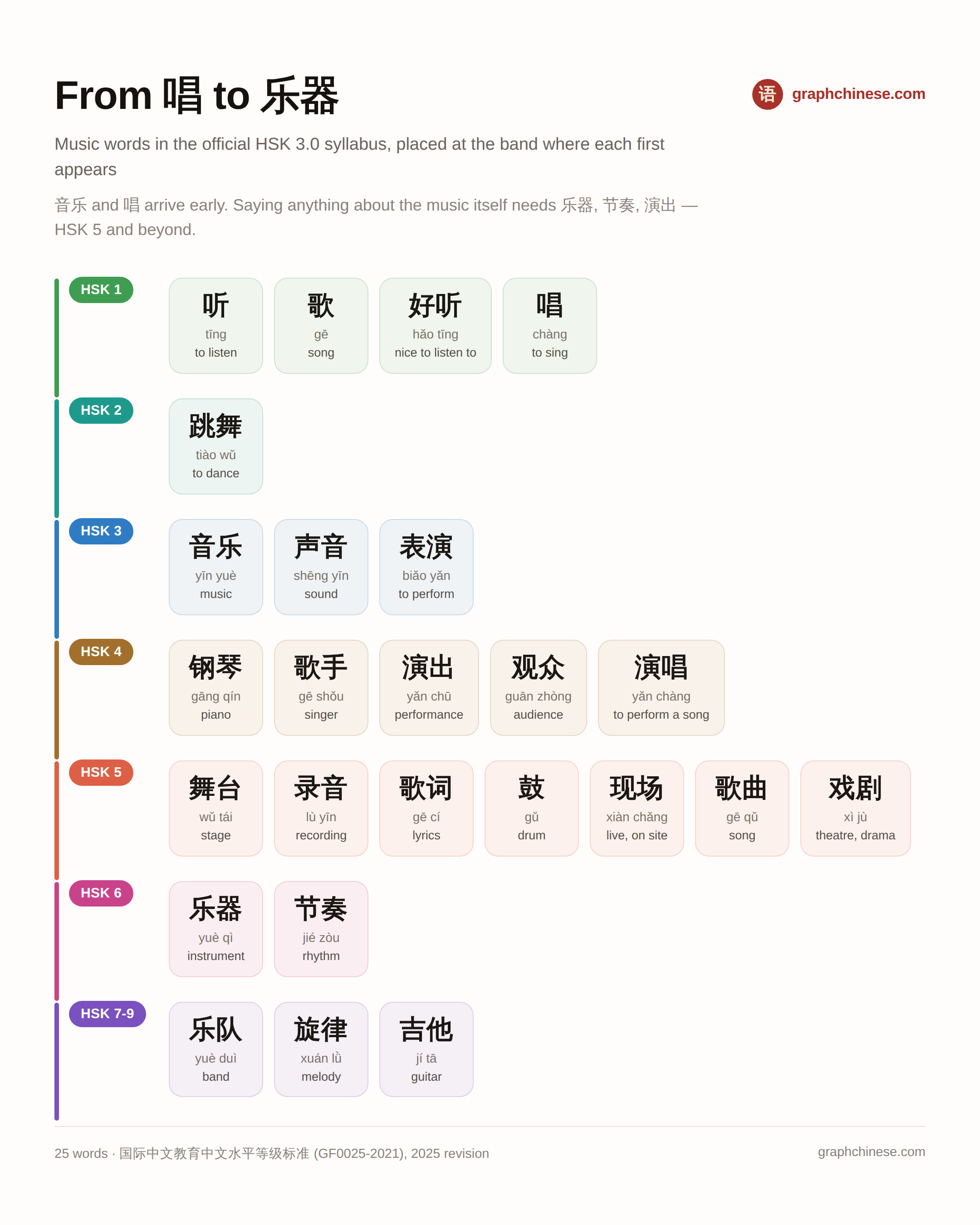
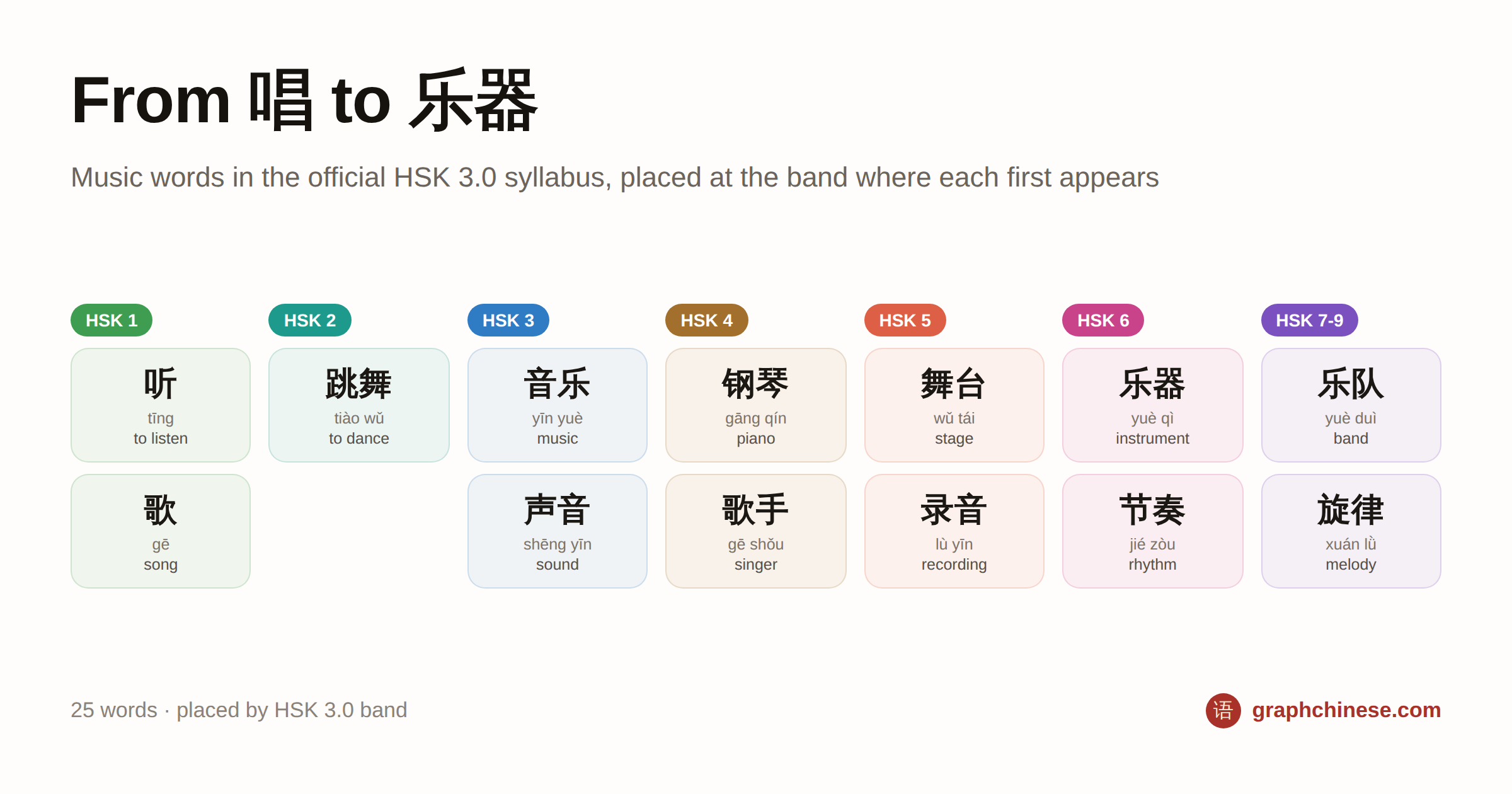
- 级 · From 唱 to 乐器 PNG 1080 wide 1080×1350 1200×630
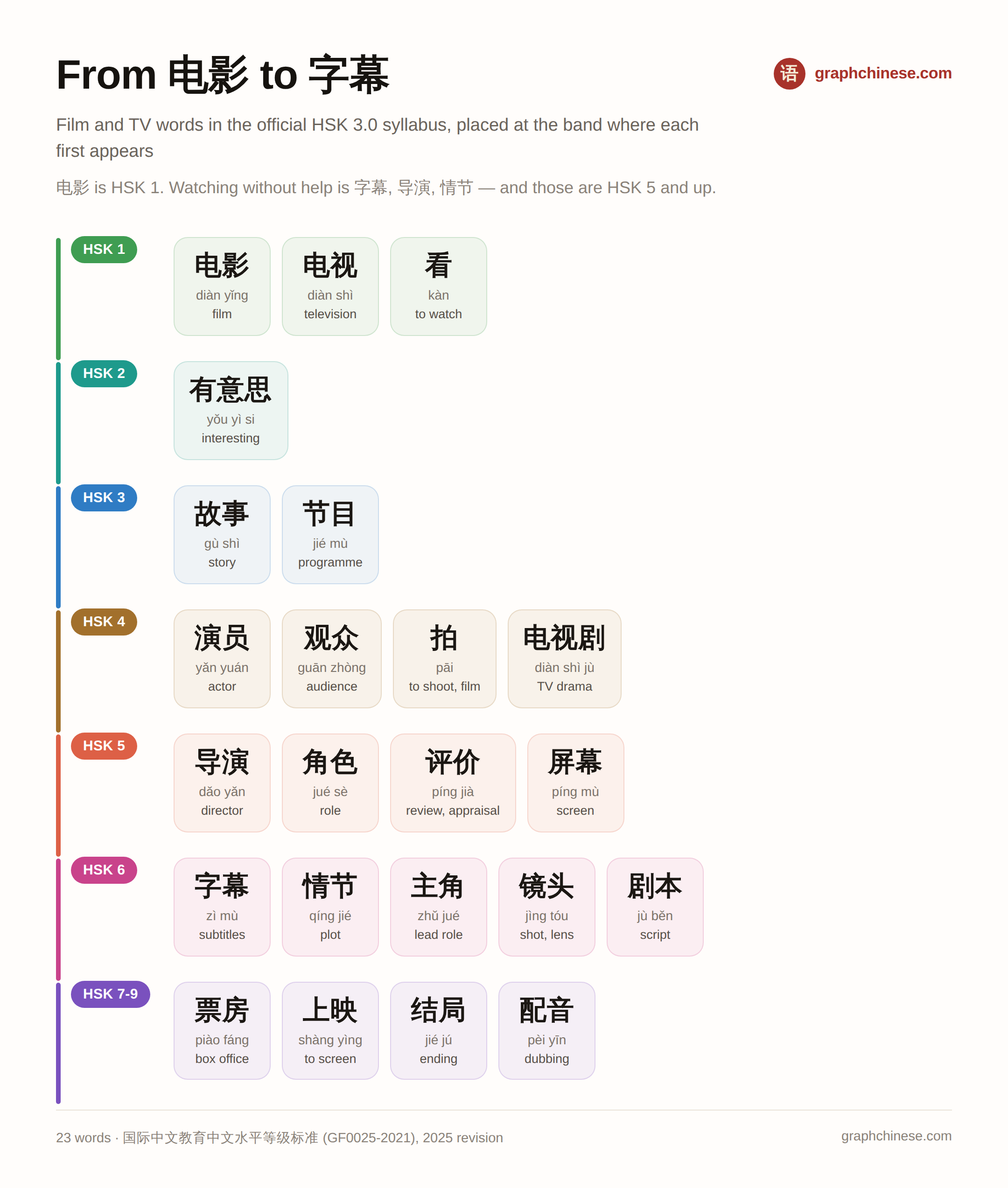
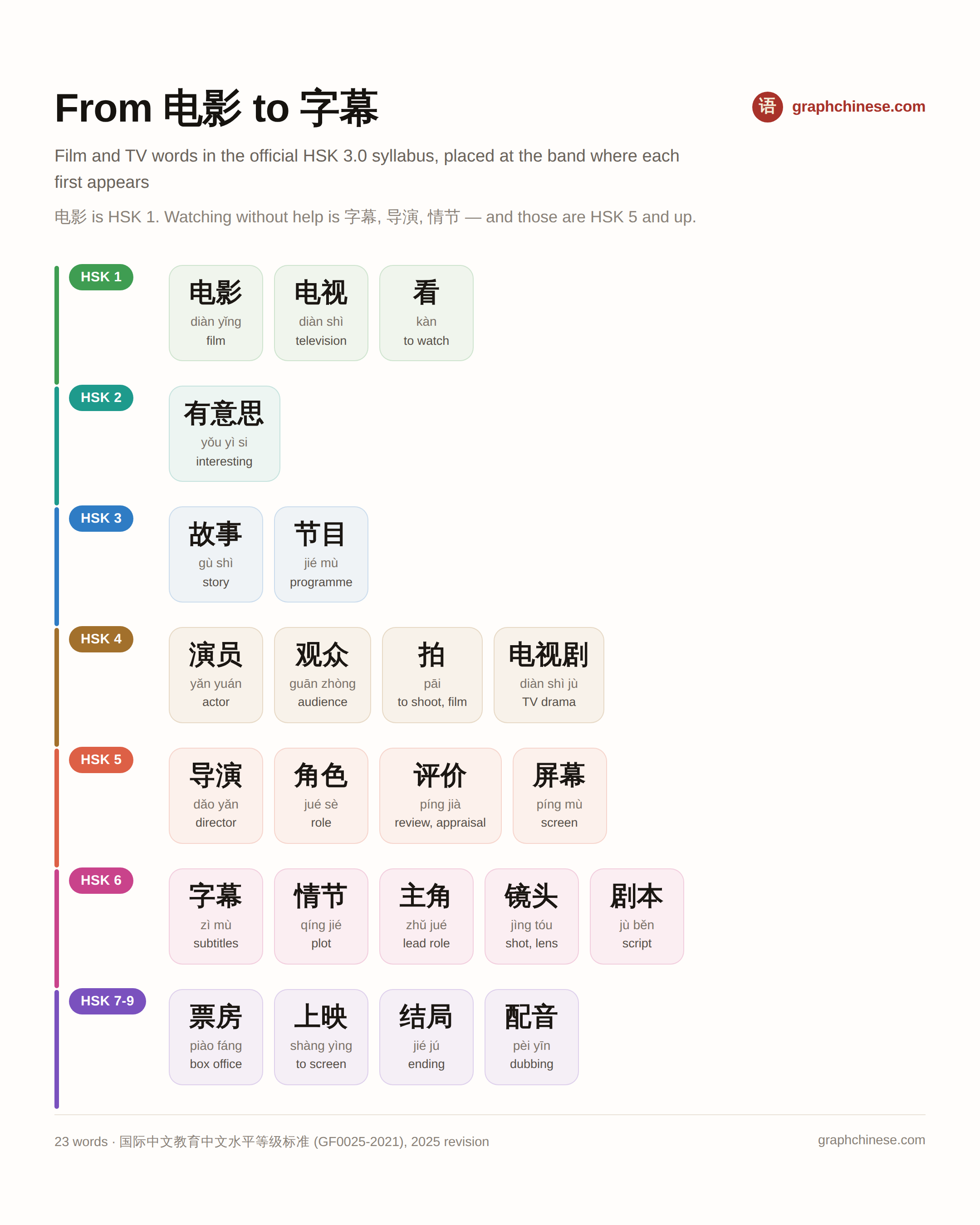
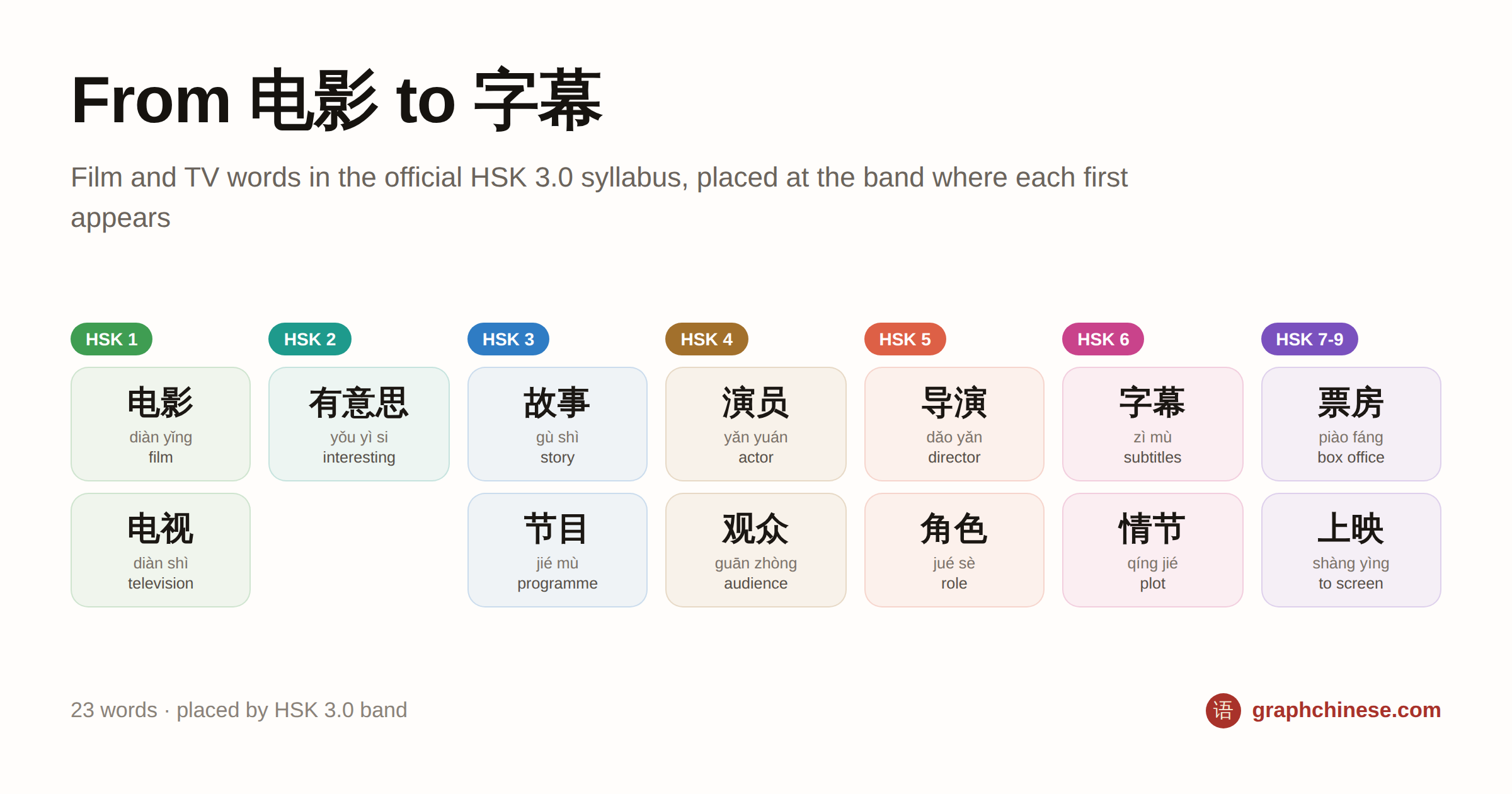
- 级 · From 电影 to 字幕 PNG 1080 wide 1080×1350 1200×630
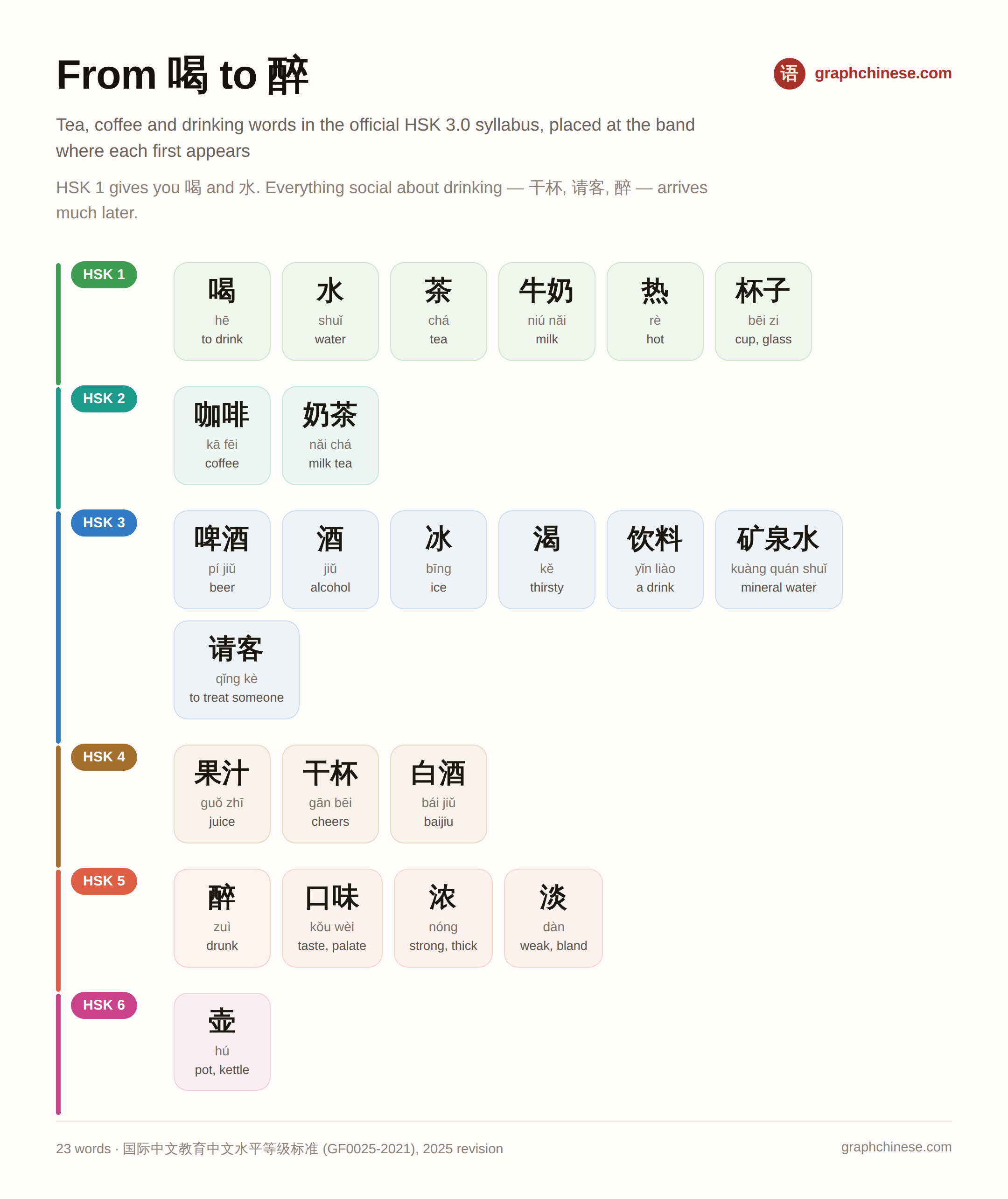
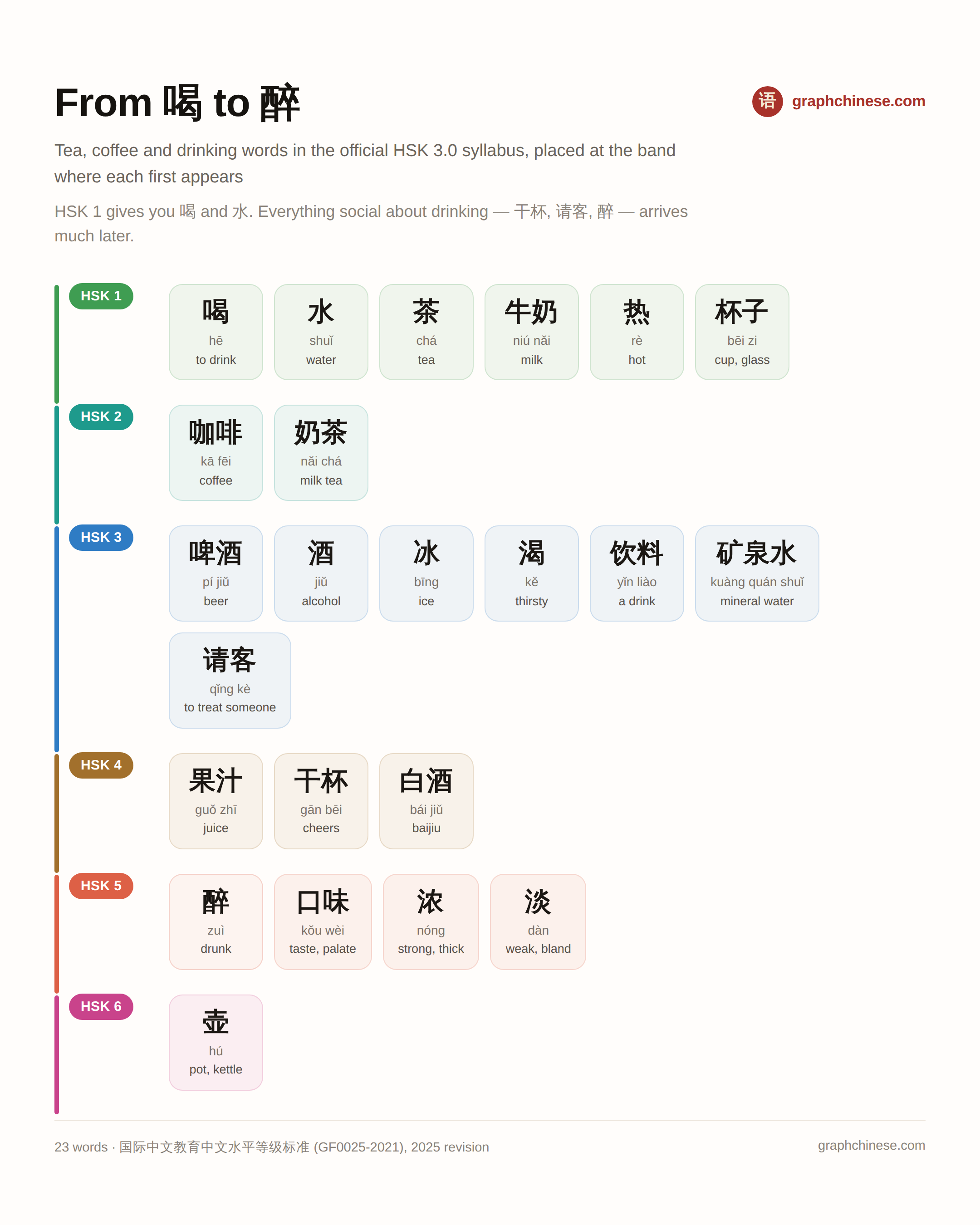
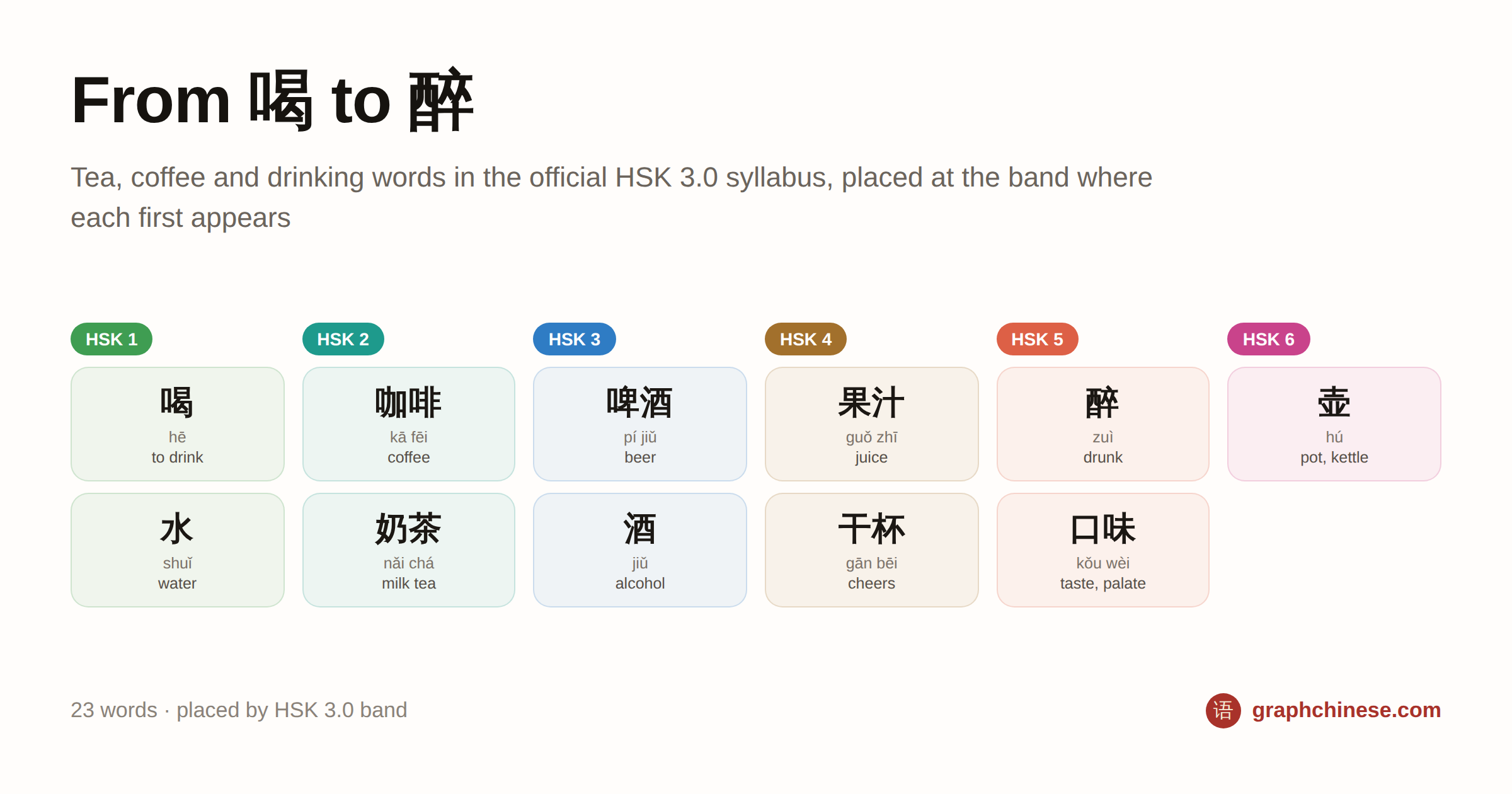
- 级 · From 喝 to 醉 PNG 1080 wide 1080×1350 1200×630
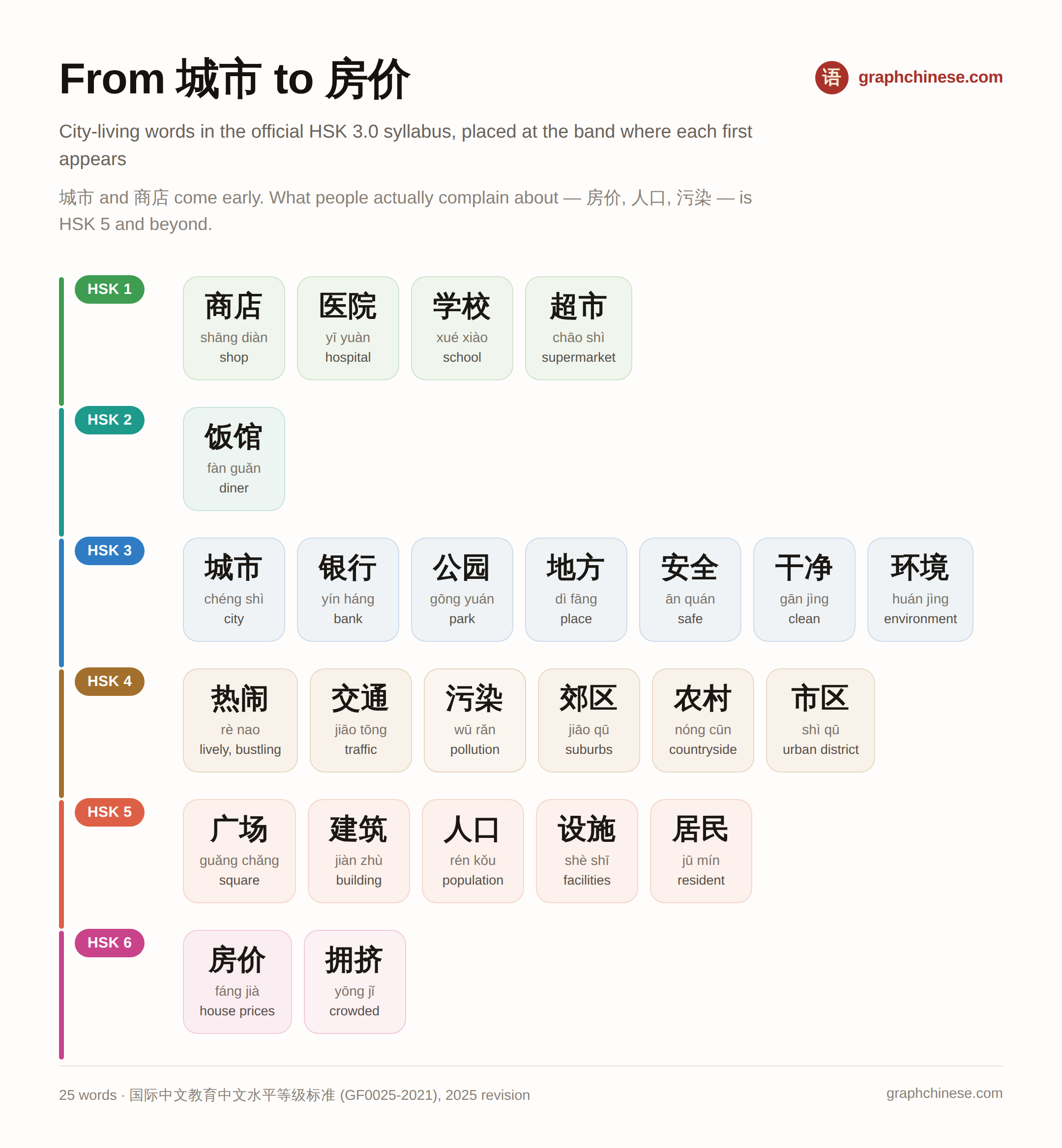
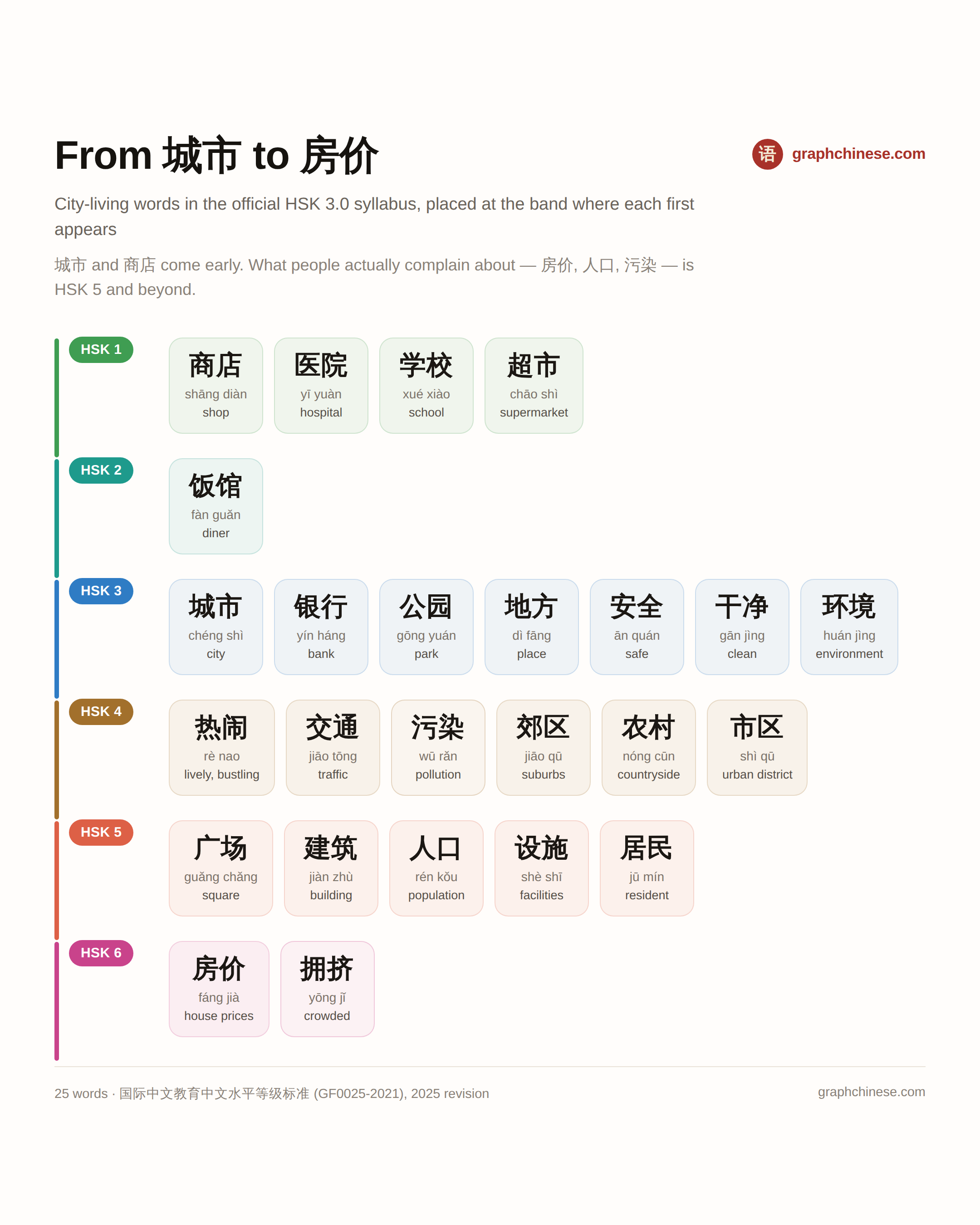
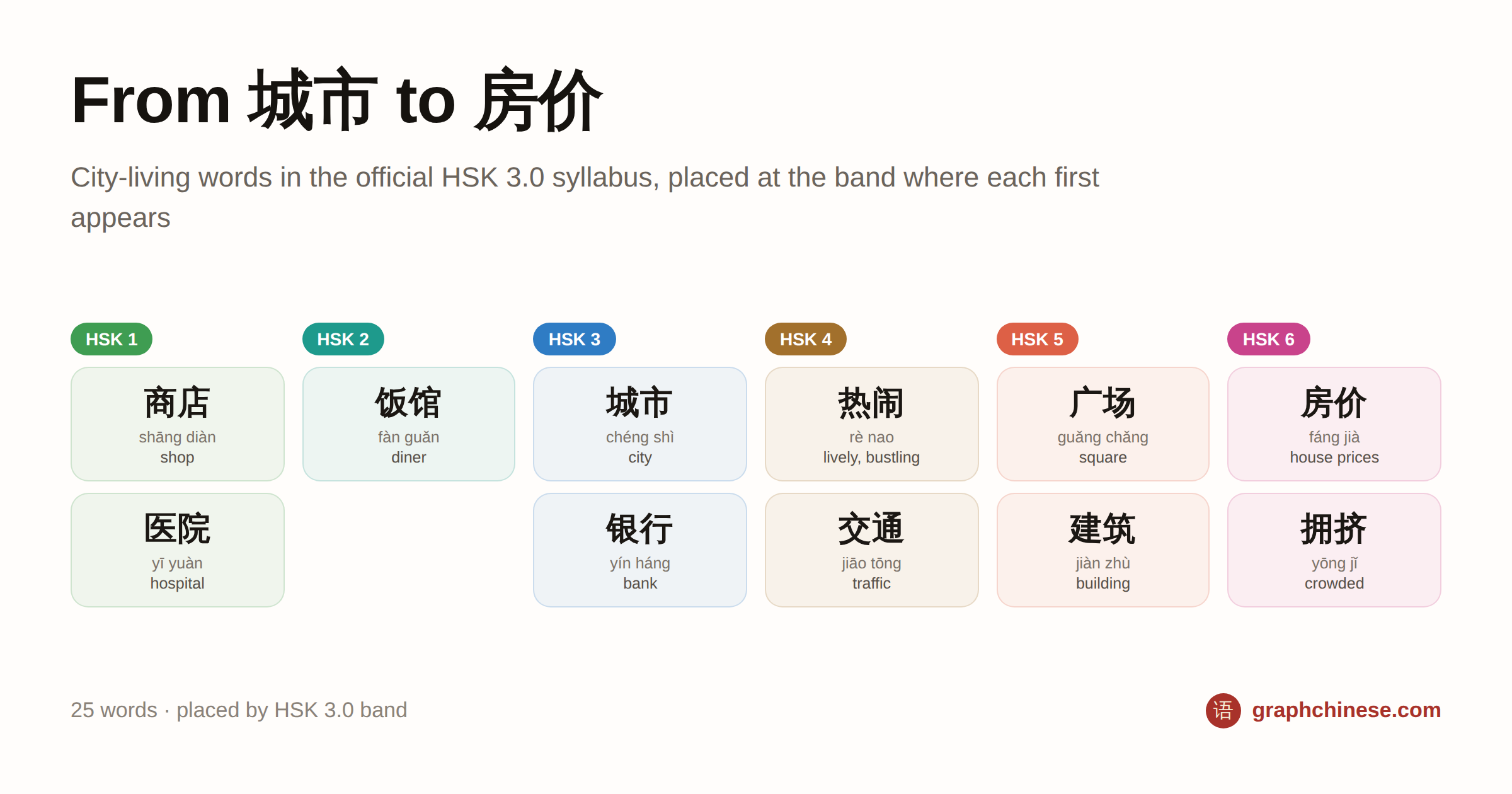
- 级 · From 城市 to 房价 PNG 1080 wide 1080×1350 1200×630
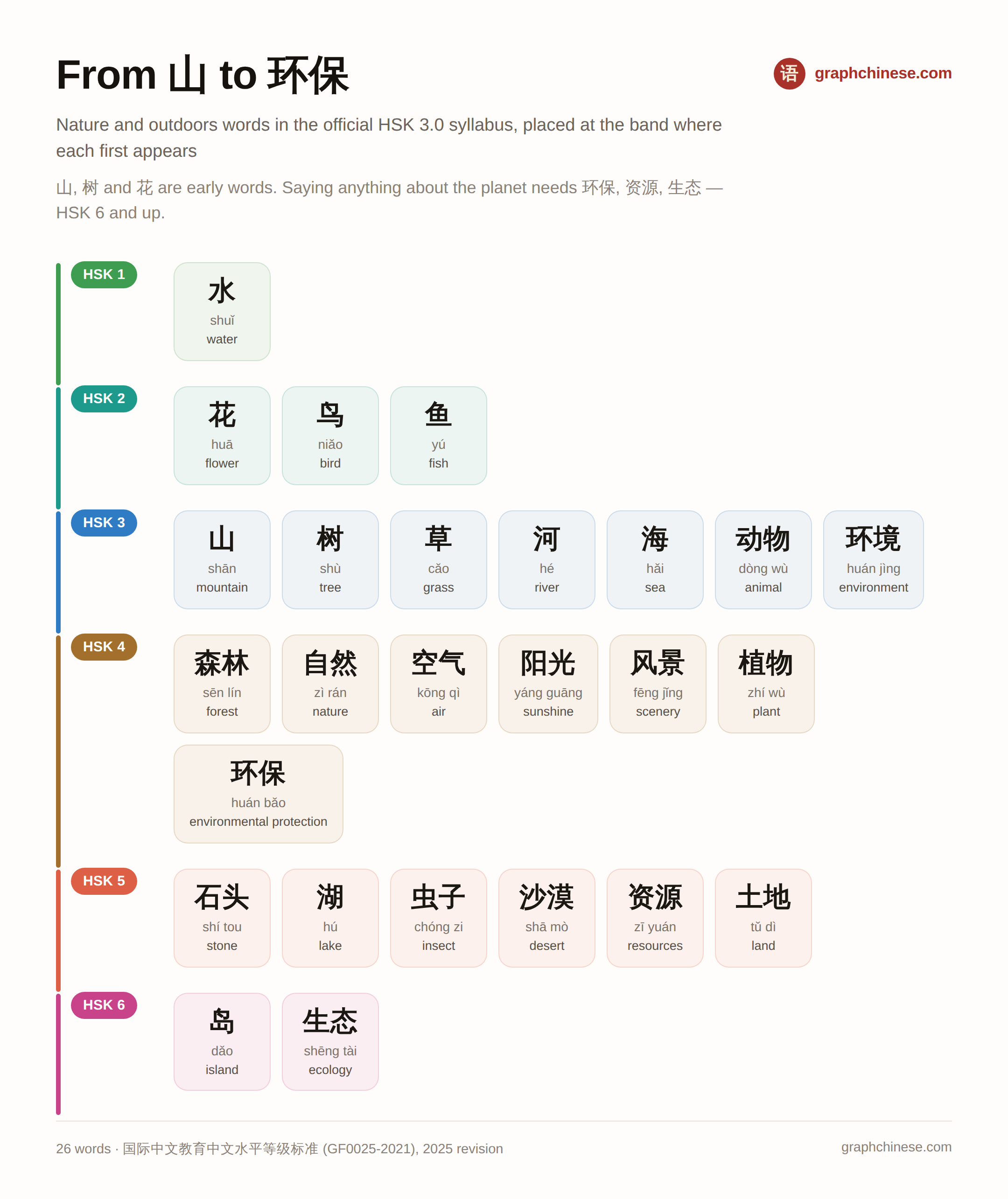
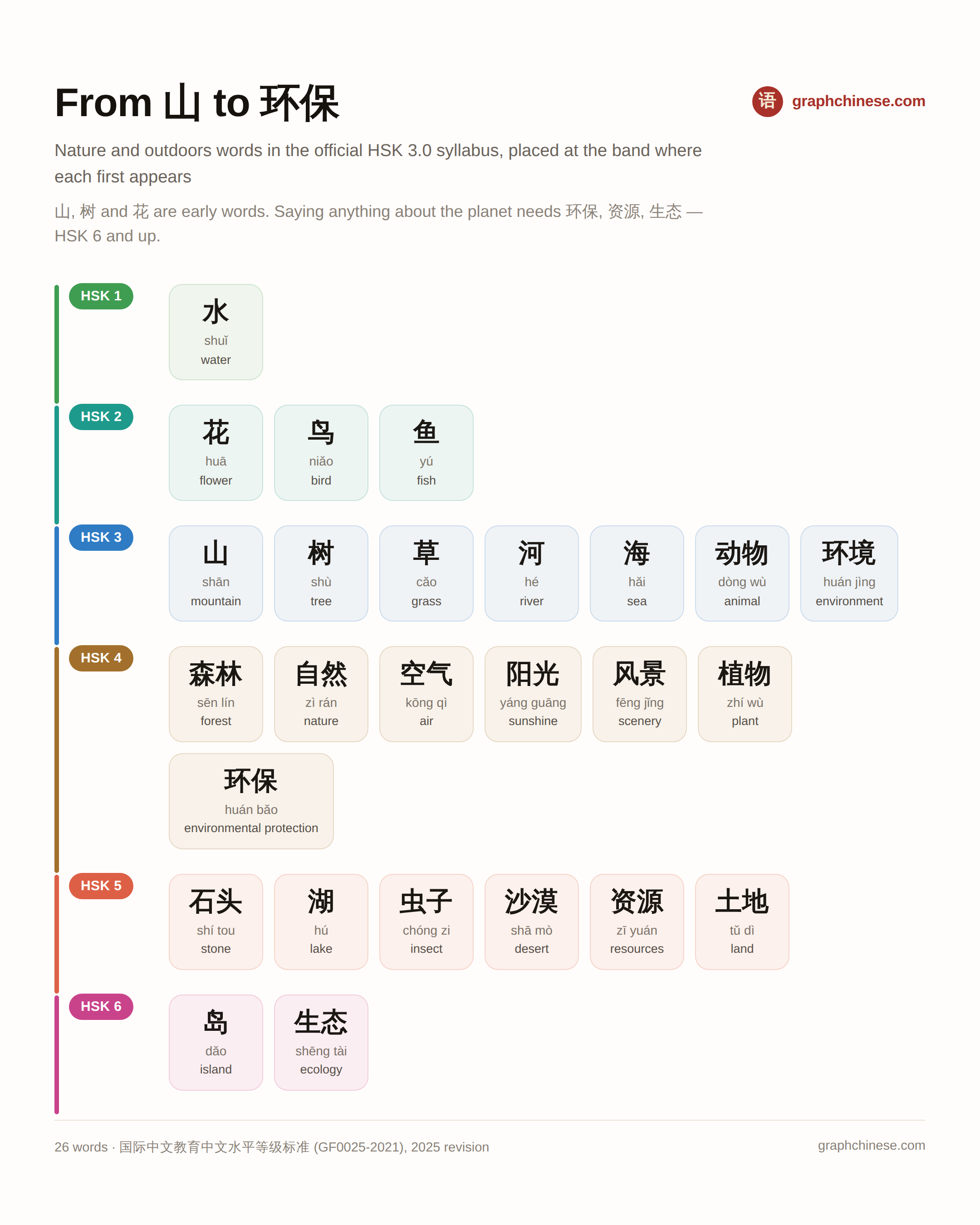
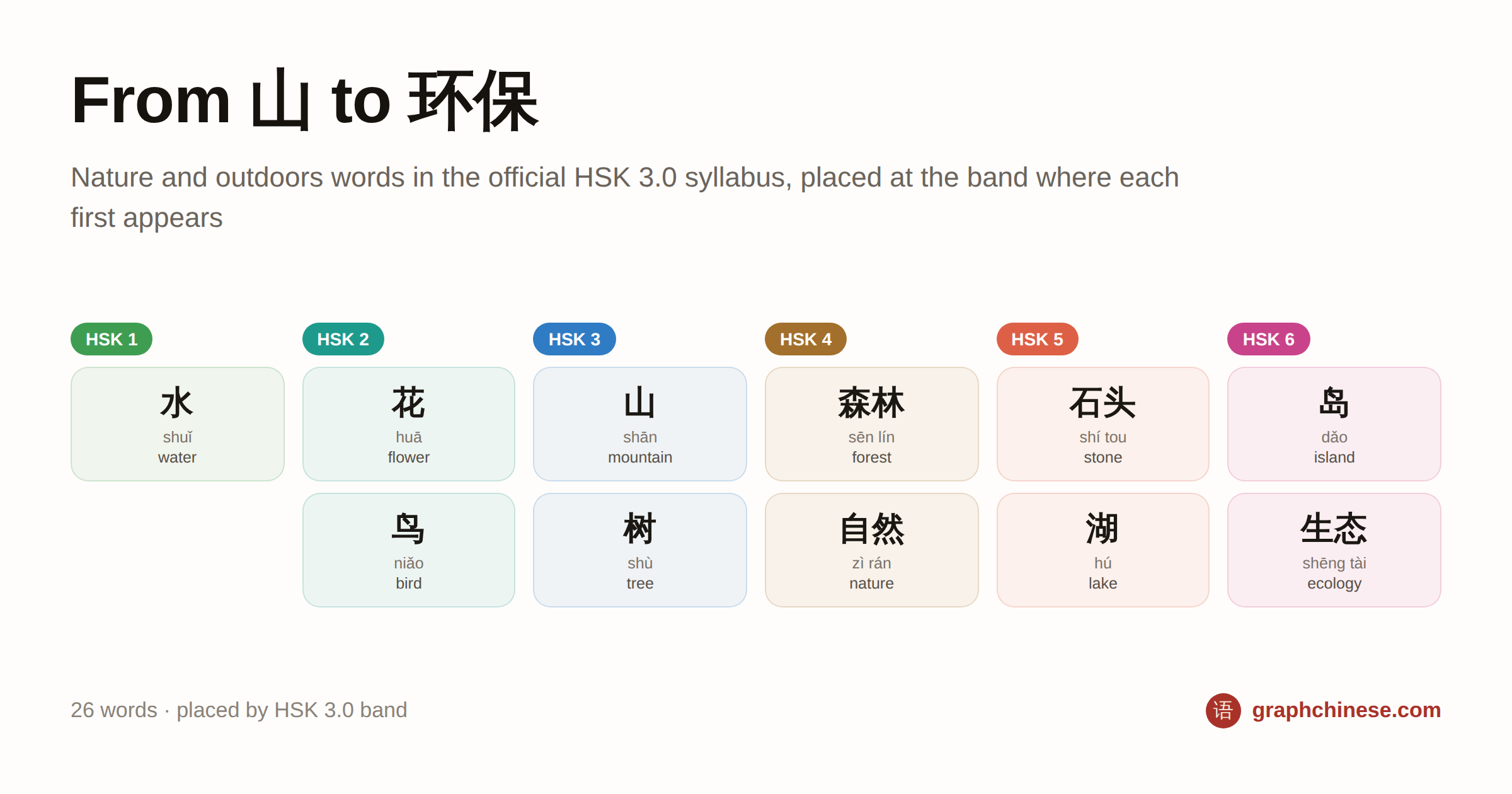
- 级 · From 山 to 环保 PNG 1080 wide 1080×1350 1200×630
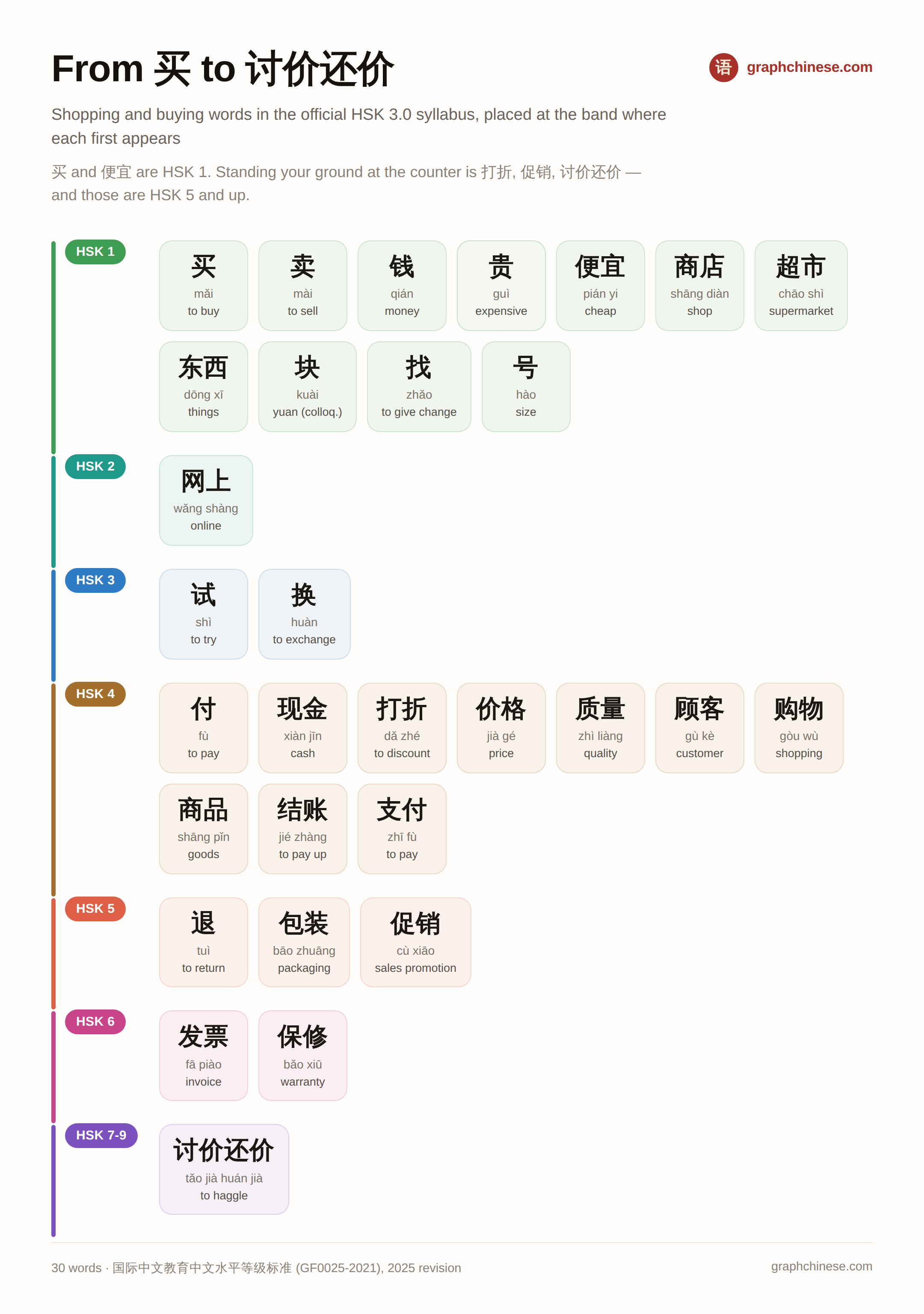
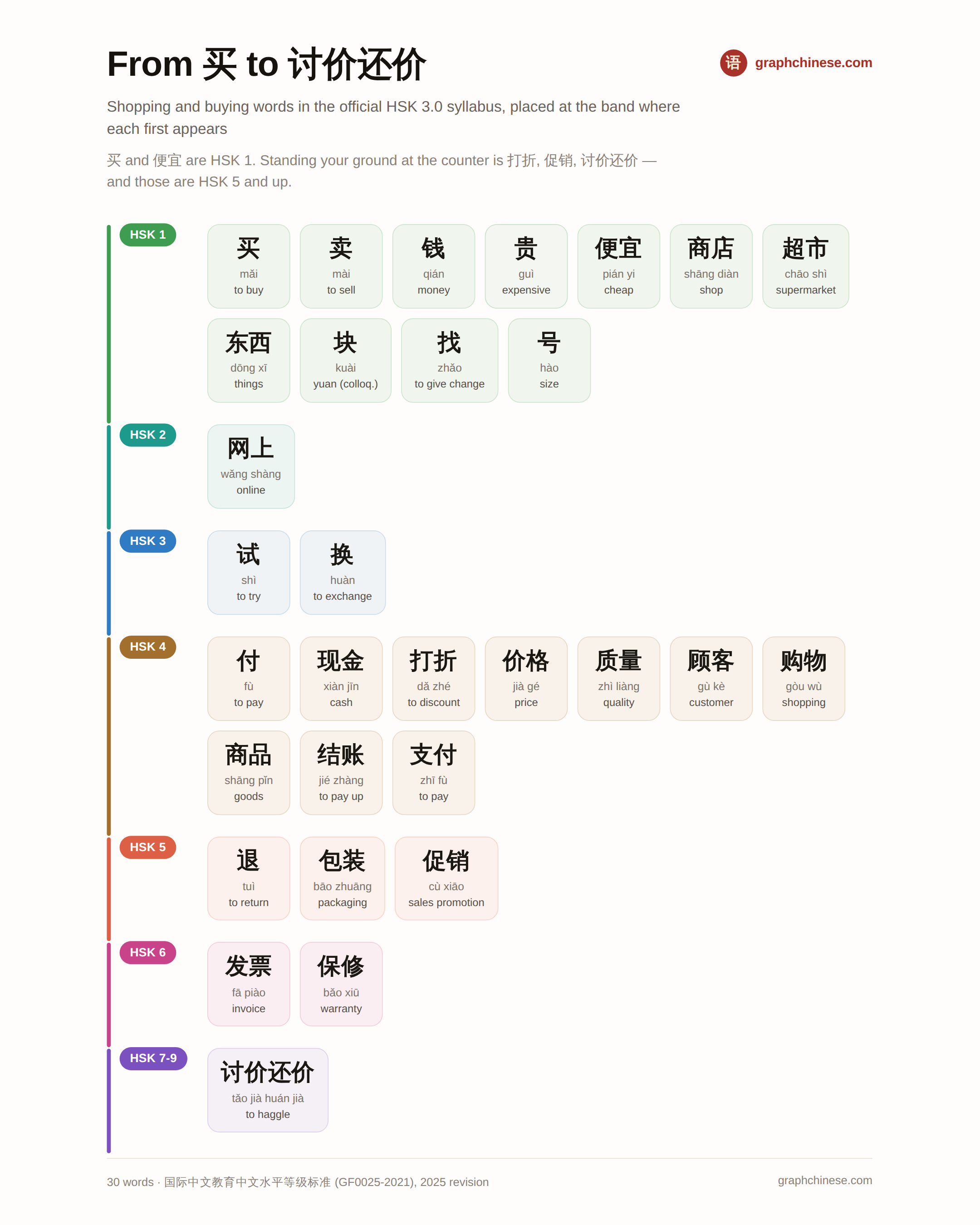
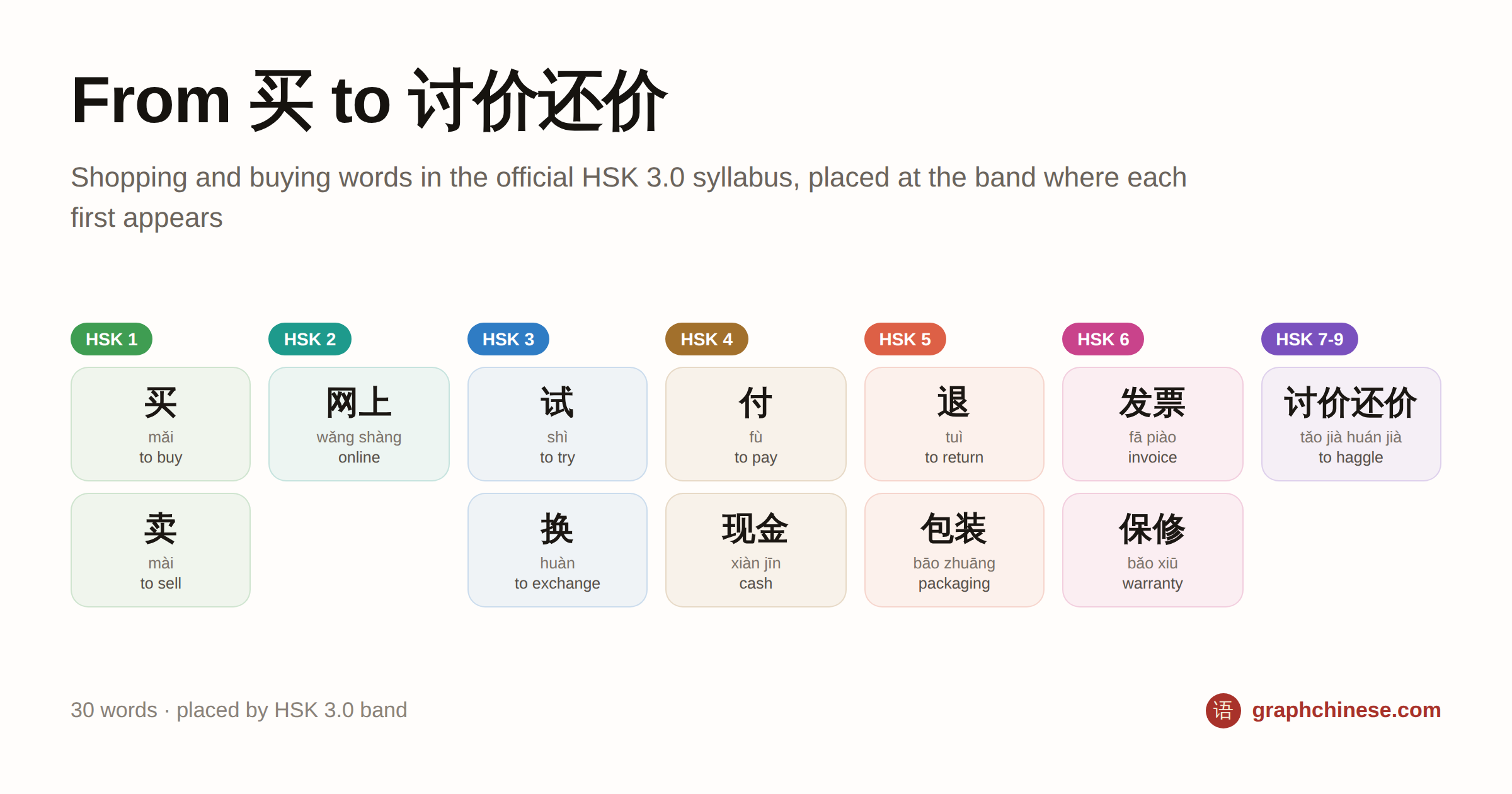
- 级 · From 买 to 讨价还价 PNG 1080 wide 1080×1350 1200×630
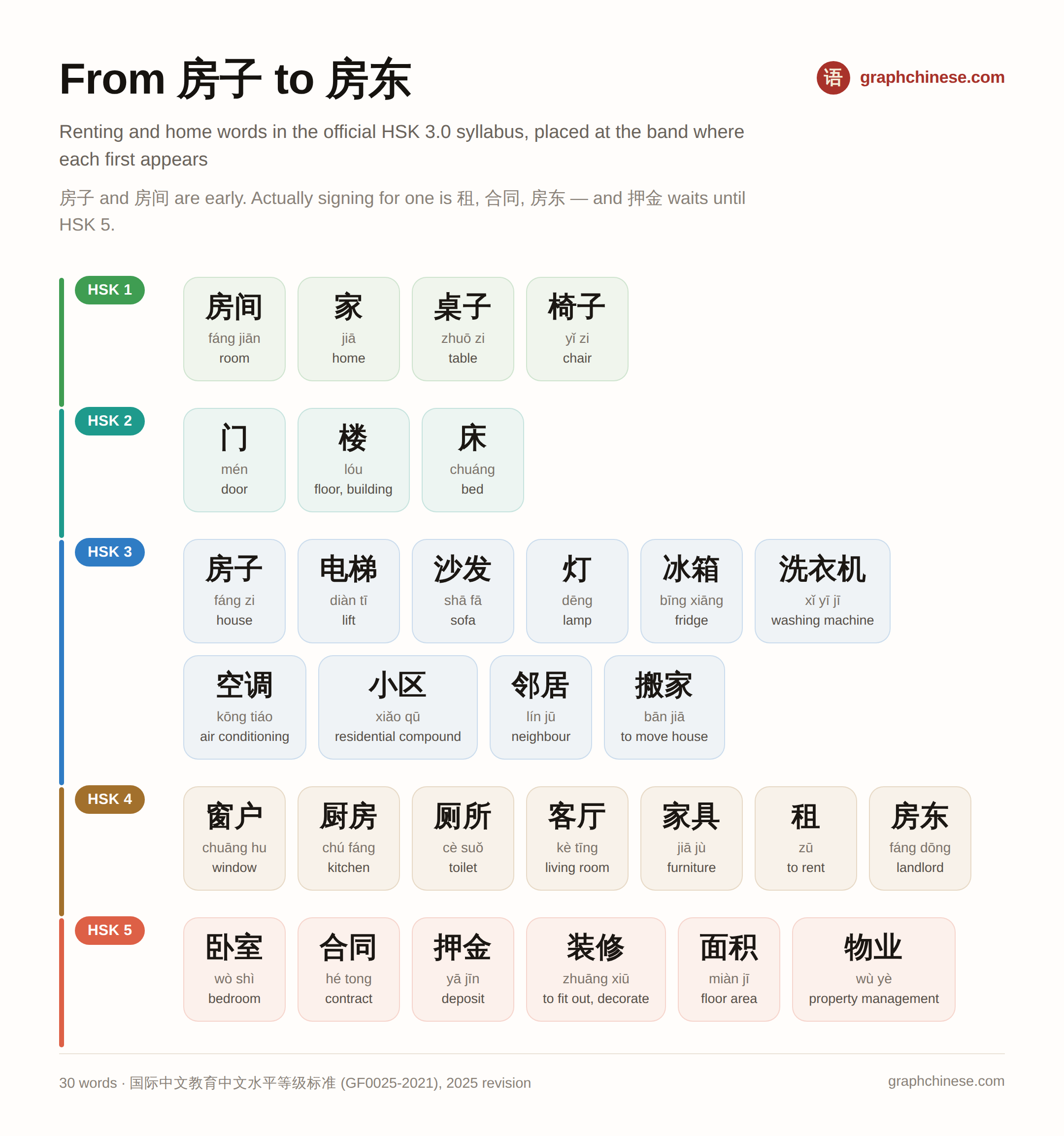
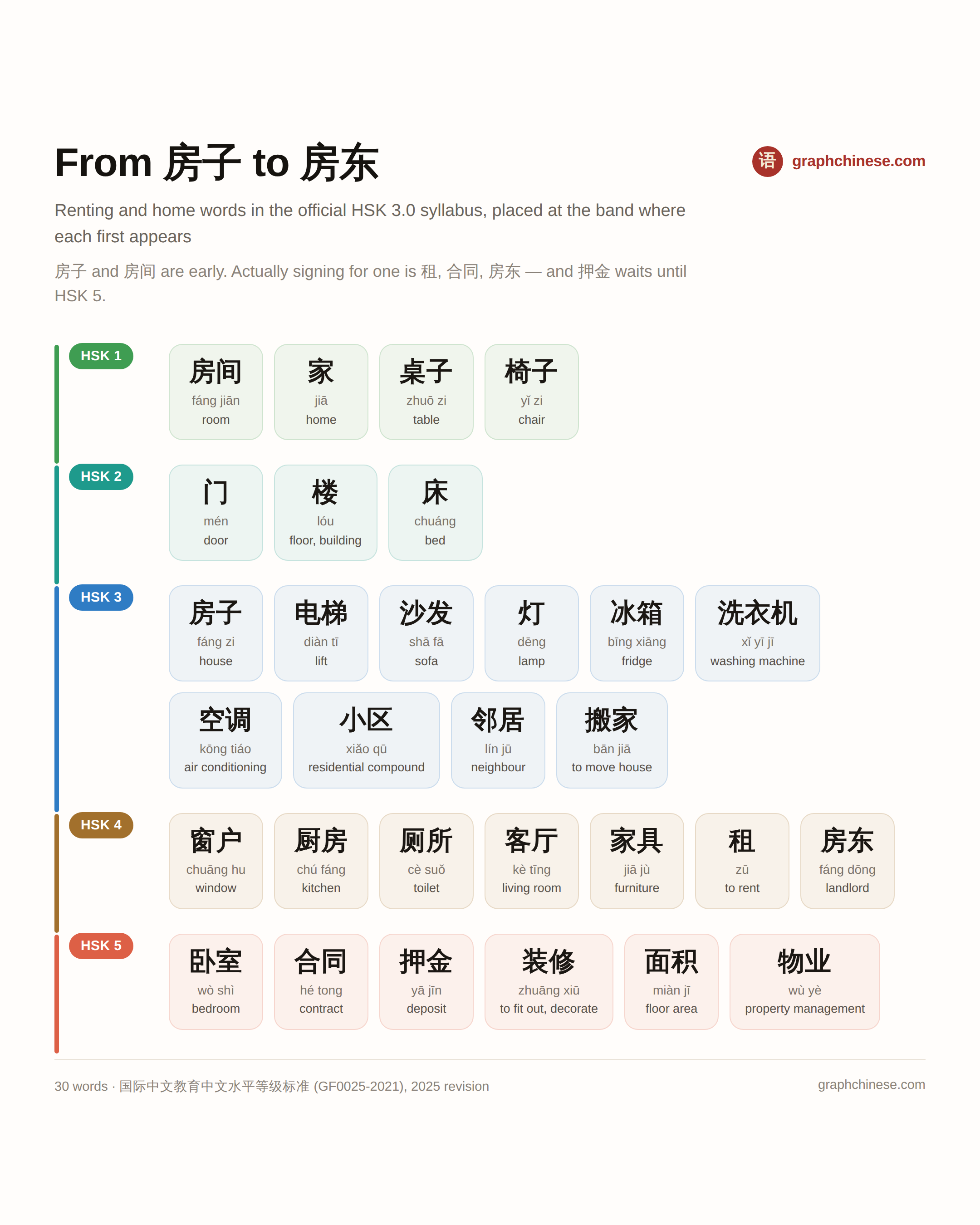
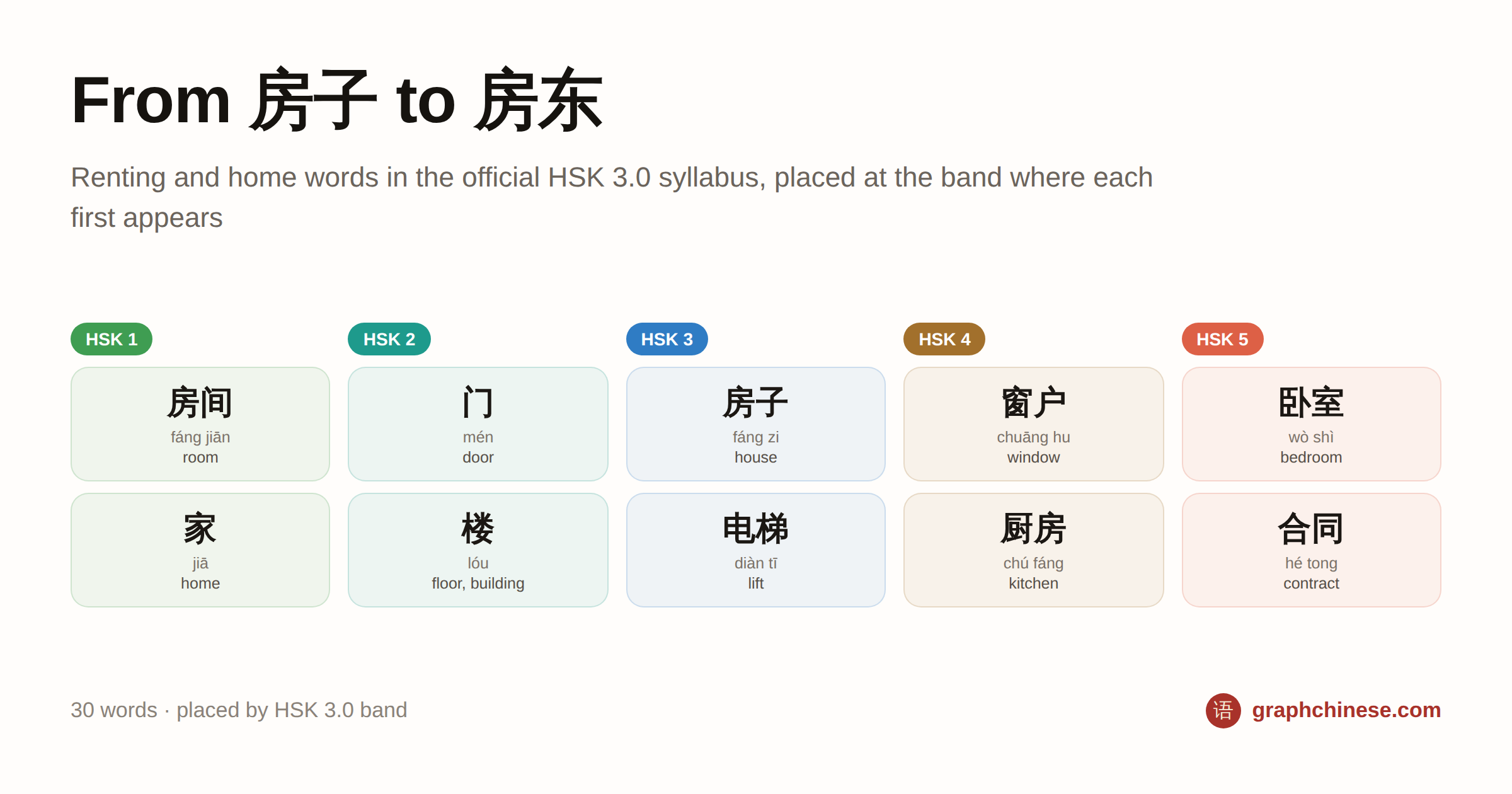
- 级 · From 房子 to 房东 PNG 1080 wide 1080×1350 1200×630
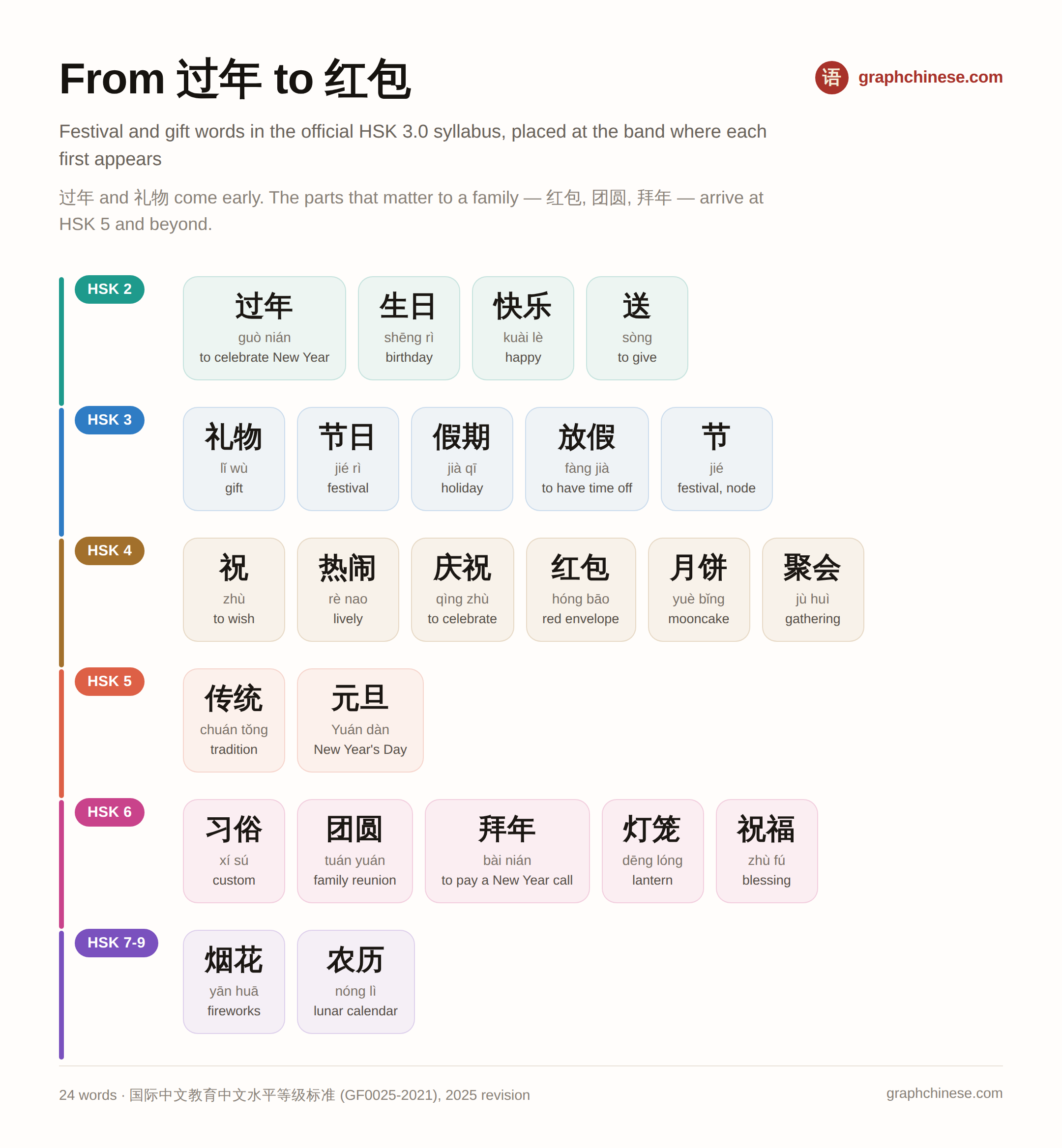
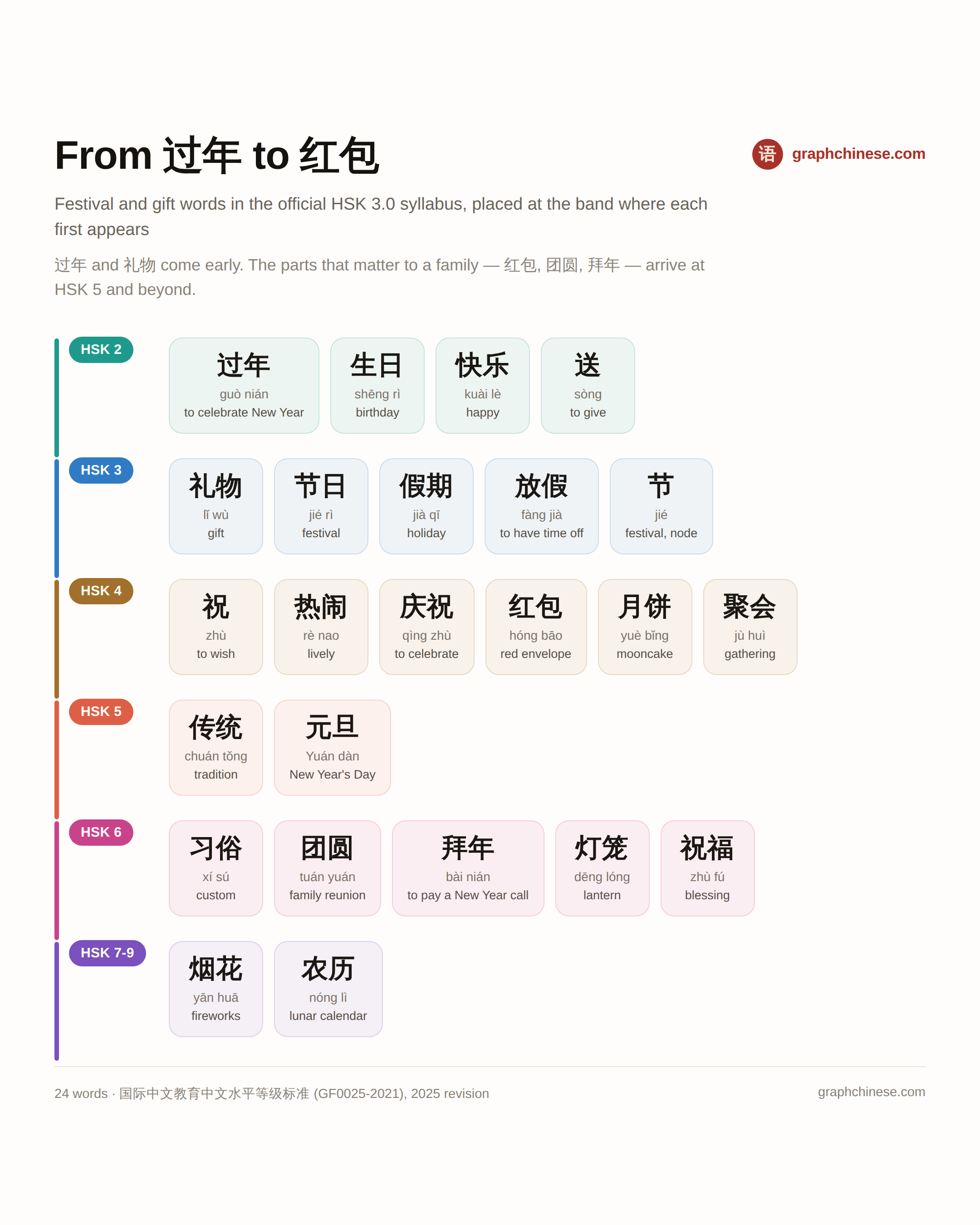
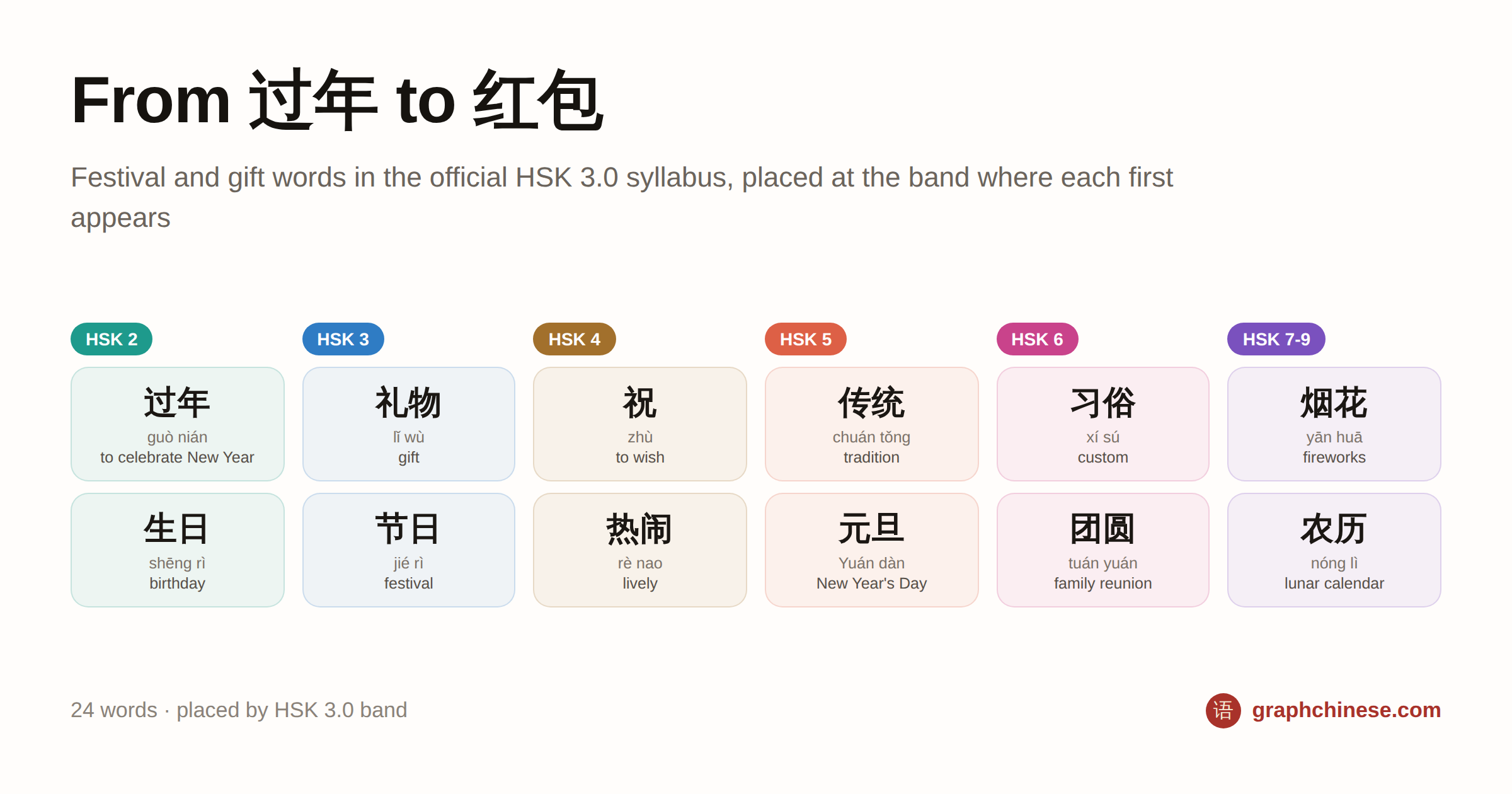
- 级 · From 过年 to 红包 PNG 1080 wide 1080×1350 1200×630
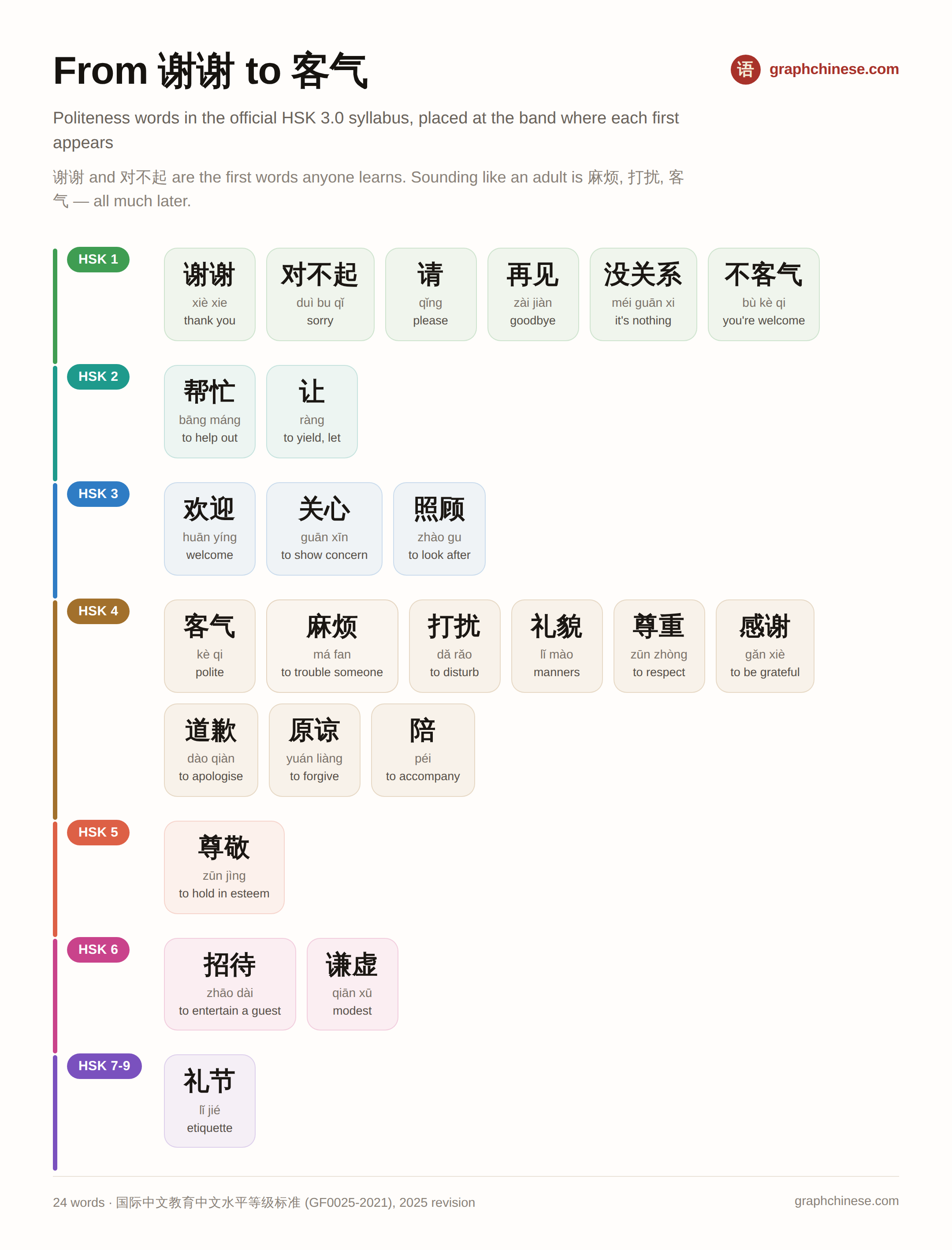
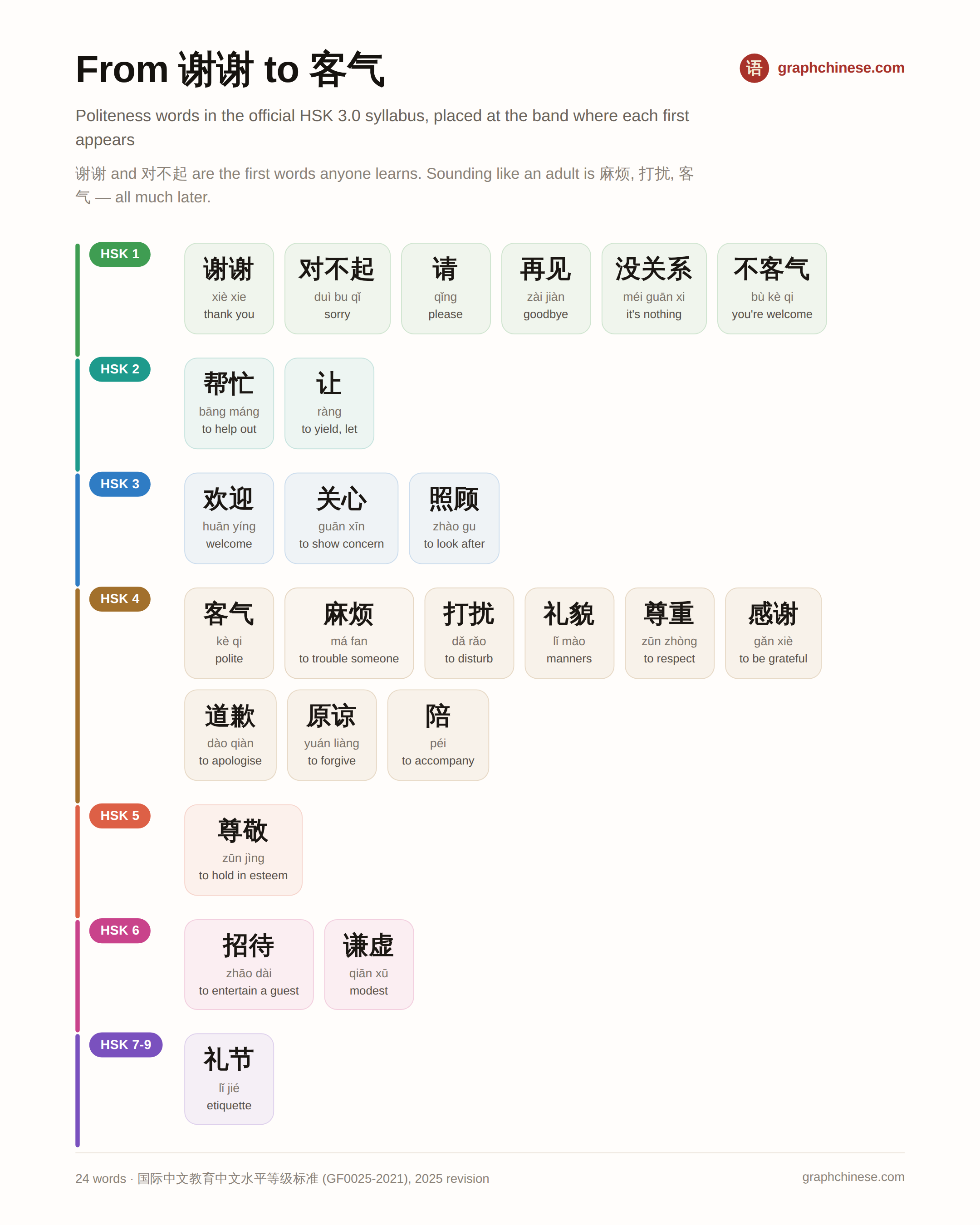
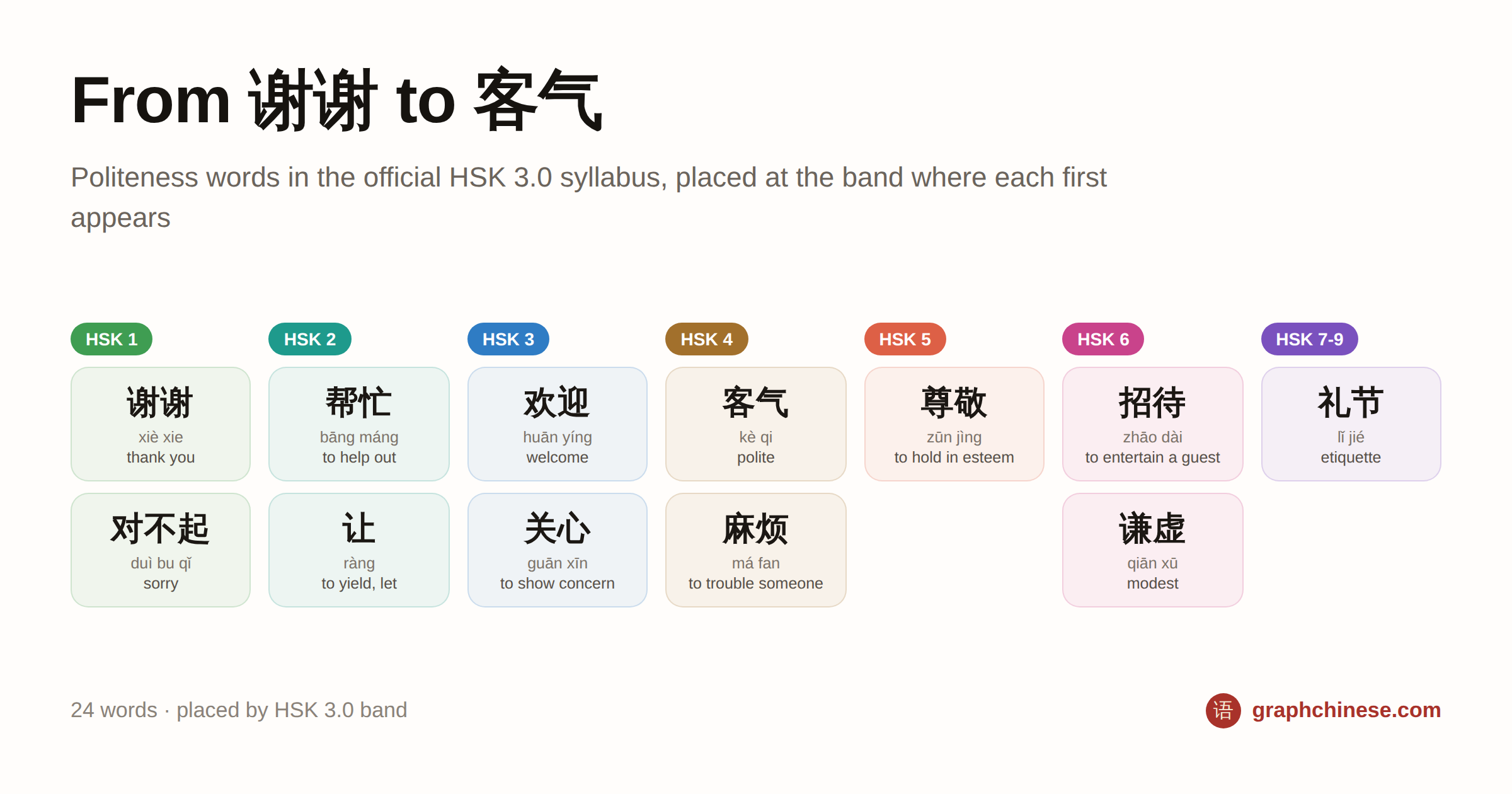
- 级 · From 谢谢 to 客气 PNG 1080 wide 1080×1350 1200×630
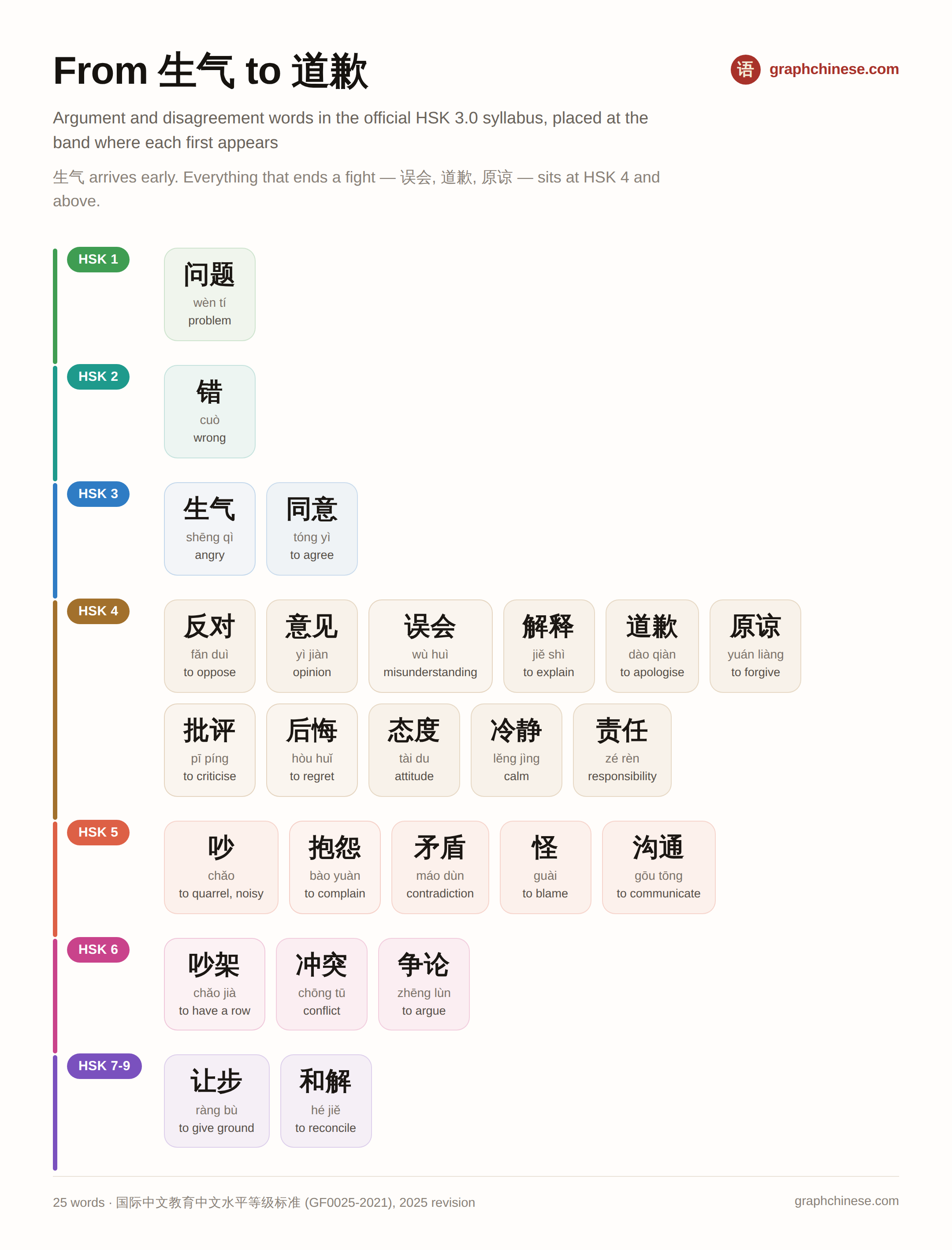
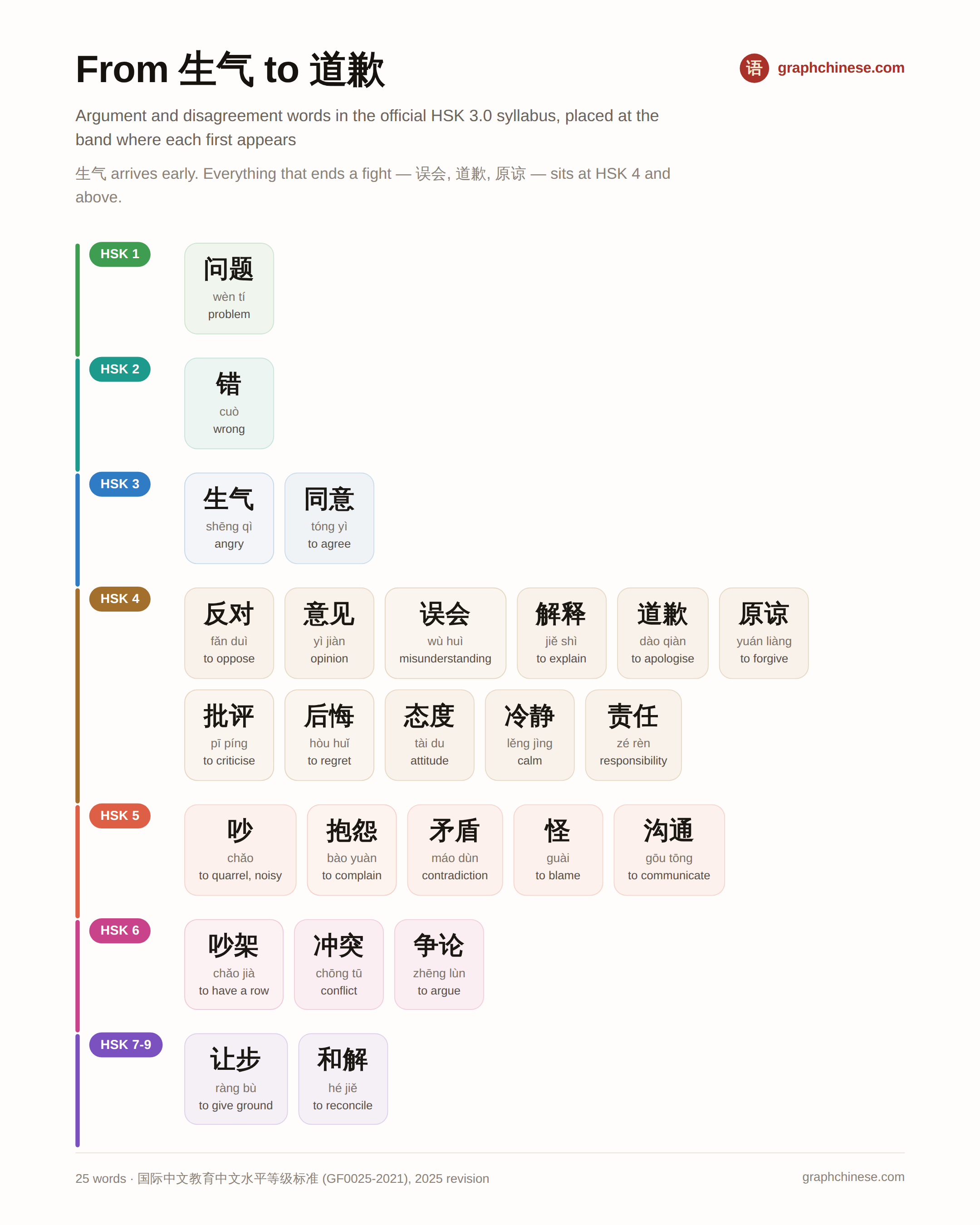
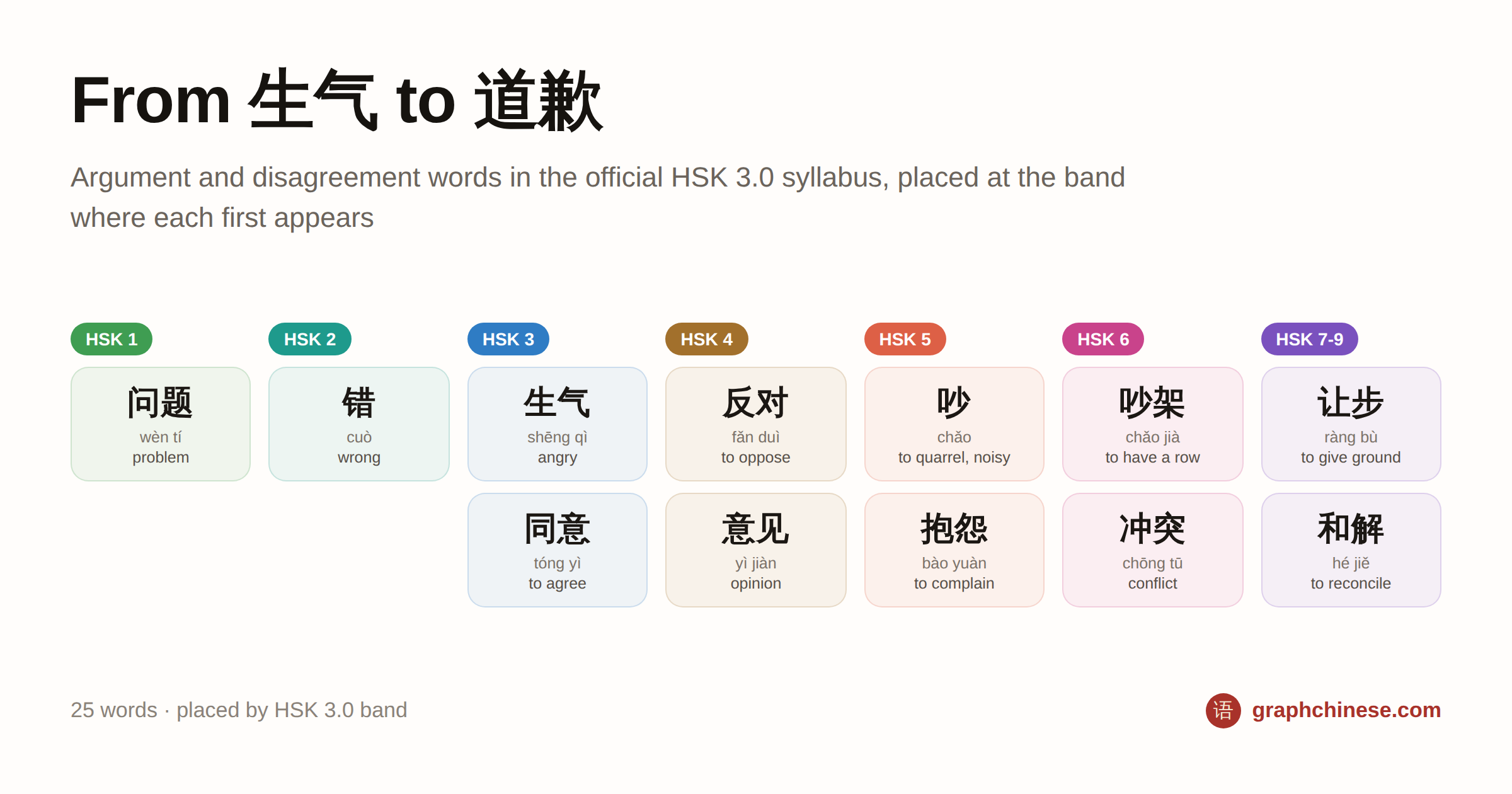
- 级 · From 生气 to 道歉 PNG 1080 wide 1080×1350 1200×630
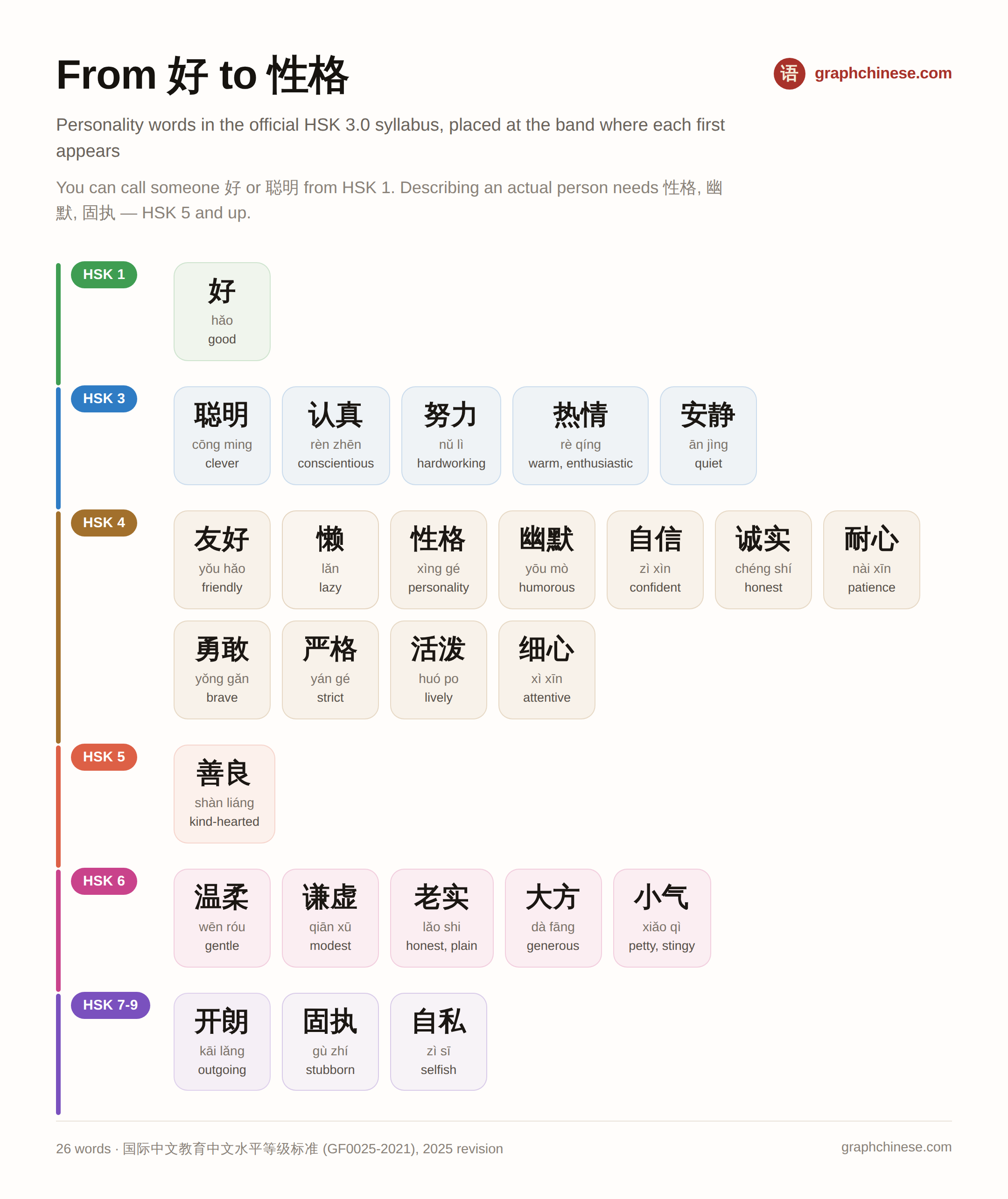
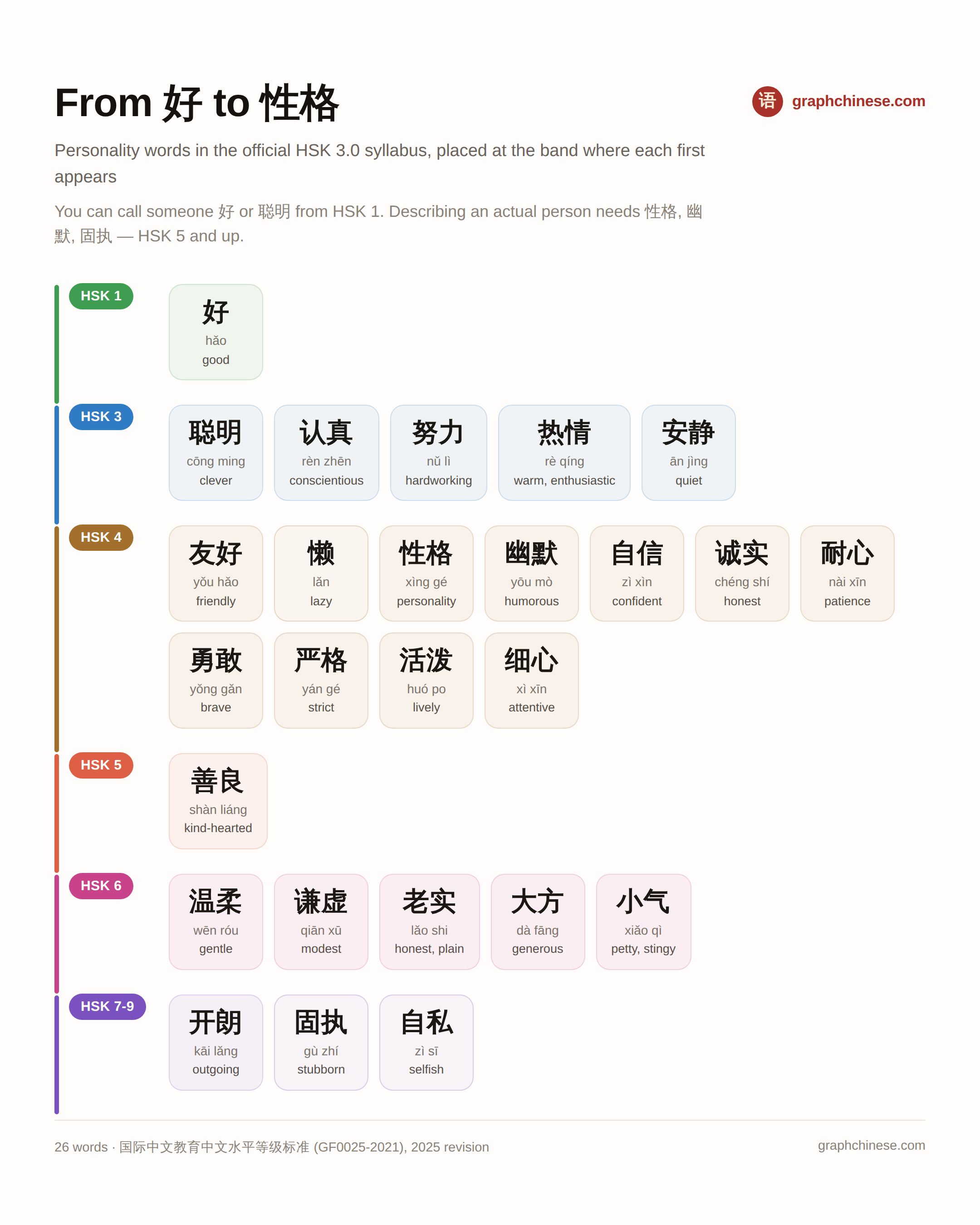
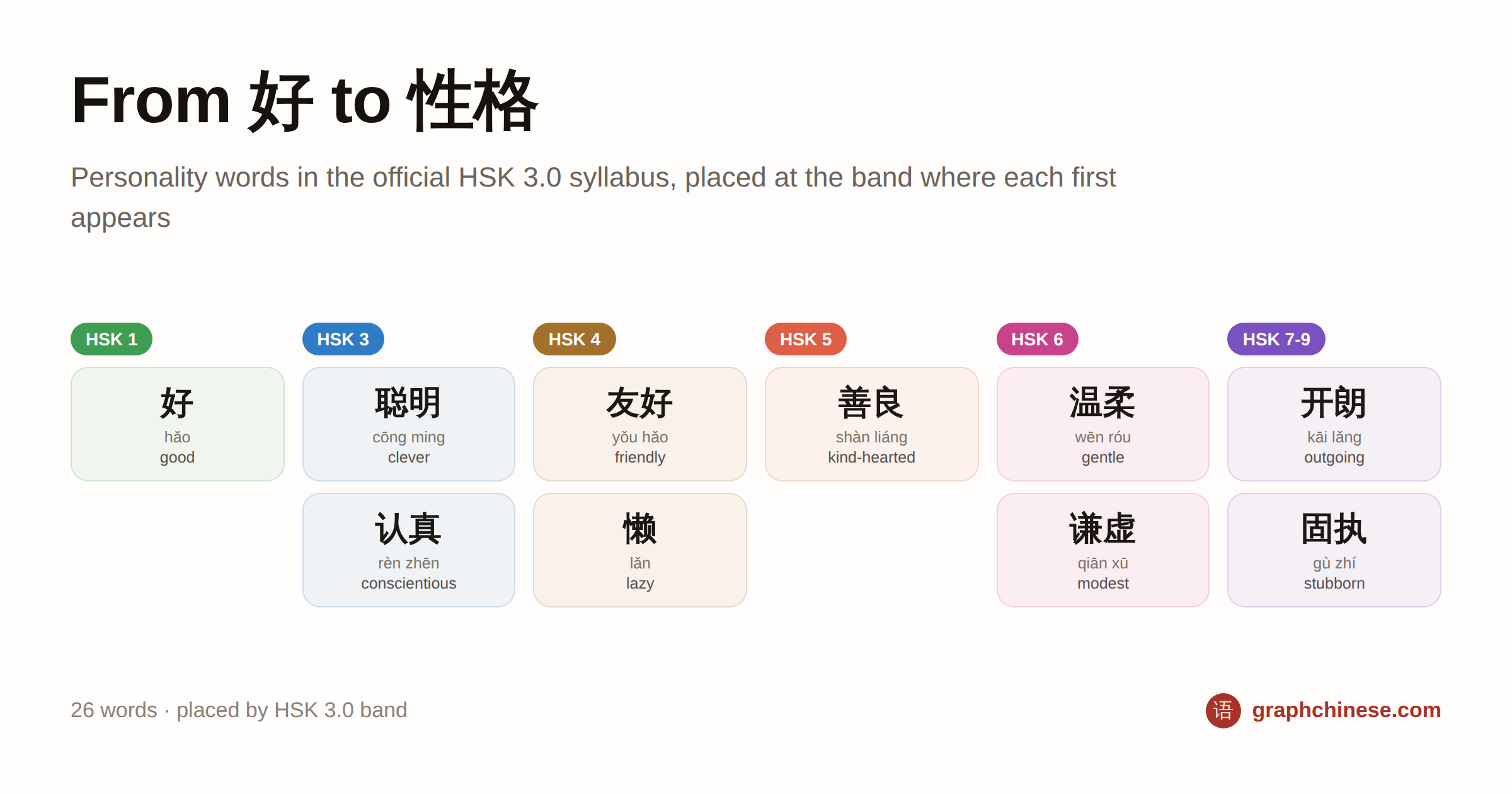
- 级 · From 好 to 性格 PNG 1080 wide 1080×1350 1200×630
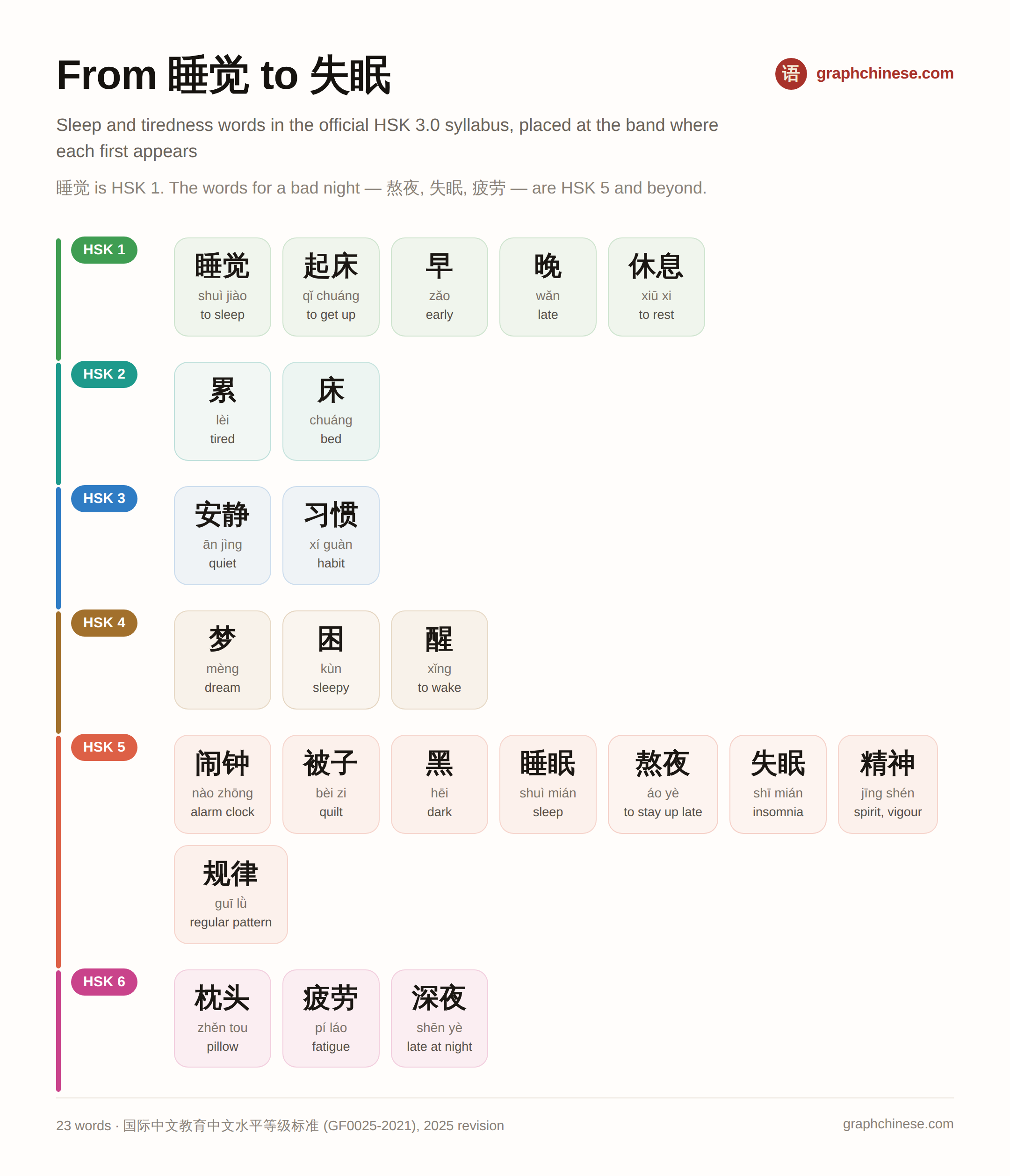
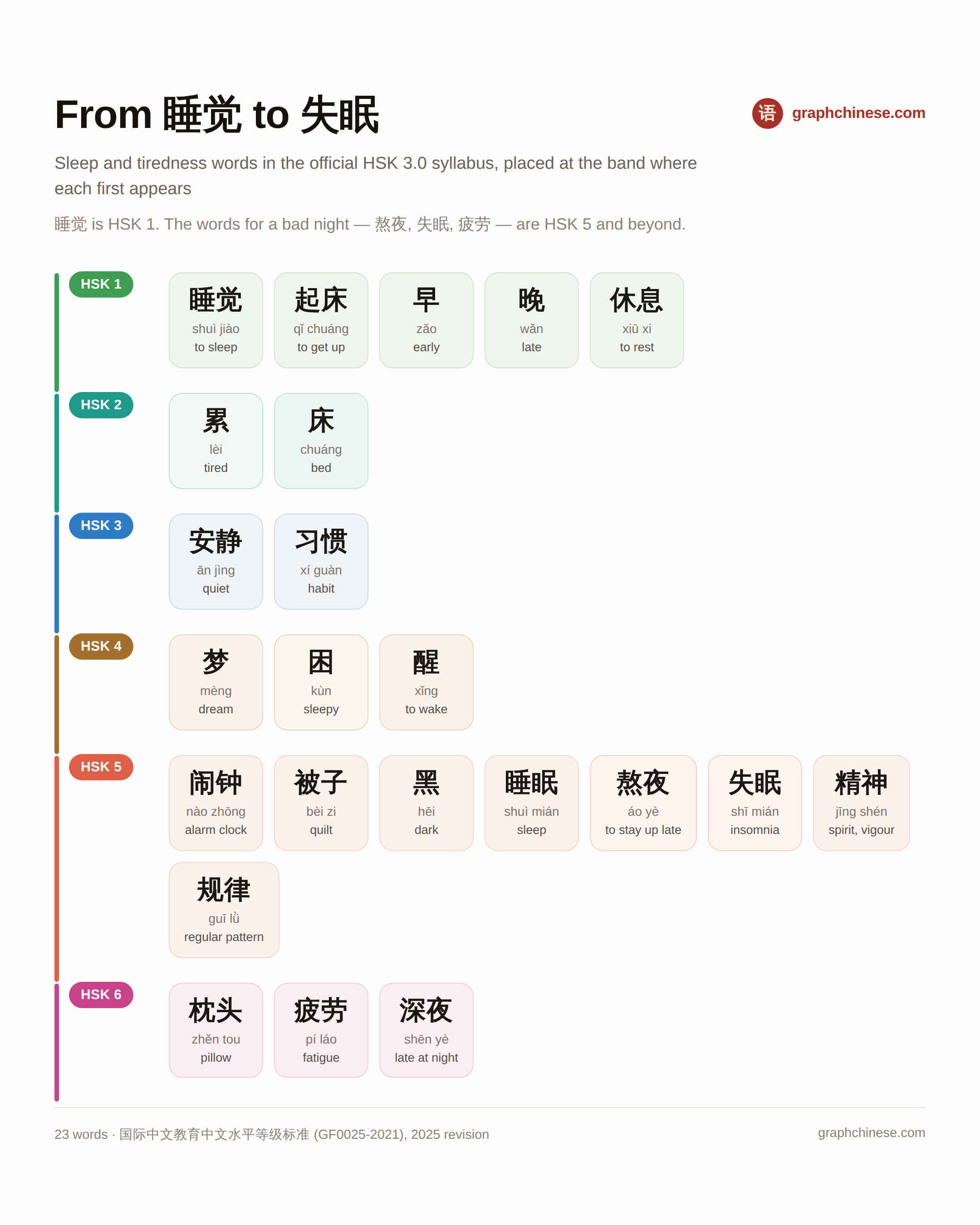
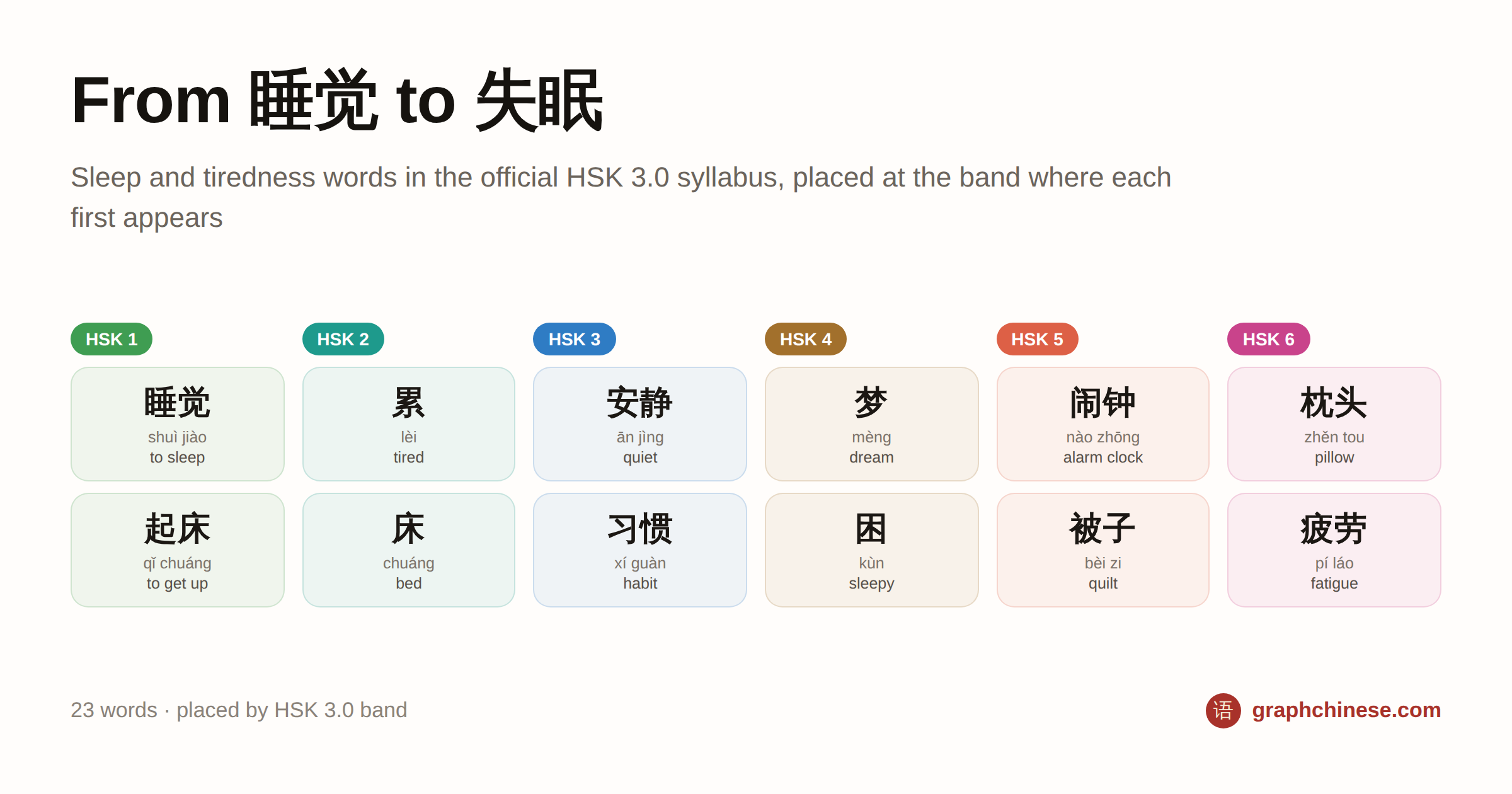
- 级 · From 睡觉 to 失眠 PNG 1080 wide 1080×1350 1200×630
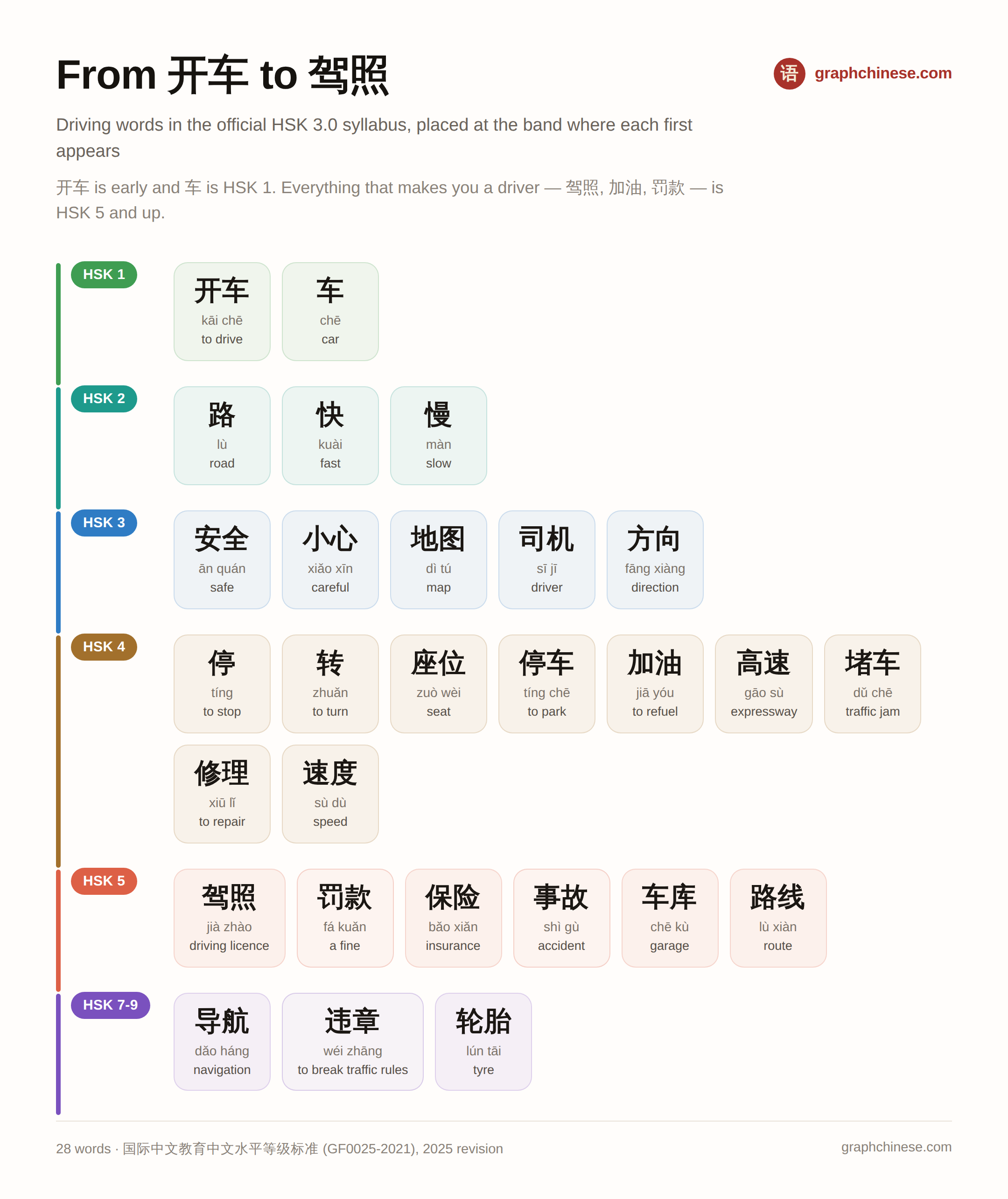
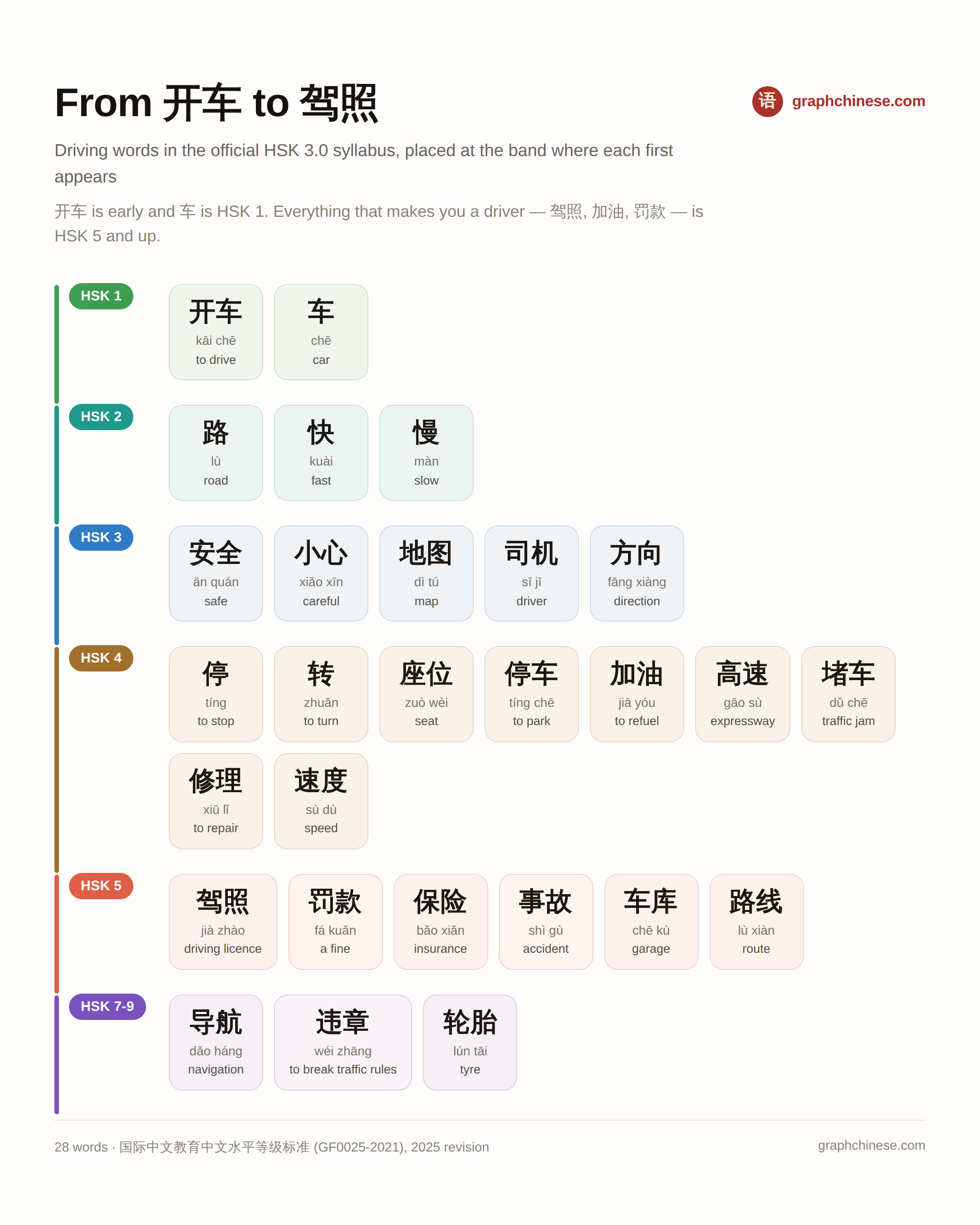
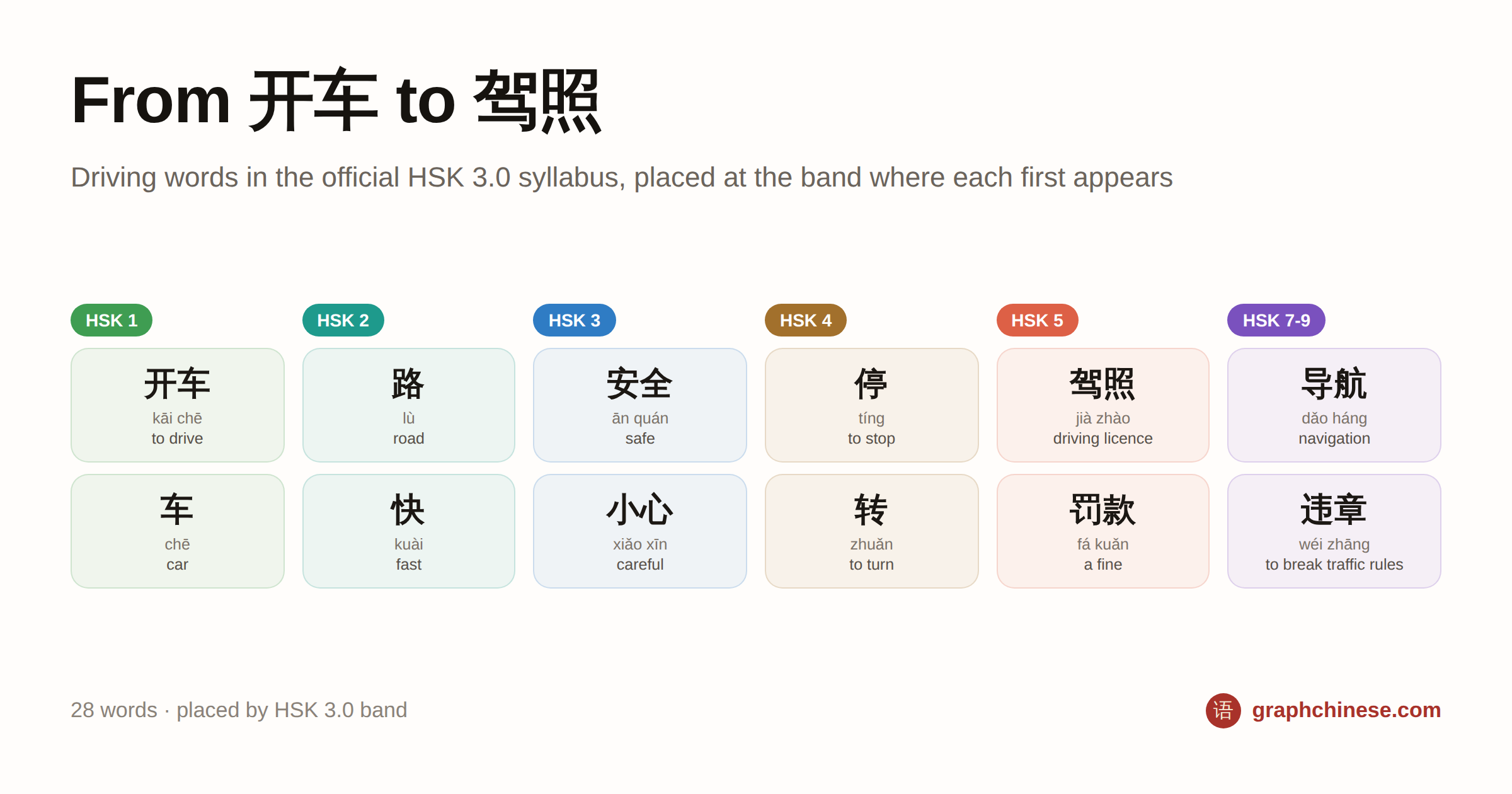
- 级 · From 开车 to 驾照 PNG 1080 wide 1080×1350 1200×630
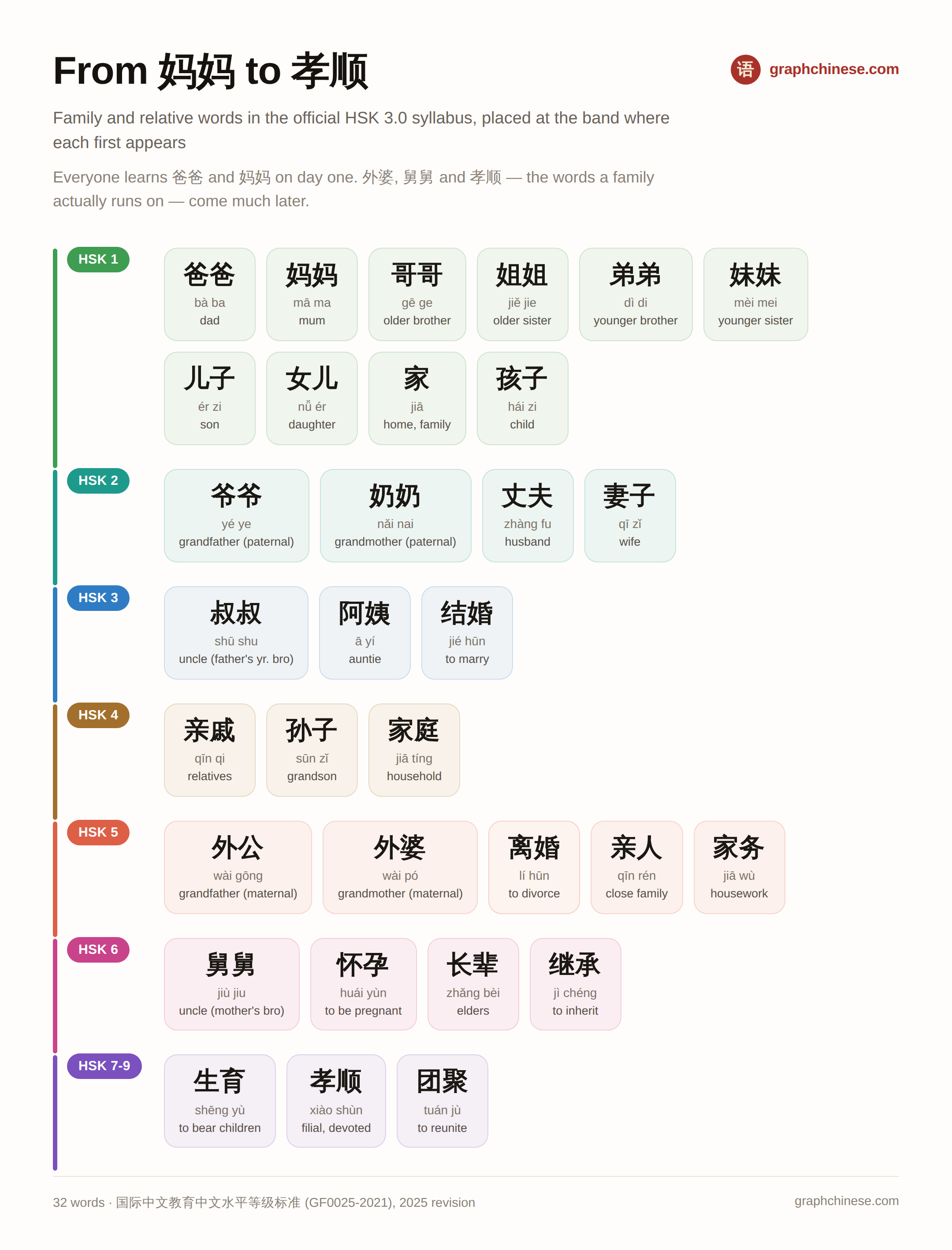
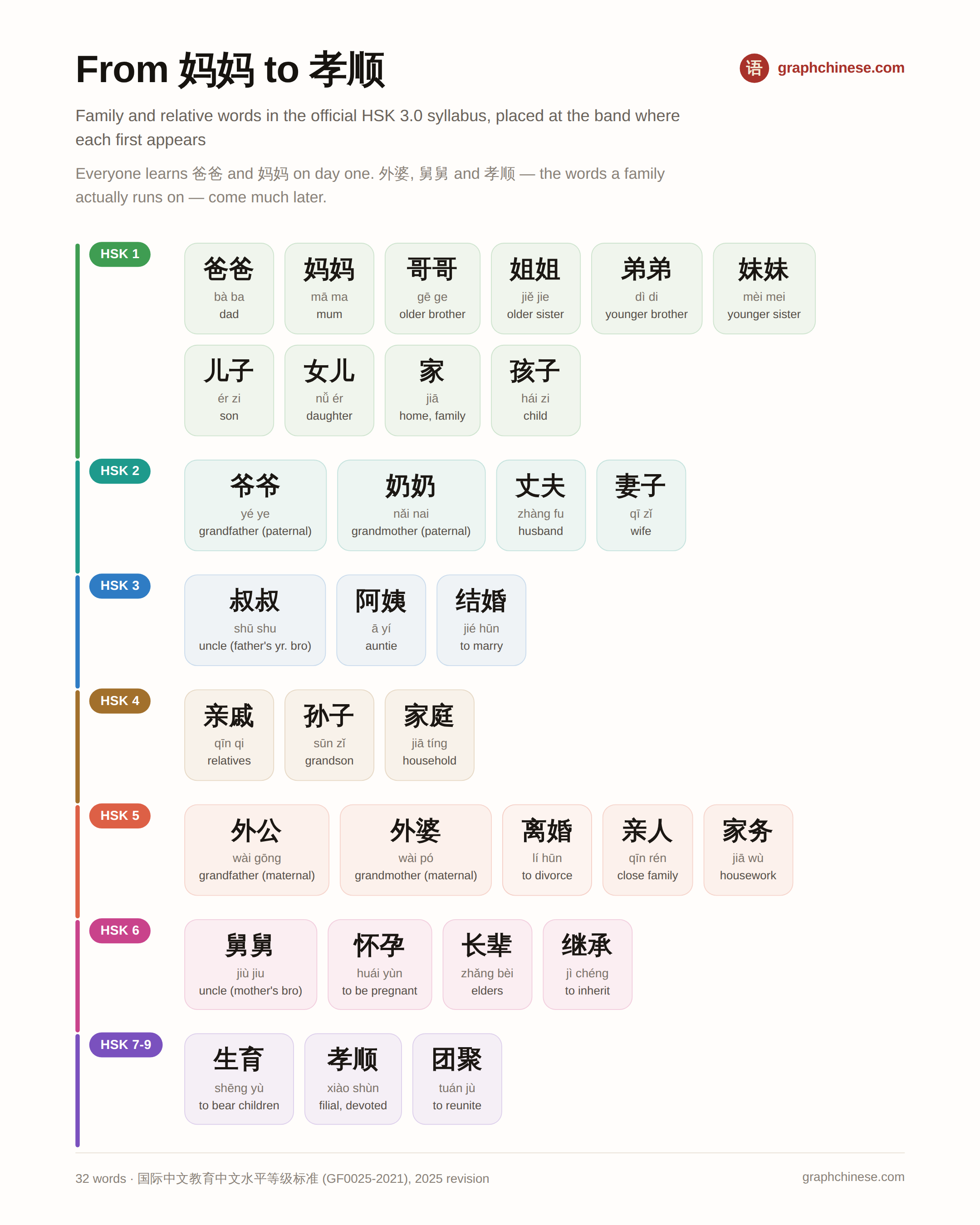
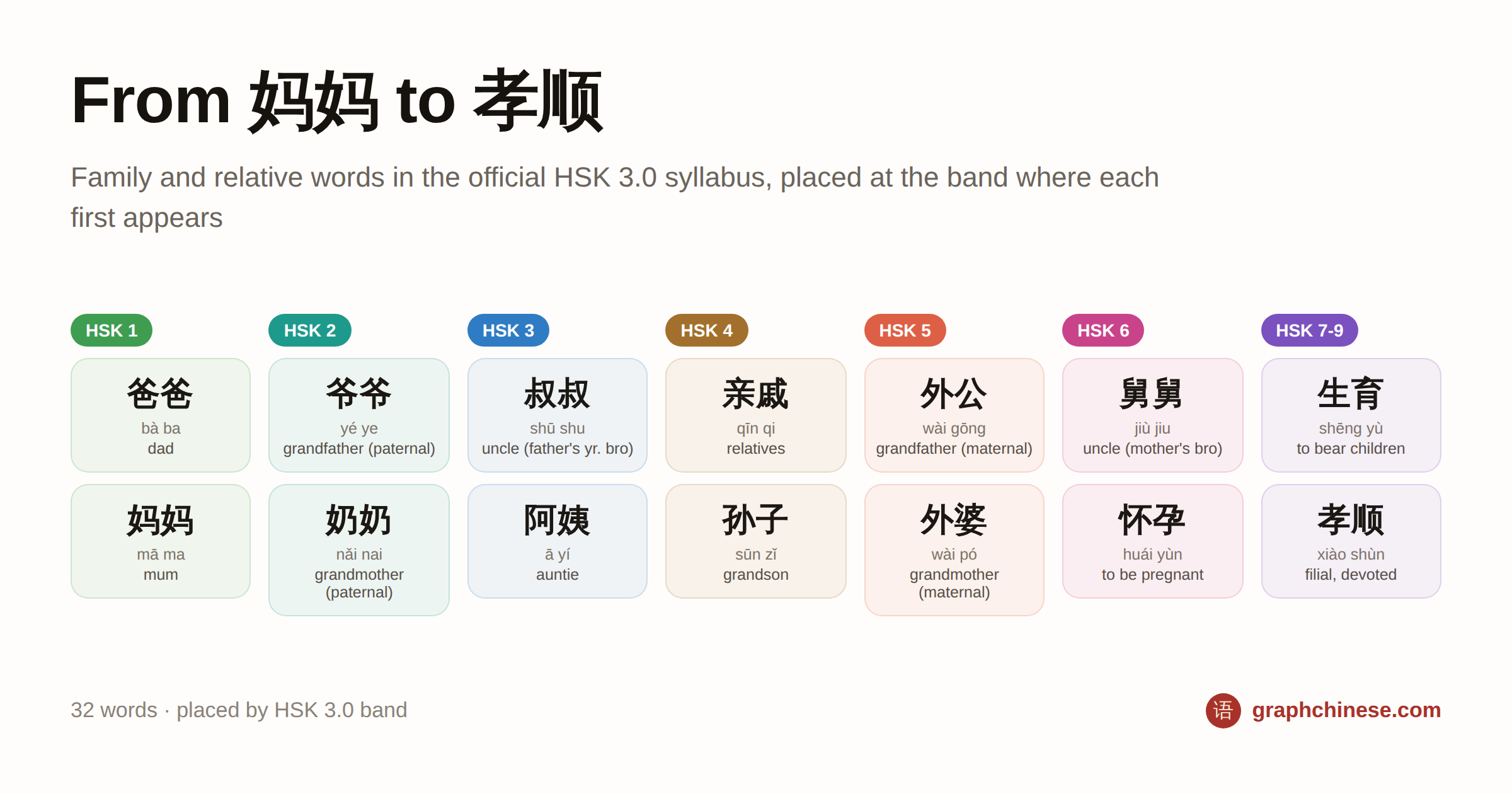
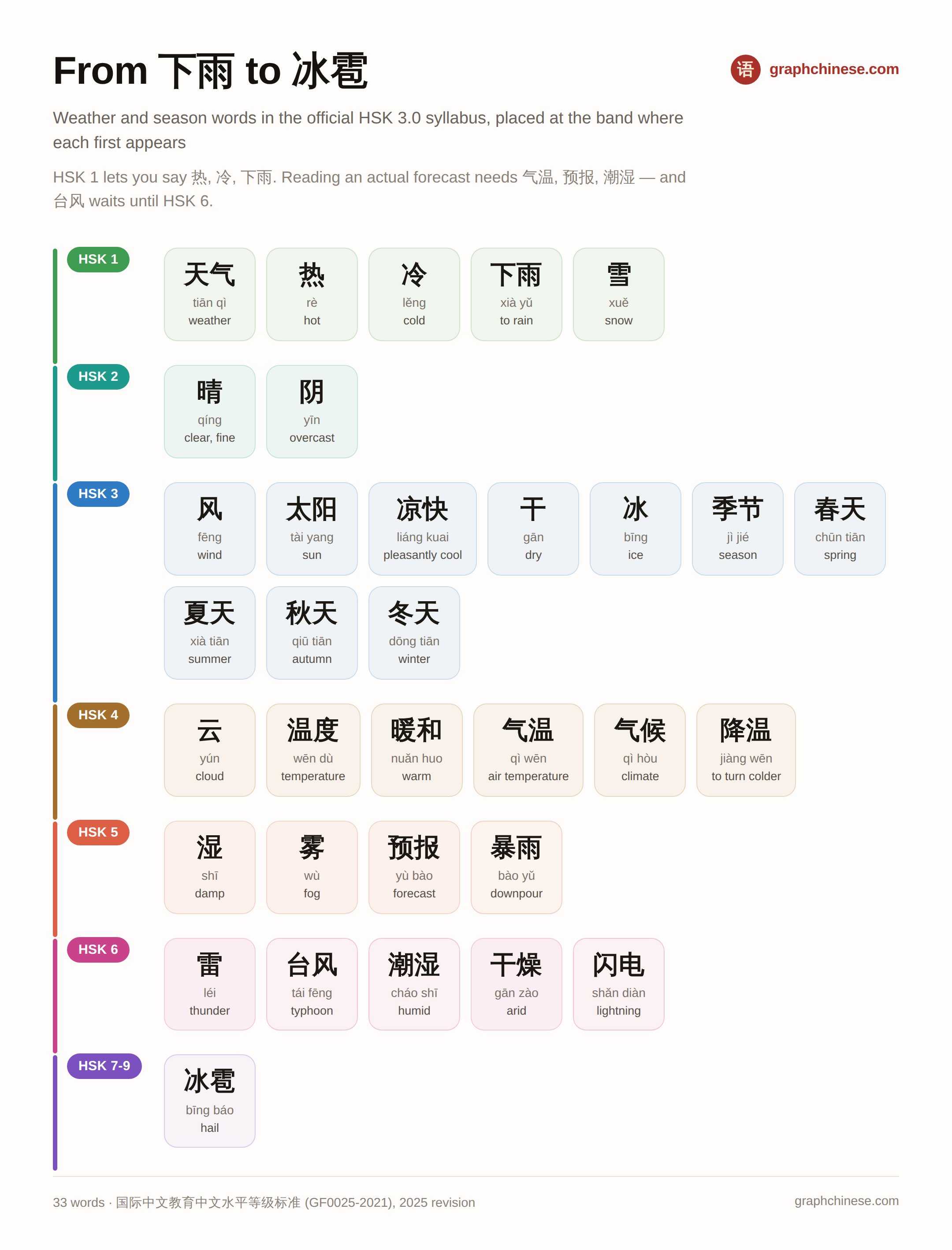
Every card
HSK 0 — 20 cards
Foundations — sounds, strokes, and your first characters
- 中国 · The country in the middle — Two characters, and the second one is a picture of a border with something inside it.
- 十二生肖 · The twelve zodiac animals — Twelve animals, one per year, in the order they finished the race.
- 福 · Why it's hung upside down — A pun you can see: upside-down 福 sounds exactly like fortune arriving.
- 确 · Confirm the language — Ask before you dive in — older speakers, ideally ones with no English, tend to have the best stories.
- 打招呼与回应 · Say hello and answer back — Say hello and answer back
- 拼音声母与韵母 · Pinyin Initials and Finals — Pinyin Initials and Finals
- 基本笔画与笔顺规则 · Basic Strokes and Stroke-Order Rules — Basic Strokes and Stroke-Order Rules
- 四声与轻声 · The Four Tones and Neutral Tone — The Four Tones and Neutral Tone
- 高频部首与意义线索 · High-Frequency Radicals as Meaning Cues — 部首 · Radicals as Meaning Cues
- 拼读音节与变调 · Reading Pinyin Syllables and Tone Sandhi — Reading Pinyin Syllables and Tone Sandhi
- 构成 · What 的 is built from — 的 = 白 + 勺.
- 声旁 · 禾 gives the sound — 禾 carries the sound in 4 characters, including 和.
- 形近 · Characters that look like 在 — 在 next to 再、报、库 — one stroke apart, nothing else in common.
- 构成 · What 我 is built from — 我 = 手 + 戈.
- 声旁 · 门 gives the sound — 门 carries the sound in 7 characters, including 们.
- 形近 · Characters that look like 他 — 他 next to 地、她、休 — one stroke apart, nothing else in common.
- 构成 · What 个 is built from — 个 = 人 + 丨.
- 声旁 · 乍 gives the sound — 乍 carries the sound in 7 characters, including 作.
- 构成 · What 和 is built from — 和 = 禾 + 口.
- 声旁 · 见 gives the sound — 见 carries the sound in 7 characters, including 现.
HSK 1 — 52 cards
HSK 1 — the first 150 words and the sentences they make
- 成语 · 马马虎虎 — Horse-horse-tiger-tiger: so-so, and the story of how careless gets you killed.
- 您 · Politeness you can see — 您 is 你 with a heart underneath. That is the whole difference.
- 春节 · The words of Chinese New Year — Six words that cover the whole holiday, from the red envelope to the couplets on the door.
- 评 · Comment on your surroundings — Point at something real and say what you notice. This alone is a complete strategy — caveman Chinese is correct Chinese.
- 问 · Ask about their life — Hometown, family, children, grandchildren, work. Memorize a few of these — they get a person to open up about their past.
- 问 · 哪儿 Where — 哪儿 and 哪里 are the same question. It sits where the answer goes, so the word order never moves.
- 问 · 什么 What — 什么 attaches to the noun it asks about: 什么工作, 什么东西, 什么好吃的.
- 问 · 有…吗 Do you have — 有 + noun + 吗 is the whole question. Nothing else changes.
- 问 · 谁 Who — 谁 goes where the person goes: 这是谁 asks about the subject, and the same word would ask about the object.
- 问 · 呢 The one-word follow-up — 呢 turns anything into a question about what came next. It is the cheapest way to keep someone talking.
- 日常动作 · Everyday Actions — The 11 words of Everyday Actions, with readings.
- 情感与形容词 · Feelings and Adjectives — The 12 words of Feelings and Adjectives, with readings.
- 学习与工作 · School, Work and Study — The 9 words of School, Work and Study, with readings.
- 家人与人际 · Family and People — The 9 words of Family and People, with readings.
- 饮食与用餐 · Food, Drink and Eating — The 8 words of Food, Drink and Eating, with readings.
- 功能词与副词 · Function Words and Adverbs — The 10 words of Function Words and Adverbs, with readings.
- 方位词 · Location Words — The 6 words of Location Words, with readings.
- 数字零到十 · Numbers Zero to Ten — The 11 words of Numbers Zero to Ten, with readings.
- 物品与家居 · Objects, Home Items and Pets — The 9 words of Objects, Home Items and Pets, with readings.
- 地点与场所 · Places and Locations — The 7 words of Places and Locations, with readings.
- 人称代词 · Personal Pronouns — The 5 words of Personal Pronouns, with readings.
- 交通与科技 · Transport and Technology — The 6 words of Transport and Technology, with readings.
- 量词、钱与年龄 · Measure Words, Money and Age — The 6 words of Measure Words, Money and Age, with readings.
- 疑问词与指示代词 · Question Words and Demonstratives — The 9 words of Question Words and Demonstratives, with readings.
- 连词:和/跟与并列句 · Conjunctions: 和/跟 and Parallel Clauses — Pattern: Noun1 + 和/跟 + Noun2
- 结构助词:的 · 的 for Possession and Modification — Noun/Pronoun + 的 + Noun
- 程度副词:很、太、非常 · Degree Adverbs: 很/太/非常 — Subject + Degree Adverb + Adjective
- 动态助词:了 · 了: Completion and Change of State — Use 1 — Verb + 了 (completion marker)
- 介词在:引出处所 · Location with 在: Where Things Are — 2. 在 + place before an action verb
- 是非问句:用吗提问 · Yes/No Questions with 吗 — Yes/No Questions with 吗
- 能愿动词:想与要 · Modal Verbs: 想 and 要 — Modal Verbs: 想 and 要
- 否定副词:不与没 · Negation with 不 and 没 — Negation with 不 and 没
- 范围副词:都与也 · Scope Adverbs: 都 and 也 — Scope Adverbs: 都 and 也
- 形容词谓语句 · Adjective Predicate Sentences — Subject + (Degree Adverb) + Adjective
- 正反问句 · Affirmative-Negative Questions — Affirmative-Negative Questions
- 比较句:比与没有 · Comparison Sentences with 比 and 没有 — Pattern 1: A 比 B + Adjective
- 方位名词作补语 · Direction Words as Localizers — Direction Words as Localizers
- 选择问句:还是 · Choice Questions with 还是 — Choice Questions with 还是
- 能愿动词:会与能 · Modal Verbs: 会 and 能 — Modal Verbs: 会 and 能
- 钱数与时刻表达法 · Reading Prices and Clock Times — Reading Prices and Clock Times
- 数量短语 · Number-Measure Phrases — Number + Measure Word + Noun
- 进行态:在/正在…呢 · Progressive Aspect: 在/正在 ... 呢 — Progressive Aspect: 在/正在 ... 呢
- 是字句:表示等同与类属 · The 是-Sentence: Identity and Classification — The 是-Sentence: Identity and Classification
- 特指问句:疑问代词 · Wh-Questions: 什么/谁/哪/怎么 — Wh-Questions: 什么/谁/哪/怎么
- 构成 · What 是 is built from — 是 = 日 + 龰.
- 声旁 · 青 gives the sound — 青 carries the sound in 8 characters, including 请.
- 形近 · Characters that look like 那 — 那 next to 邸、邱、邵 — one stroke apart, nothing else in common.
- 构成 · What 前 is built from — 前 = 䒑 + 刖.
- 声旁 · 其 gives the sound — 其 carries the sound in 8 characters, including 期.
- 形近 · Characters that look like 系 — 系 next to 条、杀、角 — one stroke apart, nothing else in common.
- 构成 · What 没 is built from — 没 = 氵 + 殳.
- 声旁 · 相 gives the sound — 相 carries the sound in 6 characters, including 想.
HSK 2 — 51 cards
HSK 2 — past, future, comparison, and getting around
- 成语 · 熟能生巧 — Familiarity breeds skill. Four characters behind every hour of practice.
- 唐诗 · 静夜思 — Twenty characters every Chinese child knows by heart, and almost all of them are HSK 1.
- 中秋节 · The words of Mid-Autumn — One full moon, one round cake, and the word that means both: 团圆.
- 歌 · 甜蜜蜜 — Sweet as honey, and the line in it is a question you already know how to ask.
- 歌 · 月亮代表我的心 — Seven characters, six of them HSK 1, and the most-covered love song in Mandarin.
- 追 · Follow up, genuinely curious — History, food, their village — chase whatever thread they just opened. Very little language unlocks hundreds of hours of practice.
- 问 · 多久 How long, how many — 多久 asks a length of time and follows the verb; 几 counts and takes a measure word after it.
- 问 · 怎么 How, and what do you think — 怎么 asks the manner of doing something; 怎么样 asks for an opinion or a state.
- 问 · 能…吗 Could you — 能 + verb + 吗 is a request, not an order. It is the polite way to ask someone to keep going.
- 颜色和外貌 · Colors and Appearance — The 8 words of Colors and Appearance, with readings.
- 交流和信息 · Communication and Information — The 10 words of Communication and Information, with readings.
- 连词和语篇副词 · Conjunctions and Discourse Adverbs — The 12 words of Conjunctions and Discourse Adverbs, with readings.
- 日常动作 · Daily Actions — The 10 words of Daily Actions, with readings.
- 方向和位置 · Directions and Position — The 8 words of Directions and Position, with readings.
- 情感和状态 · Emotions and States — The 9 words of Emotions and States, with readings.
- 家庭成员 · Family Members — The 10 words of Family Members, with readings.
- 食物和饮料 · Food and Drink — The 8 words of Food and Drink, with readings.
- 健康和天气 · Health and Weather — The 8 words of Health and Weather, with readings.
- 金钱和购物 · Money and Shopping — The 9 words of Money and Shopping, with readings.
- 数量词 · Numbers and Measure Words — The 9 words of Numbers and Measure Words, with readings.
- 地点和交通 · Places and Transport — The 10 words of Places and Transport, with readings.
- 学校和工作 · School and Work — The 9 words of School and Work, with readings.
- 速度、方式和程度 · Speed, Manner and Degree — The 8 words of Speed, Manner and Degree, with readings.
- 形容词重叠:AA、AABB · Adjective Reduplication: AA, AABB — Adjective Reduplication: AA, AABB
- 比较句:A比B+形容词/更/还 · Comparison with 比: A比B + adj/更/还 — Comparison with 比: A比B + adj/更/还
- 连词:或者、不过、但是、如果、虽然、只要 · Conjunctions: 或者、不过、但是、而且、如果、虽然、只要 — Conjunctions: 或者、不过、但是、而且、如果、虽然、只要
- 程度副词:多、更、十分、特别、挺、有点儿 · Degree Adverbs: 多、多么、更、十分、特别、挺、有点儿 — Degree Adverbs: 多、多么、更、十分、特别、挺、有点儿
- 指示代词:那么、那样、这么、这样 · Demonstrative Adverbs: 那么、这么、那样、这样 — Demonstrative Adverbs: 那么、这么、那样、这样
- 趋向补语:来/去、上/下/进/出/回 · Directional Complements: 来/去, 上/下/进/出/回 — Simple: Verb + 来/去
- 双宾语句:动词+宾语1+宾语2 · Double Object Sentences: 给/送 + person + thing — Double Object Sentences: 给/送 + person + thing
- 固定格式:越来越、又⋯⋯又⋯⋯、该⋯⋯了 · Fixed Patterns: 越来越, 又…又, 该…了, 还是…吧 — 1. 越来越 + Adj/V
- 频率副词:经常、重新、老是、又 · Frequency Adverbs: 经常、重新、老是、又 — Frequency Adverbs: 经常、重新、老是、又
- 疑问代词:多久、为什么、怎么样 · Interrogative Pronouns: 多久、为什么、怎么样 — Interrogative Pronouns: 多久、为什么、怎么样
- 大数词:千、万、亿和概数 · Large Numbers: 千、万、亿 and Approximate Numbers — Large Numbers: 千、万、亿 and Approximate Numbers
- 量词:层、封、件、条、位及动量词 · Classifiers: 层、封、件、条、位 and Action Measures — Classifiers: 层、封、件、条、位 and Action Measures
- 语气助词:啊、吧、的 · Sentence-final Particles: 啊、吧、的 — Sentence-final Particles: 啊、吧、的
- 能愿动词:可能、可以、应该、愿意 · Modal Verbs: 可能、可以、应该、愿意 — Modal Verbs: 可能、可以、应该、愿意
- 名词谓语句 · Noun Predicate Sentences: 今天晴天、他中国人 — Subject + Noun Phrase
- 序数表示法:第一、302路公交车 · Ordinals and Room/Bus Numbers: 第一、302路 — Ordinals and Room/Bus Numbers: 第一、302路
- 结构助词得:状态补语 · Structural Particle 得: State Complement — Verb + 得 + (Degree Adverb) + Adjective
- 动态助词过:经历态 · Experiential Aspect 过: Have Done Before — Verb + 过 (+ Object)
- 动态助词着:持续态 · Continuous State 着: Persistent Action or State — Pattern: Verb + 着 (+ Object)
- 引出方向的介词:往、向、从 · Directional Prepositions: 往、向、从 — Directional Prepositions: 往、向、从
- 构成 · What 为 is built from — 为 = 力 + ⺀.
- 声旁 · 是 gives the sound — 是 carries the sound in 8 characters, including 题.
- 形近 · Characters that look like 开 — 开 next to 介、升、丹 — one stroke apart, nothing else in common.
- 构成 · What 件 is built from — 件 = 亻 + 牛.
- 声旁 · 旦 gives the sound — 旦 carries the sound in 7 characters, including 但.
- 形近 · Characters that look like 知 — 知 next to 细、抽、恤 — one stroke apart, nothing else in common.
- 构成 · What 它 is built from — 它 = 宀 + 匕.
- 声旁 · 巳 gives the sound — 巳 carries the sound in 5 characters, including 起.
HSK 3 — 46 cards
HSK 3 — the level where you start sounding like yourself
- 成语 · 画蛇添足 — Drawing feet on a snake: the mistake of not stopping when you're done.
- 成语 · 守株待兔 — Guarding the stump, waiting for a rabbit. Trusting luck to repeat itself.
- 成语 · 对牛弹琴 — Playing the lute to a cow. The wrong audience, not the wrong music.
- 歌手 · 邓丽君 — The voice that taught a generation what Mandarin sounds like when it is sung.
- 抽象名词与关键概念 · Abstract Nouns & Key Concepts — The 11 words of Abstract Nouns & Key Concepts, with readings.
- 成就、变化与进步 · Achievement, Change & Progress — The 11 words of Achievement, Change & Progress, with readings.
- 身体部位与外貌描述 · Body Parts & Physical Description — The 11 words of Body Parts & Physical Description, with readings.
- 服装与配饰 · Clothing & Accessories — The 10 words of Clothing & Accessories, with readings.
- 认知与交流动词 · Cognitive & Communication Verbs — The 11 words of Cognitive & Communication Verbs, with readings.
- 连接词、连词与关键副词 · Connectors, Conjunctions & Key Adverbs — The 12 words of Connectors, Conjunctions & Key Adverbs, with readings.
- 日常动作与家务 · Daily Actions & Household Chores — The 11 words of Daily Actions & Household Chores, with readings.
- 方向与位置 · Directions & Location — The 12 words of Directions & Location, with readings.
- 情感与态度 · Emotions & Attitudes — The 11 words of Emotions & Attitudes, with readings.
- 娱乐、艺术与媒体 · Entertainment, Arts & Media — The 12 words of Entertainment, Arts & Media, with readings.
- 语气副词与评价词 · Stance Adverbs & Evaluative Words — The 12 words of Stance Adverbs & Evaluative Words, with readings.
- 家庭成员扩展 · Extended Family — The 11 words of Extended Family, with readings.
- 饮食与餐饮 · Food, Drink & Dining — The 13 words of Food, Drink & Dining, with readings.
- 健康与疾病 · Health & Illness — The 11 words of Health & Illness, with readings.
- 前缀与后缀:第-、老-、小-、-们、-子 · Prefixes & Suffixes: 第-, 老-, 小-, -们, -子 — Prefixes & Suffixes: 第-, 老-, 小-, -们, -子
- 把字句 · The 把 Construction — Subject + 把 + Object + Verb + Result/Direction/Duration
- 名量词:把、双、台、张、种、辆 · New Classifiers: 把, 双, 台, 张, 种, 辆 — New Classifiers: 把, 双, 台, 张, 种, 辆
- 比较句扩展:A比B+动词+得+形容词 · Extended Comparison Patterns: A比B V得Adj — Extended Comparison Patterns: A比B V得Adj
- 程度副词:比较、更加、相当、极 · Degree Adverbs: 比较, 更加, 相当, 极 — Degree Adverbs: 比较, 更加, 相当, 极
- 程度补语:形容词+得很/极了/死了 · Degree Complements: Adj+得很/极了/死了 — Adjective + 得很/极了/死了
- 指示代词:各、各位、每、任何 · Inclusive Pronouns: 各, 每, 任何 — Inclusive Pronouns: 各, 每, 任何
- 时量补语与动量补语 · Duration & Frequency Complements — Duration & Frequency Complements
- 强调方法:是…的、难道…吗、一…也不 · Emphasis: 是…的, 难道…吗, 一…也不 — Emphasis: 是…的, 难道…吗, 一…也不
- 频率副词:通常、往往、总是 · Frequency Adverbs: 通常, 往往, 总是 — Frequency Adverbs: 通常, 往往, 总是
- 方式副词:互相、尽量、亲自、相互 · Manner Adverbs: 互相, 尽量, 亲自 — Manner Adverbs: 互相, 尽量, 亲自
- 情态语气副词:大概、恐怕、当然、其实 · Modal Stance Adverbs: 大概, 恐怕, 当然, 其实 — Modal Stance Adverbs: 大概, 恐怕, 当然, 其实
- 能愿动词:敢、需要 · Modal Verbs: 敢 (dare) & 需要 (need) — Modal Verbs: 敢 (dare) & 需要 (need)
- 兼语句:叫/派/请/让+宾语+动词 · Pivot Sentences: 叫/让/请+someone+V — Subject1 + 叫/让/请/派 + Object1(=Subject2) + Verb2
- 原因目的介词:由于、因为、为了 · Prepositions of Cause & Purpose: 由于, 因为, 为了 — Prepositions of Cause & Purpose: 由于, 因为, 为了
- 方向介词:朝、向 · Directional Preposition: 朝, 向 — Directional Preposition: 朝, 向
- 时间处所介词:由、自从、从…起 · Prepositions of Time & Place: 自从, 由, 从…起 — Prepositions of Time & Place: 自从, 由, 从…起
- 疑问代词的任指和不定指用法 · Question Words as Non-Questions: 谁都, 什么都 — Question Words as Non-Questions: 谁都, 什么都
- 结果补语:动词+到/住/走 · Result Complements: V+到/住/走 — Result Complements: V+到/住/走
- 范围副词:光、仅、仅仅、就、至少 · Scope Adverbs: 光, 仅, 就, 至少 — Scope Adverbs: 光, 仅, 就, 至少
- 构成 · What 国 is built from — 国 = 囗 + 玉.
- 声旁 · 里 gives the sound — 里 carries the sound in 8 characters, including 理.
- 形近 · Characters that look like 成 — 成 next to 戒、庇、戎 — one stroke apart, nothing else in common.
- 构成 · What 过 is built from — 过 = 辶 + 寸.
- 声旁 · 甬 gives the sound — 甬 carries the sound in 8 characters, including 通.
- 形近 · Characters that look like 安 — 安 next to 去、麦、夹 — one stroke apart, nothing else in common.
- 构成 · What 好 is built from — 好 = 女 + 子.
- 声旁 · 娄 gives the sound — 娄 carries the sound in 5 characters, including 数.
HSK 4 — 45 cards
HSK 4 — abstract words, longer sentences, real opinions
- 成语 · 井底之蛙 — The frog at the bottom of the well. Zhuangzi on how small a world can look.
- 成语 · 塞翁失马 — The old man lost his horse, and nobody could say yet whether it was bad news.
- 成语 · 亡羊补牢 — Mend the pen after the sheep is lost. It is still not too late.
- 抽象概念 · Abstract concepts — The 8 words of Abstract concepts, with readings.
- 学术教育 · Academic study & education — The 15 words of Academic study & education, with readings.
- 成果结果 · Achievements & outcomes — The 9 words of Achievements & outcomes, with readings.
- 调整变化 · Adjustment & change — The 10 words of Adjustment & change, with readings.
- 动植物 · Animals & nature — The 5 words of Animals & nature, with readings.
- 外表状态 · Appearance & physical state — The 17 words of Appearance & physical state, with readings.
- 评价批评 · Evaluation & feedback — The 4 words of Evaluation & feedback, with readings.
- 态度观点 · Attitudes & opinions — The 11 words of Attitudes & opinions, with readings.
- 商业金融 · Business & finance — The 14 words of Business & finance, with readings.
- 因果关系 · Cause, effect & logic — The 9 words of Cause, effect & logic, with readings.
- 思维认知 · Cognition & mental processes — The 12 words of Cognition & mental processes, with readings.
- 沟通交流 · Communication & information — The 16 words of Communication & information, with readings.
- 逻辑连词 · Logical connectives & conjunctions — The 22 words of Logical connectives & conjunctions, with readings.
- 量词容器 · Containers & classifiers — The 16 words of Containers & classifiers, with readings.
- 人家:人称代词 · 人家: third-person/distancing pronoun — 人家: third-person/distancing pronoun
- 难道…吗:反问句 · 难道…吗: rhetorical question — 难道…吗: rhetorical question
- 按照/根据:介词 · 按照/根据: according to — 按照/根据: according to
- 对于/关于:介词 · 对于/关于/针对: regarding/about — 对于/关于/针对: regarding/about
- 又…又… · 又…又…: both X and Y — 又…又…: both X and Y
- 语气副词 · Attitude adverbs: 偏偏/偶尔/竟然/随便 — Attitude adverbs: 偏偏/偶尔/竟然/随便
- 程度副词 · Degree adverbs: 十分/极其/稍微/格外 — Degree adverbs: 十分/极其/稍微/格外
- 范围副词 · Scope adverbs: 共/全/光/仅/至少 — Scope adverbs: 共/全/光/仅/至少
- 时间副词细分 · Time adverbs: 渐渐/逐渐/及时/立刻 — Time adverbs: 渐渐/逐渐/及时/立刻
- 约数表达 · Approximation: 左右/大约/差不多/将近 — Approximation: 左右/大约/差不多/将近
- 把字句 · 把-construction (disposal) — Subject + 把 + Object + Verb + Result/Direction/Duration
- 比字句进阶 · 比 extended: degree & verb phrases — 比 extended: degree & verb phrases
- 不但…而且… · 不但…而且…: not only…but also — 不但…而且…: not only…but also
- 程度补语 · Degree complement: V得+predicate — Degree complement: V得+predicate
- 简单趋向补语 · Simple directional complements: 进来/出去 — Simple directional complements: 进来/出去
- 正式与口语差异 · Formal vs. informal register differences — Formal vs. informal register differences
- 动量补语 · Frequency complement: V+次/遍/趟 — Frequency complement: V+次/遍/趟
- 跟…一样/不一样 · 跟/和…一样/不一样: same as/different from — 跟/和…一样/不一样: same as/different from
- 过:经历体 · 过: experiential aspect — 过: experiential aspect
- 也许/恐怕:语气表达 · 也许/恐怕/大概: hedging expressions — 也许/恐怕/大概: hedging expressions
- 构成 · What 会 is built from — 会 = 人 + 云.
- 声旁 · 共 gives the sound — 共 carries the sound in 8 characters, including 供.
- 形近 · Characters that look like 部 — 部 next to 都、勃、铝 — one stroke apart, nothing else in common.
- 构成 · What 经 is built from — 经 = 纟 + 工.
- 声旁 · 壬 gives the sound — 壬 carries the sound in 5 characters, including 任.
- 形近 · Characters that look like 自 — 自 next to 白、当、负 — one stroke apart, nothing else in common.
- 构成 · What 使 is built from — 使 = 亻 + 吏.
- 声旁 · 安 gives the sound — 安 carries the sound in 8 characters, including 案.
HSK 5 — 47 cards
HSK 5 — written registers, 成语, and argument
- 成语 · 刻舟求剑 — Notching the boat to find the sword. A map of a world that has moved on.
- 成语 · 温故知新 — Warm up the old to know the new. Confucius on why review is not a chore.
- 唐诗 · 春晓 — Spring Dawn: waking to birdsong and wondering how many blossoms the rain took.
- 庄子 · 庄周梦蝶 — Zhuang Zhou dreamt he was a butterfly, and woke unsure which way round it was.
- 电影 · 霸王别姬 — A film title that is also a 2,200-year-old scene: the warlord says goodbye.
- 能力与成就 · Ability, Achievement & Excellence — The 11 words of Ability, Achievement & Excellence, with readings.
- 动作与日常互动 · Actions & Everyday Interactions — The 12 words of Actions & Everyday Interactions, with readings.
- 辩论与批评 · Argumentation, Debate & Criticism — The 10 words of Argumentation, Debate & Criticism, with readings.
- 文艺与古典文化 · Arts, Literature & Classical Culture — The 10 words of Arts, Literature & Classical Culture, with readings.
- 身体部位与外貌 · Body Parts & Physical Features — The 9 words of Body Parts & Physical Features, with readings.
- 建设与规划 · Building, Planning & Organizing — The 12 words of Building, Planning & Organizing, with readings.
- 商业与金融 · Business, Trade & Finance — The 11 words of Business, Trade & Finance, with readings.
- 坦率与态度 · Candor, Clarity & Attitude — The 10 words of Candor, Clarity & Attitude, with readings.
- 竞赛与体能 · Competition, Fitness & Timing — The 10 words of Competition, Fitness & Timing, with readings.
- 冲突与愤怒 · Conflict, Anger & Frustration — The 12 words of Conflict, Anger & Frustration, with readings.
- 容器与日常物品 · Containers & Everyday Objects — The 14 words of Containers & Everyday Objects, with readings.
- 勇气与艰苦奋斗 · Courage, Determination & Hardship — The 12 words of Courage, Determination & Hardship, with readings.
- 话语助词与副词 · Discourse Particles & Adverbs — The 13 words of Discourse Particles & Adverbs, with readings.
- 情绪与心情 · Emotions & Moods — The 11 words of Emotions & Moods, with readings.
- 指示代词与量词 · Demonstratives & Measure Words — Demonstratives & Measure Words
- 程度副词:过于、尤其、稍微 · Degree Adverbs: 过于、尤其、稍微 — Degree Adverbs: 过于、尤其、稍微
- 范围副词:大都 · Scope Adverb: 大都 — Scope Adverb: 大都
- 频率副词:偶尔、再次、偷偷 · Frequency & Manner Adverbs: 偶尔、再次、偷偷 — Frequency & Manner Adverbs: 偶尔、再次、偷偷
- 语气副词:毕竟、居然、明明、总算 · Modal Adverbs: 毕竟、居然、明明、总算 — Modal Adverbs: 毕竟、居然、明明、总算
- 介词:随着 · Preposition 随着 (along with, as) — 随着 + 抽象名词化短语
- 引出施受介词:将、由 · Agent Prepositions: 将、由 — Agent Prepositions: 将、由
- 四字格:A来A去、A着A着、有A有B · Reduplication Patterns: A来A去、A着A着 — Reduplication Patterns: A来A去、A着A着
- 固定短语:不得了、用不着、得了 · Fixed Phrases: 不得了、用不着、得了 — Fixed Phrases: 不得了、用不着、得了
- 固定格式:从…来看、在…看来 · Fixed Frames: 从…来看、到…为止、在…看来 — Fixed Frames: 从…来看、到…为止、在…看来
- 宾语的语义类型:存在宾语与受事宾语 · Object Semantics: Existential & Affected Objects — Place/Time + V(着/了) + Number+Classifier + Noun
- 多项状语的顺序 · Multiple Adverbials: Ordering Rules — 时间 (time) → 语气/范围副词 (已经/都/也) → 介词短语 (在…/跟…/对…) → 方式状语 (adj+地) → Verb
- 趋向补语表时间意义:起来、下去 · Directional Complements: Temporal Meaning — V + 起来
- 可能补语:动词+得/不得 · Potential Complements: V+得/不得 — V + 不得
- 有字句3:有着、写有 · '有' Sentences: Existence & Attachment — V+有
- 把字句与意念被动句 · 把-Sentences & Notional Passive — 把-Sentences & Notional Passive
- 连动句与兼语句 · Serial Verb & Pivotal Constructions — Serial Verb & Pivotal Constructions
- 比较句:跟…相比 · Comparison Sentences: 跟…相比 — Comparison Sentences: 跟…相比
- 时间副词:仍旧、时常、依旧 · Time Adverbs: 仍旧、时常、依旧、一向 — Time Adverbs: 仍旧、时常、依旧、一向
- 凭借介词:凭、依据、依照 · Basis Prepositions: 凭、依据、依照 — Basis Prepositions: 凭、依据、依照
- 构成 · What 了 is built from — 了 = 乛 + 亅.
- 声旁 · 正 gives the sound — 正 carries the sound in 7 characters, including 政.
- 形近 · Characters that look like 性 — 性 next to 怪、坡、拨 — one stroke apart, nothing else in common.
- 构成 · What 权 is built from — 权 = 木 + 又.
- 声旁 · 呈 gives the sound — 呈 carries the sound in 6 characters, including 程.
- 形近 · Characters that look like 情 — 情 next to 请、清、债 — one stroke apart, nothing else in common.
- 构成 · What 资 is built from — 资 = 次 + 贝.
- 声旁 · 居 gives the sound — 居 carries the sound in 8 characters, including 据.
HSK 6 — 47 cards
HSK 6 — literary vocabulary and the classical undertow
- 成语 · 半途而废 — Stopping halfway, and the wife who cut her own weaving to make the point.
- 庄子 · 庖丁解牛 — Cook Ding's blade never dulls: he cuts where the ox is already open.
- 庄子 · 北冥有鱼 — The opening line of the Zhuangzi: a fish so large nobody knows how many miles it runs.
- 论语 · 己所不欲,勿施于人 — Confucius's one-sentence rule, and the character 恕 that holds it.
- 唐诗 · 登鹳雀楼 — To see a thousand miles, climb one more floor. Twenty characters, and a proverb ever since.
- HSK 6 词汇 · cǎi–cāo · HSK 6 Vocabulary · cǎi–cāo — The 15 words of HSK 6 Vocabulary · cǎi–cāo, with readings.
- HSK 6 词汇 · dǎ · HSK 6 Vocabulary · dǎ — The 15 words of HSK 6 Vocabulary · dǎ, with readings.
- HSK 6 词汇 · chàng–zhāo · HSK 6 Vocabulary · chàng–zhāo — The 15 words of HSK 6 Vocabulary · chàng–zhāo, with readings.
- HSK 6 词汇 · chēng–chí · HSK 6 Vocabulary · chēng–chí — The 15 words of HSK 6 Vocabulary · chēng–chí, with readings.
- HSK 6 词汇 · chān–chǎn · HSK 6 Vocabulary · chān–chǎn — The 15 words of HSK 6 Vocabulary · chān–chǎn, with readings.
- HSK 6 词汇 · bì · HSK 6 Vocabulary · bì — The 15 words of HSK 6 Vocabulary · bì, with readings.
- HSK 6 词汇 · biàn–biāo · HSK 6 Vocabulary · biàn–biāo — The 15 words of HSK 6 Vocabulary · biàn–biāo, with readings.
- HSK 6 词汇 · gēng–gōng · HSK 6 Vocabulary · gēng–gōng — The 15 words of HSK 6 Vocabulary · gēng–gōng, with readings.
- HSK 6 词汇 · duì–lüè · HSK 6 Vocabulary · duì–lüè — The 15 words of HSK 6 Vocabulary · duì–lüè, with readings.
- HSK 6 词汇 · fù · HSK 6 Vocabulary · fù — The 15 words of HSK 6 Vocabulary · fù, with readings.
- HSK 6 词汇 · chuàng–cì · HSK 6 Vocabulary · chuàng–cì — The 15 words of HSK 6 Vocabulary · chuàng–cì, with readings.
- HSK 6 词汇 · bài–bàn · HSK 6 Vocabulary · bài–bàn — The 15 words of HSK 6 Vocabulary · bài–bàn, with readings.
- HSK 6 词汇 · chóu–chū · HSK 6 Vocabulary · chóu–chū — The 15 words of HSK 6 Vocabulary · chóu–chū, with readings.
- HSK 6 词汇 · gòu–gù · HSK 6 Vocabulary · gòu–gù — The 15 words of HSK 6 Vocabulary · gòu–gù, with readings.
- 程度、范围与时间副词 · Degree, Scope and Time Adverbs — Degree, Scope and Time Adverbs
- 类前缀与类后缀 · Productive Prefixes and Suffixes — Productive Prefixes and Suffixes
- 高级连词:而、同、与、不料、可、若 · Advanced Conjunctions: 而, 同, 与, 不料, 可, 若 — Advanced Conjunctions: 而, 同, 与, 不料, 可, 若
- 书面指示代词:本、此 · Formal Demonstrative Pronouns: 本 and 此 — Formal Demonstrative Pronouns: 本 and 此
- 趋向补语的引申用法:下来、下去、起来、过来 · Directional Complements: Extended Stative Meanings — Directional Complements: Extended Stative Meanings
- 强调句型:非…不可 · Emphatic Constructions: 非…不可 — (Subject) + 非 + Verb Phrase + 不可
- 常用固定短语 · Common Fixed Expressions: 不怎么, 好不容易, 那倒是, 算了 — Common Fixed Expressions: 不怎么, 好不容易, 那倒是, 算了
- 四字格固定短语 · Four-Character Fixed Patterns: 或A或B, 无A无B, A这A那, 左A右B — Four-Character Fixed Patterns: 或A或B, 无A无B, A这A那, 左A右B
- 高级量词:名量词与动量词 · Advanced Measure Words: Nominal and Verbal — Advanced Measure Words: Nominal and Verbal
- 宾语的语义类型:处所宾语与结果宾语 · Object Semantic Types: Locative and Result Objects — Object Semantic Types: Locative and Result Objects
- 高级助词:结构助词所与语气助词 · Advanced Particles: Structural 所 and Modal 罢了/啦/嘛 — 所 + V
- 引出时间、处所、方向、对象的介词 · Prepositions of Time, Place, Direction and Object — Prepositions of Time, Place, Direction and Object
- 关联、方式与情态语气副词 · Connective, Manner and Modal Adverbs — Connective, Manner and Modal Adverbs
- 高级把字句与被动句 · Advanced 把 and Passive Constructions — 把 + O + V + 成/为/作
- 口语格式:X到Y头上、X就X吧、X是X、好你个X等 · Colloquial Spoken Patterns — 1. V + 到 + 人 + 头上
- 并列复句与承接复句:时而…时而…、一时…一时…、便 · Coordinate and Sequential Compound Sentences — Coordinate and Sequential Compound Sentences
- 递进复句:不但不…反而…、不是…还是…、连…也/都…更… · Progressive and Additive Compound Sentences — Progressive and Additive Compound Sentences
- 固定格式:交替结构与目的状语格式 · Fixed Formats: A一量词B一量词, 东一A西一A, 为了…而… — Fixed Formats: A一量词B一量词, 东一A西一A, 为了…而…
- 数词+形容词+量词短语 · Numeral + Adjective + Classifier Phrases — Numeral + Adjective + Classifier Phrases
- 引出目的、原因、排除与凭借的介词 · Prepositions of Purpose, Exclusion and Basis — Prepositions of Purpose, Exclusion and Basis
- 构成 · What 不 is built from — 不 = 丆 + 卜.
- 声旁 · 亥 gives the sound — 亥 carries the sound in 8 characters, including 该.
- 形近 · Characters that look like 程 — 程 next to 理、雅、稍 — one stroke apart, nothing else in common.
- 构成 · What 情 is built from — 情 = 忄 + 青.
- 声旁 · 次 gives the sound — 次 carries the sound in 8 characters, including 资.
- 形近 · Characters that look like 建 — 建 next to 政、适、波 — one stroke apart, nothing else in common.
- 构成 · What 此 is built from — 此 = 止 + 匕.
- 声旁 · 中 gives the sound — 中 carries the sound in 8 characters, including 种.
麻将 Mahjong — 13 cards
The tile set as a Chinese lesson — every face, the table talk, and the counters.
- 萬子 · Characters — The only suit that is written in words: a number plus 萬 (ten thousand).
- 筒子 · Dots — Circles, not characters. Count the dots and say the number yourself.
- 索子 · Bamboo — Sticks of tied cash. Called 条 tiáo in much of the north — both are right.
- 風牌 · Winds — The four directions, in the order they are seated: 东南西北.
- 箭牌 · Dragons — Also 三元牌. Three tiles that are three ordinary words: centre, wealth, blank.
- 麻将 · Every character on a tile is HSK Chinese — The characters stamped on a mahjong set are HSK 1–4 vocabulary.
- 说 · What you say at the table — The words a real game runs on.
- 说 · More of what you say at the table — The calls that decide a hand.
- 数 · Counting tiles, sets, rounds — The measure words a game needs: 张, 副, 圈, 局.
- 牌型 · The shapes a hand is made of — 顺子, 刻子, and what a winning hand has to be.
- 萬 · The character on the tile means ten thousand — 萬/万 is the number a mahjong suit is named for, and it is live modern Chinese.
- 東南西北 · The four winds are the four directions — The wind tiles are the compass, in the order players are seated.
- 中發白 · The three dragons — 中, 發 and the blank tile — the three honours every set carries.
力 Leverage — 55 cards
方法 — the ranking itself, drawn. Which words buy the most language, and the questions they let you ask on day one.
- 一词开门 · 这 — 这 (pronoun this; these) opens 5 questions you can ask on day one.
- 一词开门 · 个 — 个 (generic classifier; individual; single) opens 5 questions you can ask on day one.
- 一词开门 · 什么 — 什么 (what?) opens 5 questions you can ask on day one.
- 一词开门 · 不 — 不 (no; not so) opens 5 questions you can ask on day one.
- 一词开门 · 是 — 是 (to be) opens 5 questions you can ask on day one.
- 一词开门 · 一 — 一 (one) opens 5 questions you can ask on day one.
- 一词开门 · 吗 — 吗 (question particle for yes/no questions) opens 5 questions you can ask on day one.
- 一词开门 · 你 — 你 (you) opens 5 questions you can ask on day one.
- 一词开门 · 的 — 的 (of; ~'s) opens 5 questions you can ask on day one.
- 一词开门 · 叫 — 叫 (to be called; to call) opens 5 questions you can ask on day one.
- 一词开门 · 那 — 那 (that; those) opens 5 questions you can ask on day one.
- 一词开门 · 了 — 了 (completed action marker) opens 5 questions you can ask on day one.
- 一词开门 · 真 — 真 (really; true) opens 5 questions you can ask on day one.
- 一词开门 · 好 — 好 (good) opens 5 questions you can ask on day one.
- 一词开门 · 对 — 对 (right; correct) opens 4 questions you can ask on day one.
- 一词开门 · 能 — 能 (can; to be able to) opens 5 questions you can ask on day one.
- 一词开门 · 东西 — 东西 (thing; stuff) opens 5 questions you can ask on day one.
- 一词开门 · 上 — 上 (up; above; to go up; previous) opens 5 questions you can ask on day one.
- 一词开门 · 怎么 — 怎么 (how?) opens 5 questions you can ask on day one.
- 一词开门 · 里 — 里 (lining; interior; inside) opens 5 questions you can ask on day one.
- 一词开门 · 多 — 多 (many; much) opens 5 questions you can ask on day one.
- 一词开门 · 很 — 很 (adverb of degree) opens 5 questions you can ask on day one.
- 一词开门 · 哪 — 哪 (which?) opens 5 questions you can ask on day one.
- 一词开门 · 有 — 有 (to have; there is) opens 5 questions you can ask on day one.
- 一词开门 · 意思 — 意思 (idea; meaning) opens 5 questions you can ask on day one.
- 一词开门 · 听 — 听 (to listen; to hear; to obey) opens 5 questions you can ask on day one.
- 一词开门 · 看 — 看 (to see; to look at; to watch; to read) opens 5 questions you can ask on day one.
- 一词开门 · 种 — 种 (kind; type) opens 4 questions you can ask on day one.
- 一词开门 · 跟 — 跟 (with; and; to follow) opens 4 questions you can ask on day one.
- 一词开门 · 呢 — 呢 (particle indicating that a previously asked…) opens 5 questions you can ask on day one.
- 一词开门 · 我 — 我 (I; me; my) opens 5 questions you can ask on day one.
- 一词开门 · 在 — 在 (at; in; on; to be at) opens 5 questions you can ask on day one.
- 一词开门 · 您 — 您 (you) opens 5 questions you can ask on day one.
- 一词开门 · 字 — 字 (character; word) opens 5 questions you can ask on day one.
- 一词开门 · 用 — 用 (to use) opens 4 questions you can ask on day one.
- 一词开门 · 会 — 会 (can; to have the skill; to know how to) opens 4 questions you can ask on day one.
- 一词开门 · 名字 — 名字 (name) opens 5 questions you can ask on day one.
- 一词开门 · 到 — 到 (to reach; to arrive) opens 5 questions you can ask on day one.
- 一词开门 · 家 — 家 (home; family) opens 4 questions you can ask on day one.
- 一词开门 · 还是 — 还是 (or; still; had better) opens 5 questions you can ask on day one.
- 一词开门 · 做 — 做 (to make; to produce) opens 5 questions you can ask on day one.
- 一词开门 · 太 — 太 (too; excessively) opens 5 questions you can ask on day one.
- 一词开门 · 写 — 写 (to write) opens 5 questions you can ask on day one.
- 一词开门 · 可以 — 可以 (can; may) opens 5 questions you can ask on day one.
- 一词开门 · 还 — 还 (still; also; even) opens 4 questions you can ask on day one.
- 一词开门 · 也 — 也 (also; too) opens 5 questions you can ask on day one.
- 一词开门 · 个人 — 个人 (individual, personal) opens 5 questions you can ask on day one.
- 一词开门 · 怎么样 — 怎么样 (how is it?; how about it?) opens 4 questions you can ask on day one.
- 一词开门 · 现在 — 现在 (now) opens 4 questions you can ask on day one.
- 一词开门 · 中文 — 中文 (Chinese language) opens 4 questions you can ask on day one.
- 一词开门 · 声音 — 声音 (sound; voice) opens 4 questions you can ask on day one.
- 问网 · The question web — 14 words, 53 questions, and which builds which.
- 词砖 · The first twenty — The twenty words we teach first, sized by how much language each one buys.
- 借力二十 · Twenty words — The twenty highest-leverage words in Chinese, with what each one means. Together they are 48% of everything a learner says in our conversation material.
- 词不是字 · 什么, not 什 and 么 — A frequency list of characters puts 么 first. You cannot say 么 to anyone. We rank words, so the list starts with things you can actually put in your mouth.
级 HSK 3.0 — 38 cards
The nine-band standard, one ladder at a time — where each word and each question first appears. Bands 7, 8 and 9 share a word list, so the last rung is 7-9.
- 级 · From 男朋友 to 前任 — You start at 男朋友. By HSK 7-9 the syllabus has taught you 前任 and 单身.
- 级 · From 工作 to 破产 — HSK 1 gives you 工作 and 钱. 辞职 waits until HSK 5, 破产 until HSK 6.
- 级 · From 吃 to 麻辣 — HSK 1 teaches you 吃. Ordering like a local is 结账, 打包, 麻辣 — and those come much later.
- 级 · From 手机 to 隐私 — The syllabus lists 手机 at HSK 1 and 隐私 at HSK 6. It does not list 微信 at all.
- 级 · From 高兴 to 崩溃 — 高兴 is HSK 1. 焦虑 waits until HSK 6, and 崩溃 until HSK 7-9 — the syllabus teaches you to be happy long before it teaches you to say why you are not.
- 级 · From 飞机 to 签证 — 飞机 and 火车 arrive at HSK 1. 护照 waits for HSK 3, 签证 for HSK 4, and 时差 for HSK 5.
- 级 · From 上课 to 作弊 — 上课 is HSK 1 and 考试 is HSK 2, but 高考 waits for HSK 4, 熬夜 for HSK 5 and 作弊 for HSK 7-9.
- 级 · From 朋友 to 偶像 — 朋友 and 电影 are HSK 1. 干杯 waits for HSK 4, 醉 and 明星 for HSK 5, 偶像 for HSK 6, and 粉丝 for HSK 7-9.
- 级 · From 猫 to 领养 — 猫 and 狗 are HSK 1, but 宠物 waits for HSK 5 and 领养 for HSK 7-9.
- 级 · From 看病 to 挂号 — HSK 1 gives you 医生 and 医院. Actually getting seen is 挂号, 急诊, 处方 — and those are years later.
- 级 · From 手 to 膝盖 — You get 头, 眼睛 and 手 early. Telling a doctor it is your 嗓子, your 胃 or your 膝盖 waits until HSK 5.
- 级 · From 上班 to 汇报 — HSK 1 teaches 工作, 上班, 下班. Surviving the actual office is 加班, 合同, 汇报 — all HSK 4 and up.
- 级 · From 妈妈 to 孝顺 — Everyone learns 爸爸 and 妈妈 on day one. 外婆, 舅舅 and 孝顺 — the words a family actually runs on — come much later.
- 级 · From 下雨 to 冰雹 — HSK 1 lets you say 热, 冷, 下雨. Reading an actual forecast needs 气温, 预报, 潮湿 — and 台风 waits until HSK 6.
- 级 · From 穿 to 搭配 — 穿 and 衣服 arrive in HSK 1. Shopping like you mean it is 尺寸, 搭配, 牛仔裤 — and those sit at HSK 5 and above.
- 级 · From 坐 to 违章 — HSK 1 gets you on the 车. Getting anywhere on time needs 堵车, 导航 and 高铁 — and 违章 waits until HSK 7.
- 级 · From 飞机 to 托运 — 飞机 and 机场 are HSK 1 and 2. Everything that actually happens at an airport — 安检, 登机, 托运, 延误 — is HSK 4 and up.
- 级 · From 住 to 押金 — 住 and 房间 are HSK 1. Checking in for real is 预订, 押金, 发票 — and every one of them is HSK 5 or later.
- 级 · From 左 to 迷路 — 左 and 右 come early. Actually following an answer needs 附近, 对面 and 位置 — and 迷路 is the word you need most.
- 级 · From 今天 to 按时 — 今天 and 明天 are day one. Being trusted with a deadline is 准时, 提前, 按时 — all HSK 4 and beyond.
- 级 · From 跑步 to 教练 — 运动 and 跑步 are early. Talking about a real match is 比赛, 教练, 冠军 — and those land at HSK 4 and up.
- 级 · From 唱 to 乐器 — 音乐 and 唱 arrive early. Saying anything about the music itself needs 乐器, 节奏, 演出 — HSK 5 and beyond.
- 级 · From 电影 to 字幕 — 电影 is HSK 1. Watching without help is 字幕, 导演, 情节 — and those are HSK 5 and up.
- 级 · From 喝 to 醉 — HSK 1 gives you 喝 and 水. Everything social about drinking — 干杯, 请客, 醉 — arrives much later.
- 级 · From 城市 to 房价 — 城市 and 商店 come early. What people actually complain about — 房价, 人口, 污染 — is HSK 5 and beyond.
- 级 · From 山 to 环保 — 山, 树 and 花 are early words. Saying anything about the planet needs 环保, 资源, 生态 — HSK 6 and up.
- 级 · From 买 to 讨价还价 — 买 and 便宜 are HSK 1. Standing your ground at the counter is 打折, 促销, 讨价还价 — and those are HSK 5 and up.
- 级 · From 房子 to 房东 — 房子 and 房间 are early. Actually signing for one is 租, 合同, 房东 — and 押金 waits until HSK 5.
- 级 · From 过年 to 红包 — 过年 and 礼物 come early. The parts that matter to a family — 红包, 团圆, 拜年 — arrive at HSK 5 and beyond.
- 级 · From 谢谢 to 客气 — 谢谢 and 对不起 are the first words anyone learns. Sounding like an adult is 麻烦, 打扰, 客气 — all much later.
- 级 · From 生气 to 道歉 — 生气 arrives early. Everything that ends a fight — 误会, 道歉, 原谅 — sits at HSK 4 and above.
- 级 · From 好 to 性格 — You can call someone 好 or 聪明 from HSK 1. Describing an actual person needs 性格, 幽默, 固执 — HSK 5 and up.
- 级 · From 睡觉 to 失眠 — 睡觉 is HSK 1. The words for a bad night — 熬夜, 失眠, 疲劳 — are HSK 5 and beyond.
- 级 · From 开车 to 驾照 — 开车 is early and 车 is HSK 1. Everything that makes you a driver — 驾照, 加油, 罚款 — is HSK 5 and up.
- 问 · Ask about their life, by band — Every question is placed at the band of its hardest word — the earliest point in the HSK 3.0 syllabus you could actually ask it.
- 问 · Comment on your surroundings, by band — Every question is placed at the band of its hardest word — the earliest point in the HSK 3.0 syllabus you could actually ask it.
- 问 · Follow up, genuinely curious, by band — Every question is placed at the band of its hardest word — the earliest point in the HSK 3.0 syllabus you could actually ask it.
- 问 · Confirm the language, by band — Every question is placed at the band of its hardest word — the earliest point in the HSK 3.0 syllabus you could actually ask it.
印 Printable sheets — 8 sheets
The paper half of the same collection: full word lists that print clean and save as a PDF from the same dialog.
- The 200 highest-leverage words — The 200 words that are 85% of what a learner actually says, in rank order. If you print one sheet, print this one.
- The 120 most productive radicals — The building blocks that carry the most characters, with readings and meanings.
- HSK 1 vocabulary — All 150 HSK 1 words with pinyin and English.
- HSK 2 vocabulary — All 147 HSK 2 words with pinyin and English.
- HSK 3 vocabulary — All 298 HSK 3 words with pinyin and English.
- HSK 4 vocabulary — All 598 HSK 4 words with pinyin and English.
- HSK 5 vocabulary — All 1298 HSK 5 words with pinyin and English.
- HSK 6 vocabulary — All 2500 HSK 6 words with pinyin and English.
How to use these cards
Pick the level you study at and open a card: each one holds a single idea. Save it at the size you need and post it, or print the matching word sheet. For the words behind a card, use the dictionary; for what comes next at your level, the curriculum.
Questions about the cards
How many cards are there?
414 cards in 10 collections, at least 20 for every HSK level, plus 8 printable sheets.
What sizes can I save a card in?
1080×1920 for TikTok or Reels, 1080×1350 for a feed, and 1200×630 for a link preview, in paper or night colours.
What is on a card?
One idea each: a vocabulary set, a grammar pattern with its example sentences, a character taken apart, a sound series, a conversation opener, a 成语 with its story, or the mahjong tile set.
Are the cards free?
Yes. Tap a card to open it and save it.
These are the flat version of a course that moves. GraphChinese teaches HSK 0 through HSK 6 on a prerequisite-ordered knowledge graph: active recall in small steps, reviews timed to land just before you would forget, and speaking practice built on the comment + question method. From $49 once for lifetime access.
See plans