What depends on what in Chinese: a map of 829 HSK topics
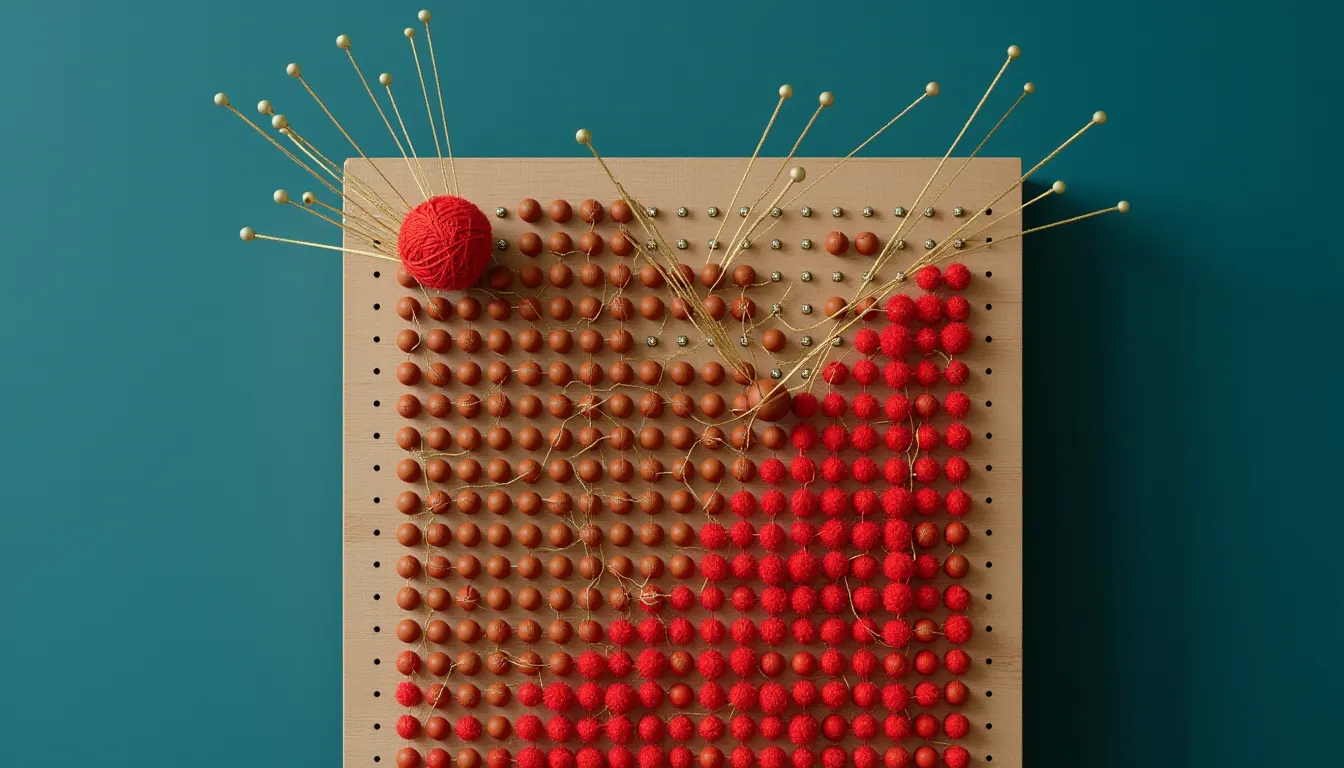
Chinese is taught here as 829 topics joined by 1,523 prerequisite links. Only 4 of them wait on nothing, 506 wait on exactly one earlier topic, and the topics that unlock the most later work are function words and adverbs rather than nouns.
Every number below is recomputed from the graph when you load this page. Nothing is typed in, so nothing here can drift behind the curriculum it describes.
The shape of the graph
| Measure | Value | What it means |
|---|---|---|
| Topics | 829 | 461 vocabulary, 195 grammar, 54 skills, 119 foundations and gates |
| Prerequisite links | 1,523 | Every one is a claim that the first topic has to hold before the second is worth starting |
| Topics that wait on nothing | 4 | Stroke order, radicals, how components build characters, and the tones |
| Topics waiting on exactly one thing | 506 | 61% of the curriculum |
| Topics waiting on more than five | 15 | The most any topic waits on is 16 |
| Longest chain | 90 topics | 86 of those links are consecutive character sets — see the limits |
| Longest chain, character lists collapsed | 48 topics | The median topic sits 31 deep |
The distribution is the finding. A curriculum built by committee tends to produce a web, where a topic waits on four or five others and any of them can block it. This one is a near-chain: 61% of topics wait on a single earlier topic and only 15 wait on more than five. A learner who stalls is almost always missing one specific thing, not a general readiness.
Which topics carry the most weight
Count how many later topics name each one as a prerequisite, and the ranking is not what a phrasebook would predict. Aggregate gates like "HSK 1-5 vocabulary mastered" are excluded here: they are scaffolding for the graph, not something a person sits down and learns.
| Topic | HSK | Kind | Later topics that name it |
|---|---|---|---|
| Function Words and Adverbs | HSK 1 | vocab | 11 |
| Daily Actions | HSK 2 | vocab | 11 |
| Number-Measure Phrases | HSK 1 | grammar | 8 |
| Communication and Information | HSK 2 | vocab | 8 |
| Stance Adverbs & Evaluative Words | HSK 3 | vocab | 8 |
| Logical connectives & conjunctions | HSK 4 | vocab | 8 |
| Time Expressions | HSK 2 | vocab | 8 |
| Conjunctions and Discourse Adverbs | HSK 2 | vocab | 8 |
Function words, adverbs, connectives, measure words and time expressions take the top of the list. They are the words a beginner course teaches last, because they are hard to picture and impossible to draw, and they are the words the rest of the language hangs off.
Nouns are cheap to add later; a learner who cannot place 都 or pick a measure word is blocked on hundreds of sentences at once.
The grammar subgraph on its own
The 195 grammar points carry 224 prerequisite links among themselves. 44 of them rest on no other grammar point, so they can be read cold. 81 unlock nothing further, which makes them the ends of branches rather than the trunk. The longest chain of grammar that must be learned in order runs 9 points.
| Grammar point | HSK | Later points that name it |
|---|---|---|
| Number-Measure Phrases | HSK 1 | 5 |
| Time Expressions as Adverbials | HSK 1 | 5 |
| 把-construction (disposal) | HSK 4 | 5 |
| Complex Sentences: Concession & Condition | HSK 5 | 5 |
| Yes/No Questions with 吗 | HSK 1 | 4 |
How the load is spread across the HSK levels
| Level | HSK 0 | HSK 1 | HSK 2 | HSK 3 | HSK 4 | HSK 5 | HSK 6 |
|---|---|---|---|---|---|---|---|
| Topics | 19 | 77 | 88 | 104 | 128 | 197 | 216 |
HSK 6 carries 2.8 times the topics of HSK 1. The exam's own word list over the same span goes from 150 words to 5,000, which is 33 times — so a topic at HSK 6 holds far more than a topic at HSK 1 does.
The number of prerequisites per topic barely moves across the ladder, so the difficulty a learner feels at the top is volume and interference inside each topic, not a deeper stack under it.
What this measurement does not tell you
- It is one curriculum, not the language. These are the dependencies GraphChinese teaches. Another course would cut the topics differently and get different numbers; the exam publishes a word list and no dependency claims at all.
- 86 of the links in the longest chain are character-list slices. "HSK 1 Characters · Set 2" follows Set 1 because a list has an order, not because one is built out of the other. The 48-topic figure is the one to quote for conceptual depth.
- An edge is a design decision, not a measurement of a learner. Each one was authored. The graph is falsifiable in the sense that a topic can be shown to serve before something it needs, and that is checked, but no edge here comes from an experiment.
- Prerequisites decide what is READY, never what is allowed. Nothing in the course is locked away, so reading ahead is always permitted.
Questions about the graph
What do you have to learn first in Chinese?
Only 4 of the 829 topics wait on nothing at all: stroke order, the first radicals, how components build characters, and the four tones. Everything else names something earlier. 506 topics name exactly one thing, which is why the curriculum reads as a line rather than a web.
Which Chinese grammar point unlocks the most?
Number-Measure Phrases and Time Expressions as Adverbials, at HSK 1. Each is named as a prerequisite by 5 later points, more than any other of the 195. Measure words and where time goes in a sentence are load-bearing in a way that vocabulary is not.
How deep does Chinese go?
The longest chain of things that must happen in order runs 90 topics. 86 of those links are consecutive slices of a character list, which are sequential because a list is sequential, not because one depends on the next. Drop them and the deepest real chain is 48 topics; the median topic sits 31 deep.
Why does learning Chinese stall around HSK 4?
The topic count nearly triples across the ladder — 77 topics at HSK 1 against 216 at HSK 6 — while the number of things each one waits on stays about the same. A gap you skipped at HSK 2 does not surface until the topics resting on it arrive, and by then several are waiting at once.
Where does this data come from?
The graph GraphChinese serves: the curriculum in serving order and the 195 grammar points, each listing its own prerequisites. Every figure on this page is recomputed from those files when the page is requested, so it moves when the curriculum does.
829 topics, 1,523 prerequisites, one route through them. GraphChinese picks the next topic from what you have proven, so the order on this page is the order you actually get. The whole course, HSK 0 through HSK 6, is $49 once for lifetime access.
Start at your true level