Readings · HSK 4

读一读 · HSK 4 阅读 · literature

一个汉字是怎么来的

How a Character Was Built

生词 · New in this passage

to scold; to curse
声旁phonetic component (the part of a character that hints at its sound)
部件component; part (of a character)
家族family (a group of related things)
演变to evolve; evolution
规律pattern; regularity
声调tone (of a syllable)
小雨

我发现一件很好玩的事:妈、吗、骂,这三个字读起来的音很像,都很像「马」的音。我猜是因为它们都有「马」这个部件,对不对?

I noticed something fun: 妈, 吗, and 骂 sound alike, almost all like the sound "ma". I'm guessing it's because they all have the component 马 in them, right?

大伟

你猜得很对,这就是规律。一个汉字常常有两个部件:一个部件负责意思,另一个部件负责读音,负责读音的部件就叫声旁。妈、吗、骂的声旁都是「马」,读音才会都很像。你知道「马」这个字自己是怎么演变来的吗?

You guessed right, and that's the pattern. A Chinese character often has two components: one carries the meaning, the other carries the pronunciation, and the component in charge of pronunciation is called the phonetic component. The phonetic component in 妈, 吗, and 骂 is all 马, which is why they sound alike. Do you know how the character 马 itself evolved?

小雨

不知道,你说说看?我猜「马」这个字最早的样子,跟马这种动物有关系吧?

No, tell me. I'm guessing the earliest form of 马 had something to do with the actual animal, a horse?

大伟

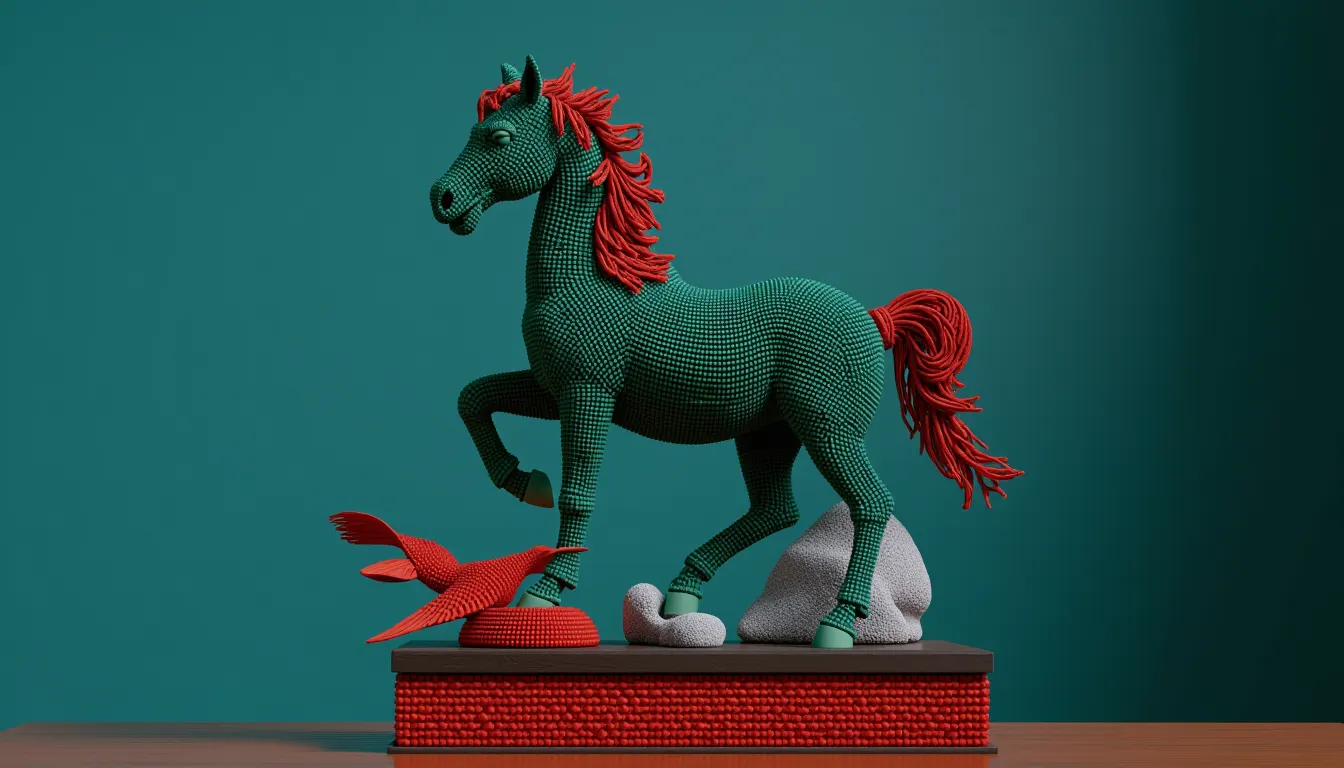
对,很久以前,「马」这个字最早的样子,就是一张马的画,看起来很清楚,一看就知道是马。后来这个字慢慢演变,笔画越来越简单,一张画变成了几笔字,最后就演变成了现在的「马」。

Right. Long ago, the earliest form of the character 马 was basically a drawing of a horse, clear enough that you could tell at a glance it was a horse. Over time the character slowly evolved, the strokes got simpler and simpler, a drawing turned into a few strokes, and it finally evolved into today's 马.

小雨

真有意思,一张画变成了几笔字。那「马」怎么又能当声旁,把读音借给别的字呢?

That's interesting, a drawing turning into a few strokes. So how does 马 get to be a phonetic component and lend its pronunciation to other characters?

大伟

因为「马」自己的读音几千年都没有大变化,别的字借用「马」这个部件,就借到了它的读音。你看「妈」,左边是「女」,意思跟女人有关系;右边是「马」,负责读音。「吗」左边是「口」,意思跟说话有关系;右边也是「马」,也负责读音。

Because 马's own pronunciation hasn't changed much in thousands of years, other characters that borrow the component 马 also borrow its pronunciation. Look at 妈: the left side is 女, related in meaning to women, and the right side is 马, carrying the pronunciation. 吗's left side is 口, related in meaning to speaking, and the right side is also 马, also carrying the pronunciation.

小雨

那「骂」呢?我猜「骂」的意思是说很难听的话,是不是因为上面有两个「口」,表示很多人在大声说话,下面还是「马」,负责读音?

What about 骂? I'm guessing 骂 means to say something nasty, and that's why it has two 口 on top, showing a lot of shouting, with 马 underneath carrying the pronunciation?

大伟

你又猜对了!「骂」的上面是两个「口」,表示大声说话骂人,下面的「马」给它读音。一个字,一半管意思,一半管读音,这就是很多汉字共同的规律。

You guessed it exactly right! 骂 has two 口 on top, showing loud shouting at someone, and the 马 underneath gives it its pronunciation. One character, half in charge of meaning, half in charge of pronunciation, that's a pattern shared by a lot of Chinese characters.

小雨

那是不是声旁一样的字,读音也会差不多,都算是一个家族,只是声调不一样,对吗?

So do characters that share a phonetic component have pronunciations close to each other too? Do they all count as one family, just with different tones?

大伟

对,妈、吗、骂就是一个「马」字家族,声旁都是「马」,主要的读音很像,只是声调不一样。同一个家族的字,声调常常不一样,但是主要的读音差不多,这也是一种规律。以后你看到不认识的字,只要认得它的声旁,就能猜出大概的读音。

Right, 妈, 吗, and 骂 are one 马 family: the phonetic component in all of them is 马, so the main pronunciation is alike, just the tones are different. Characters in the same family often have different tones, but the main pronunciation is close, and that's another pattern. From now on, when you see a character you don't know, if you recognize its phonetic component, you can guess roughly how it's read.

小雨

太好了,以后我看到新的字,就先找一找认识的部件,猜一猜它的声旁,这样猜读音就有规律,不是随便猜。

That's great. From now on when I see a new character, I'll look for a component I recognize first, take a guess at its phonetic component, and that way my guess at the pronunciation follows a pattern, it's not just a random guess.

看懂了吗 · Check yourself

What component do 妈, 吗, and 骂 all share that explains why they sound alike?

声旁都是「马」

According to 大伟, what did the character 马 look like in its earliest form?

就是一张马的画

Why does 骂 have two 口 written above 马?

表示大声说话骂人

Do 妈, 吗, and 骂 all have the same tone?

只是声调不一样

Read it with the crutches, then without them. In the study room this passage comes with pinyin you can toggle on a character at a time, a native recording that highlights each word as it is spoken, and the comprehension check as a real graded quiz. It arrives when the words in it are ones you have already learned.

Open this reading in the app

More HSK 4 readings

Does It Still Smell Okay闻着还能吃吗A mother smells a container of leftovers past its printed date and decides it is fine to eat; her adult daughter, raised on strict expiration dates, i…HSK 4 · 387 characters · 4 min · foodShould AI Write My Email该让人工智能写邮件吗Two coworkers argue about using artificial intelligence to draft work email. One says it saves an hour a day and no client has ever noticed. The other…HSK 4 · 447 characters · 5 min · techThe City I Could Not Afford住不起的城市Wang Fang has decided to leave Beijing for a smaller city because rent eats most of her salary and her daily commute eats the rest of her time. Li Qia…HSK 4 · 453 characters · 5 min · current-eventsWho Owns a Photograph照片是谁的A photographer discovers a company has used one of her photos in an advertisement without asking her. A friend who understands the law walks her throu…HSK 4 · 472 characters · 5 min · current-eventsThe Battery That Changed the Map电池改变了什么A skeptical friend doubts that cheaper batteries matter beyond electric cars. An engineer walks her through phones, storing power from the sun, and pl…HSK 4 · 500 characters · 6 min · techTranslating a Joke笑话很难翻译A student translating a Chinese joke book asks a professional translator why a joke about hotel floor numbers stopped being funny in English. The tran…HSK 4 · 529 characters · 6 min · literature

All HSK 4 readings → The whole library →